

At international climate negotiations, adaptation is traditionally framed as something wealthy countries finance and poorer countries need.
Lund University

Lund University was founded in 1666 and is repeatedly ranked among the world’s top universities. The University has around 46 000 students and 8 500 staff based in Lund, Helsingborg and Malmö. We are united in our efforts to understand, explain and improve our world and the human condition.
Lund is considered one of the most popular study locations in Sweden. The University offers one of the broadest ranges of programmes and courses in Scandinavia, based on cross-disciplinary and cutting-edge research. The unique disciplinary range encourages boundary-crossing collaborations both within academia and with wider society, creating great conditions for scientific breakthroughs and innovations. The University has a distinct international profile, with over 600 partner institutions in 70 countries.
Lund University has an annual turnover of EUR 1024 million, of which two-thirds go to research in our nine faculties, enabling us to offer one of the strongest and broadest ranges of research in Scandinavia. Prominent researchers working at the University have received some of the most prestigious awards of our time, including a Nobel Prize.
A focused and dedicated effort across the entire University has contributed to Lund University’s ranking as number one in the world in the QS World University Rankings: Sustainability 2026.
Links
Articles

The food pyramid began in 1970s Sweden as a budget eating guide. Its redesigns since show how food advice is shaped by more than nutrition science.

COVID’s impact on health can persist long after the initial infection.

Two incidents in the UK have centred attention on how Iran projects power beyond its borders.

Even in dire circumstances, people and communities have choices about how best they can adjust, collaborate and forge new social structures.

In Oceanhamnen, wastewater is collected through three separate pipelines, making the processing and reuse of black and greywater more efficient.
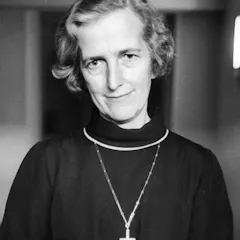
Officially recognising women’s vocation to the priesthood continues to elicit opposition from conservative factions of the Church.

Swedes take pride in being modern – and secular. But interest in the paranormal is high.

Sweden’s prison population could increase to more than 30,000 in the coming decades.

Overlooking the key causes of fatigue may mean missing important opportunities to support teenage girls’ health and wellbeing.
Geopolitical tensions and Nato membership have put the nuclear question back on the table.

After the end of its wealth tax came a newfound ‘wealth porn’.

New research suggests negative or anxiety-inducing images might be more useful than once thought.
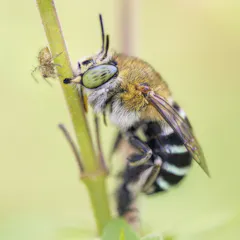
Alguns dos desempenhos visuais mais impressionantes medidos em um novo estudo vieram de espécies solitárias e raramente estudadas de abelhas
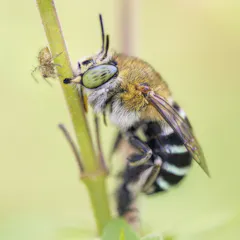
Some of the most impressive visual performances measured in a new study came from rarely studied, solitary species.

There is not only one way to learn to read, as people who are deaf, blind or dyslexic demonstrate.

Artificial intelligence cannot replace human leadership – but the problem is not machines, it’s people.
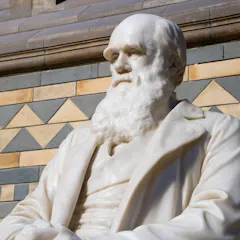
To make sense of some characteristics that species exhibit from birth, you have to turn to an old discredited theory known as Lamarckism.
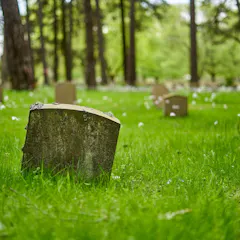
Burial grounds are filling up but are new methods any more green than traditional options?

Les musées nationaux de Scandinavie ne racontent pas seulement le passé : ils contribuent aussi à façonner l’identité contemporaine. Quitte à entretenir certains mythes sur les Vikings, toujours très présents dans l’imaginaire collectif.
Authors
-

Associate Professor of Church History, Centre for Theology and Religious Studies, Lund University
-
Postdoctoral Fellow, Nutrition Epidemiology, Lund University
-
Associate Professor in Emergency Medicine and Researcher at the Centre for Intelligence Studies, Lund University
-
Professor, Cardiology, Karolinska Institutet; Lund University
-
PhD Candidate in Water and Wastewater Treatment, Lund University
-
PhD Candidate, Sustainability Science, Lund University
-
Professor of Sustainability Science, Lund University
-
Associate Professor in Practical Theology, Centre for Theology and Religious Studies, Lund University
-
PhD Candidate, Water and Environmental Engineering, Lund University
-
Postdoctoral Research Associate, Environmental Change, Lund University
-
Senior lecturer, Division of Ethnology, Lund University
-
Postdoctoral Fellow, Family Medicine and Community Medicine, Lund University
-
Professor of Archaeology, Lund University
-
Doctoral student in criminal law, Lund University
-
Associate Senior Lecturer in Criminal Law, Lund University