

In an early childhood program, everyday encounters remind participants that acknowledging land is something we live through relationships and responsibilities.
Royal Roads University

Royal Roads University is a public university which provides an innovative model of post-secondary education. The university offers applied and professional programs that attract students and scholar-practitioners at the leading edge of 21st-century learning.
Its interdisciplinary learning and teaching approach focuses on preparing students with the knowledge, skills and competencies required to develop solutions to today’s complex problems.
Located on the traditional lands of the Xwsepsum (Esquimalt) and Lekwungen (Songhees) ancestors and families and on one of Canada’s most beautiful national historic sites, Royal Roads has a history of excellence in leadership and learning. With a balance of graduate, undergraduate and certificate programs, the university’s programs are designed with students in mind, whether a new student, working professional or lifelong learner.
Royal Roads’ blended delivery model combines short periods of intensive study with online courses, offering students a convenient way to pursue their education. The cohort learning model is a cornerstone of a Royal Roads education. Through group-based course work, peers share, challenge and grow with each other throughout their program.
Links
Articles
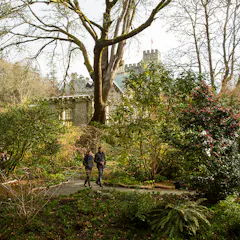
Universities must develop an intentional, place-based approach to research and teaching that’s organized around a region’s unique and specific problems.

The Liberal government has signalled it will not restore federal hate speech provisions or bring in new online safety legislation. A researcher explains what that means for the Canadians most at risk.

Canada’s tourism industry enters the summer riding one of the strongest years on record, but high airfares, rising fuel costs and a troubled geopolitical climate could change this year’s outlook.

A sultanistic system does not respond to appeals to shared values or long-standing agreements. It responds to leverage, personal relationships with the ruler and transactional incentives.

Gender inequity is still framed primarily as a problem of access and representation. It is also a governance problem.

By promoting politically expedient misinformation on a show like Joe Rogan’s, Pierre Poilievre appears intent on pushing dangerous and misleading claims that resonate only with his base.

Research in psychology and cognitive science suggests there are ways to fight back against this and reclaim your attention.

Conversations with Black, Indigenous and racialized artists in Western Canada point to key ways to protect and deepen equity-driven practices across cultural sectors.

Users began downloading Upscrolled after a group of American investors acquired a majority stake in TikTok’s U.S. operations.

The narratives embedded in disability policy influence everything from budget priorities to program eligibility and institutional cultures. They also shape how disabled people imagine their futures.

When sport leaders compromise on sport values like respect, excellence, safety and fairness, they compromise the value of sport.

History teaches us that Gaza’s reconstruction will only be successful if its people actively participate in shaping a safe, peaceful and prosperous future for themselves.
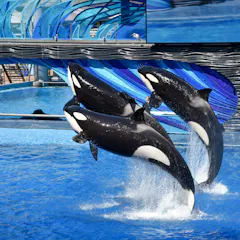
Marineland’s decline reflects a growing debate about the ethics of keeping animals in captivity, and what the future of zoos and aquariums should look like.

Though Canada, on paper, is committed to an adequate standard of living, it needs social and economic laws to become more enforceable.

Canadian travellers increasingly turned to domestic destinations instead of heading south this summer.

There is a wide range of simple actions anyone can take to regenerate and conserve biodiversity right at home.

AI-powered chatbots can be used in health-care education to help providers practice encounters with patients who have vaccine questions.
En cette période d’incertitude, le tourisme « doux » propose aux Canadiens et aux visiteurs étrangers des formules abordables pour explorer et expérimenter ce que le Canada a à offrir.
In times of global uncertainty, ‘soft tourism’ offers affordable options for Canadians to explore their own backyards — and for international tourists to experience Canada.
Authors
-

Assistant Professor in Justice Studies, Royal Roads University
-
School Director & Assistant Professor, Faculty of Interdisciplinary Studies, Royal Roads University
-
Fellow, Geopolitics, Cascade Institute, Royal Roads University
-
Assistant Professor, Communication & Culture, Royal Roads University
-
Associate Professor of Interdisciplinary Studies, Royal Roads University
-
Professor, Communication and Culture, Royal Roads University
-
Postdoctoral Fellow, Environment & Sustainability, Royal Roads University
-
PhD Candidate, Doctor of Social Sciences, Royal Roads University
-
Assistant Professor and Head of Disaster and Emergency Management Program, Royal Roads University
-
Behavioural Neuroscientist and Fellow at the Cascade Institute, Royal Roads University
-
Associate Dean, Associate Professor, Faculty of Interdisciplinary Studies, Royal Roads University
-
Master of Arts in Tourism Management, Royal Roads University
-
President and Vice-Chancellor, Royal Roads University
-
Professor, School of Environment and Sustainability, Royal Roads University
-
Master of Arts in Tourism Management, Royal Roads University