
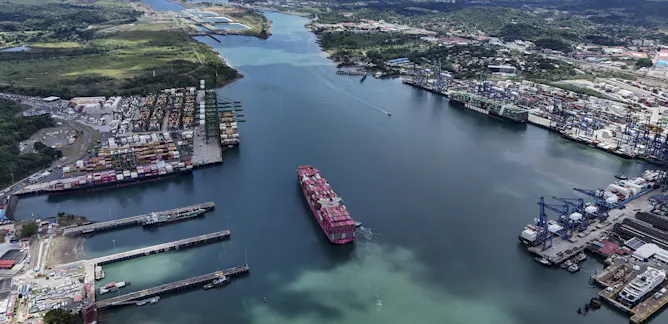
El Niño can affect agriculture, marine life and economies in profound ways, including slowing commerce at the Panama Canal. This El Niño is likely to be the strongest in over a century.
Smithsonian Institution

Since its founding in 1846, the Smithsonian Institution has been committed to inspiring generations through knowledge and discovery. The Smithsonian is the world’s largest museum, education and research complex, consisting of 21 museums, eight research centers, numerous education and cultural centers, and the National Zoological Park.
Links
Articles
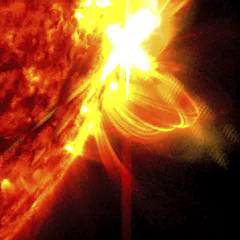
A massive solar flare could seriously disrupt life on Earth – but new NASA missions and others in development will help monitor the Sun.
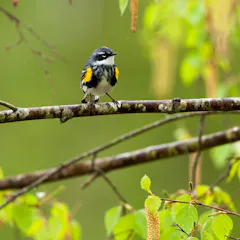
Tiny geolocators measure light levels and atmospheric pressure to reveal the migrations of small songbirds – including the yellow-rumped warbler, also known as a butter-butt – in unprecedented detail.

Idle vessels accumulate biofouling quickly, especially in tropical waters. But there are precautions other ports can take against alien pests, parasites or disease.
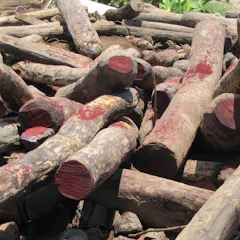
Destacamos formas de celebrar la sabiduría, la alegría, la belleza y la resistencia de los indígenas wounaan mientras hablamos de la historia.

We highlight ways to celebrate Wounaan wisdom, joy, beauty and resistance while discussing centuries of taking from Indigenous communities.
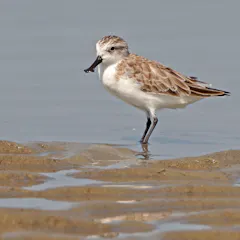
A new global assessment of the world’s migratory species finds reason for alarm, but also hope – and a road map for helping them survive.

The medical tools of the Revolutionary period help flesh out the picture of what physical well-being felt like for people living in the American colonies 250 years ago.

State lines are one way to picture the US, but natural history provides another – one that shows the ancient and living connections running across the landscape.
Até agora, cerca de 10% dos oceanos contam com proteção formal, à medida que os países trabalham para atingir a meta 30x30, mas muitas áreas ainda estão protegidas apenas no papel
So far, about 10% of the ocean has formal protection as countries work toward the 30x30 goal, but many areas are still protected on paper only.
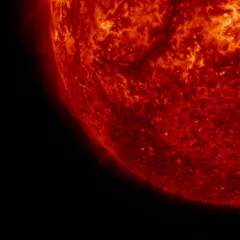
The Sun is a complex physical body. It generates incredible amounts of heat and a strong, often tangled, magnetic field.
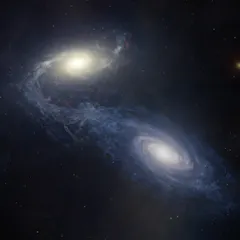
Astronomers want to understand how spiral galaxies form and get their massive spiral arms.

Healthy coral reefs can significantly reduce hurricane damage for coastlines, yet many still face harms, including pollution and ship damage, that people have the power to stop.
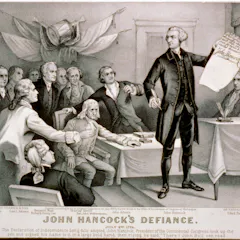
US charitable institutions rapidly changed in the 1780s as Americans established groups to support people in need and to reform society.
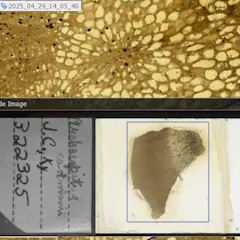
Pollen, algae, insects, radiolarians – each unique microfossil holds clues to how Earth has changed over millions of years. Combining AI with digital scanners helps researchers piece it all together.

Is the US a democracy or a republic? That’s a misleading question, writes a historian of early America. The values of republicanism and the values of democracy have both been vital to the nation.
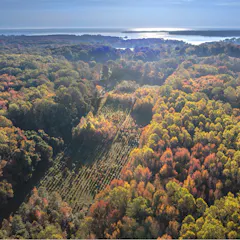
The tree mix matters. Near Chesapeake Bay, scientists have been experimenting with mini-forests for over a decade. The surprising results show how biodiversity pays off.

A space historian explains how the Artemis II crew reimagined some Apollo-era photos and found spectacular new angles.
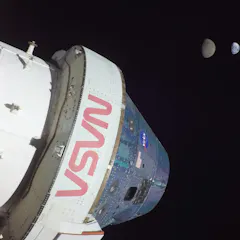
NASA’s Artemis II mission took decades of policymaking, engineering and financial support.
Authors
-

Director of the Adrienne Arsht Community-Based Resilience Solutions Initiative & Staff Scientist at the Smithsonian Tropical Research Institute, Smithsonian Institution
-
Senior Scientist in Marine Ecology and Biogeography, Smithsonian Environmental Research Center, Smithsonian Institution
-
Professor of Environment and Sustainability Studies, Wake Forest University; Smithsonian Institution; University of Michigan
-
Curator of Medicine and Science, National Museum of American History, Smithsonian Institution
-
Director of the Center for Astrophysics | Harvard & Smithsonian, Smithsonian Institution
-
Research Ecologist, Smithsonian Institution
-
Astrophysicist, Smithsonian Astrophysical Observatory, Smithsonian Institution
-
Researcher in Astrophysics, Smithsonian Institution
-
Postdoctoral Fellow in Marine Science, Smithsonian Institution
-
James Smithson Postdoctoral Fellow, Smithsonian Institution
-
Director, MarineGEO and Tennenbaum Marine Observatories Network, Smithsonian Institution
-
Research Biologist, Smithsonian Tropical Research Institute, Smithsonian Institution
-
Research Geologist and Curator of Paleobiology, Smithsonian Institution
-
Curator of North American Archaeology, Smithsonian Institution
-
Researcher in Astrophysics, Smithsonian Institution