
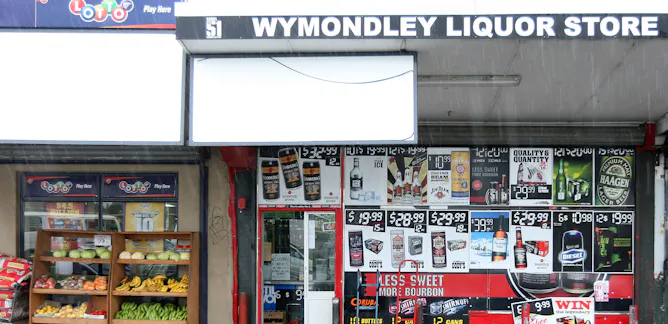
As alcohol licensing laws face change, new research suggests closing individual outlets can bring noticeable benefits for nearby residents.
Te Kunenga ki Pūrehuroa – Massey University

Te Kunenga ki Pūrehuroa Massey University is a true “University of New Zealand”, with three North Island campuses at Auckland, Manawatū and Wellington and more than 32,000 students studying either on one of the campuses or by distance learning from throughout the world.
Set up as an agricultural college in 1927 it is now a comprehensive university with qualifications in humanities and social sciences, business, creative arts, health and sciences.
Links
Articles

It’s 30 years since the All Blacks last played a test in South Africa – and only 56 years since Māori and Pacific players were first allowed to tour there.
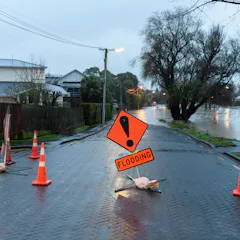
Only 3% of spending on natural hazards focuses on reducing risk, allowing governments to shift liability but leaving communities unprepared.

The history of electoral reform in NZ is full of policy surprises. But the prime minister’s latest announcement still makes little political sense.

As democratic socialists make inroads into mainstream US politics, one loaded word is doing a lot of work for their ideological opponents.

New Zealand is lifting its defence spending while deepening its military ties with Australia. But what happens when it needs to say no?

New Zealand needs more social housing and affordable rentals, but also better pathways for working renters to become home owners.
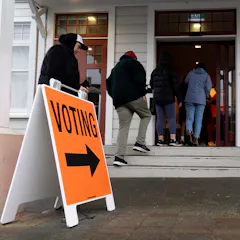
Winning the political centre is said to be key to electoral success. But what exactly does ‘centrism’ represent?

The confirmation of the bird flu virus in a brown skua appears to be a single detection. Ongoing surveillance will be essential to detect any further cases.

Fuel prices have exposed a deeper problem in NZ’s regional air network. Struggling routes may need public support if smaller communities are to stay connected.

TOP’s positive polling is fuelling media speculation about its electoral prospects. Can it finally get over the line? And what might happen if it does?

When migrants internalise expectations of gratefulness, they can come to think of racism and discrimination as inevitable – to be endured rather than challenged.

Media articles can present adolescent sleep issues as both a normal part of growing up and a sign of deeper problems. How should parents make sense of it?

Nowhere is safe from forever chemical pollution – not even the middle of the ocean. PFAS levels are on the rise in the world’s whales and dolphins.
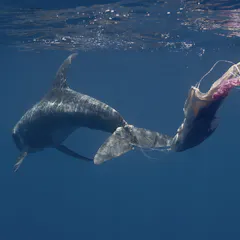
Entanglement is a major animal welfare issue for marine mammals. A successful rescue is not just whether an animal is cut free but whether it recovers from injuries.

In this extract from his newly published essay collection, the author traces the imperial British origins of a quintessential Kiwi chore.

A finding of anti-competitive behaviour by US industry giant Live Nation raises questions about New Zealand’s heavily consolidated music market.

Can a short multiple-choice test encourage new citizens to connect with a sense of national identity, or does it risk oversimplifying complex, contested ideas?

Surveys may overestimate belief in conspiracy theories because of trolls and jokers – but genuine believers can still cause real-world harm.

Doctors have to balance finite resources and uncertain evidence to decide who should get treatments. The decisions are not always based on need or clinical benefits.
Authors
-

Lecturer in Aviation Management, Te Kunenga ki Pūrehuroa – Massey University
-
Associate Professor, School of Music and Screen Arts, Te Kunenga ki Pūrehuroa – Massey University
-
Lecturer, School of Music and Screen Arts, Te Kunenga ki Pūrehuroa – Massey University
-
Professor of Marine Ecology, Te Kunenga ki Pūrehuroa – Massey University
-
Professor in Fatigue Management and Sleep Health/Associate Dean, Research, Te Kunenga ki Pūrehuroa – Massey University
-
Research associate, Te Kunenga ki Pūrehuroa – Massey University
-
Distinguished Professor of Infectious Disease Epidemiology and Public Health, Te Kunenga ki Pūrehuroa – Massey University
-
Professor of Politics, Te Kunenga ki Pūrehuroa – Massey University
-
Professor in Applied Mathematics, Te Kunenga ki Pūrehuroa – Massey University
-
Assistant Lecturer in Politics and International Relations, Te Kunenga ki Pūrehuroa – Massey University
-
Professor in Indigenous and International Development, Te Kunenga ki Pūrehuroa – Massey University
-
Associate Professor, School of Psychology, Massey University, Te Kunenga ki Pūrehuroa – Massey University
-
Public Health Researcher, Te Kunenga ki Pūrehuroa – Massey University
-
Research Officer in Drug Policy, SHORE & Whariki Research Centre, Te Kunenga ki Pūrehuroa – Massey University
-
Professor of Organisational Studies, Te Kunenga ki Pūrehuroa – Massey University