

Moving can change the conditions that shape health, so health and social policy must plan for a mobile population.
University of the Witwatersrand

The University of the Witwatersrand, Johannesburg, also known as Wits University, is a leading, internationally-ranked, research-intensive university located in Johannesburg, South Africa, the economic heartland of Africa. Committed to academic and research excellence and social justice, Wits generates high level scarce skills for a globally competitive world, while addressing local social and economic development. At the forefront of a changing society, Wits is a social leader, dedicated to advancing the public good.
Wits is known for its work in deep level mining, science, health sciences, accountancy, law, governance, and the humanities, amongst others. It houses five faculties which comprise 34 schools. Wits offers approximately 3 600 courses to about 32 500 full-time students, of whom about a third are postgraduate and 55% are female. Almost 65% of all doctoral candidates and about half of all enrolments are in the Science, Engineering and Technology fields. Wits has developed about 130 000 graduates in its 93 years of existence. It has a proud record in that about 87% of all publications are in accredited international journals.
Links
Articles

Even South Africa’s remote sacred springs are not untouched: research found microplastics in all nine tested, including waters used for healing and drinking.

South Africa runs a single waiting list for all transplant recipients, whether from the private or public sector.

A common reporting structure that combines financial and non-financial information reduces pressures on both donors and NPOs.
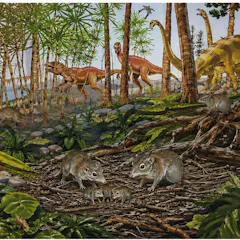
Our mammalian ancestors living 160 million years ago sometimes lived in pairs.

Redistribution must recognise that most workers are in informal employment.
The challenge now is not simply helping people live longer, but ensuring they age well.

Le stockage de l'hydrogène dans des matériaux métalliques constitue une piste prometteuse pour valoriser les minerais africains.

Automated systems need to be watched carefully to ensure they are in fact operating in the public interest.

Storing hydrogen in metallic materials is a promising avenue for extracting value from Africa’s minerals.

The country is likely to have a much stronger opposition to contend with after the 2026 polls.
The typical alcoholic beverage disclosed only a single piece of nutritional information: its alcohol content.
South Africa needs a credible gas plan tied to procurement, infrastructure and industrial policy.

The story of oil is focused on the US. But our oil-centred world was made through wider global relations.

South Africa is struggling to move to renewable energy because of: Eskom’s dominance, weak planning, a poor grid, failing municipal networks and unused solar.

If AI is not designed properly, inequalities can reappear in new, digital forms.

The economic and social conditions in which anti-migrant sentiment has exploded in South Africa include high joblessness and a collapse of government services.

A German loan for fixing Johannesburg’s electricity utility is unlikely to make much difference to users yet: prices will probably rise faster than inflation.

The only interventions capable of disrupting xenophobia are those that lower, or ideally eliminate, its political, economic and social benefits.
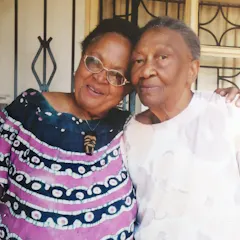
She was a trusted mentor to young militants whose 1976 uprising shaped the country forever.
Authors
-

Senior Lecturer, Africa Energy Leadership Centre, University of the Witwatersrand
-
Senior Researcher in Public Health, University of the Witwatersrand
-
Director of Research, Université de Strasbourg; University of the Witwatersrand
-
Lecturer, University of the Witwatersrand
-
Research Manager at MRC/Wits Agincourt Research Unit, University of the Witwatersrand
-
Pro Vice-Chancellor, Climate, Sustainability and Inequality and Director, Southern Centre for Inequality Studies, University of the Witwatersrand
-
Head of Transplant Surgery at the Wits Donald Gordon Medical Centre, and Academic Head of Transplantation, University of the Witwatersrand
-
Visiting Researcher at Sydney Brenner Institute for Molecular Bioscience, University of the Witwatersrand
-
Reader in Population and Public Health, MRC/Wits Rural Public Health and Health Transitions Research Unit, School of Public Health, University of the Witwatersrand
-
Visiting Research Fellow, University of the Witwatersrand
-
Associate professor, University of the Witwatersrand
-
Lecturer, University of the Witwatersrand
-
Senior Lecturer in the School of Animal, Plant and Environmental Sciences, University of the Witwatersrand
-
Lecturer, Department of Physiology, University of the Witwatersrand
-
Associate Professor and CLM Assistant Dean of Research, University of the Witwatersrand