

If this new development – designed to show if a text is AI-generated – sounds too good to be true, that’s because it is.
Articles on Academic integrity
Displaying 1 - 20 of 36 articles
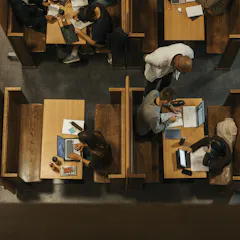
A big challenge for universities is distinguishing whether students are using AI to help or as a substitute for learning.

Over two years of interviews with a cohort of STEM college students, many described feeling something personal was lost after using AI to improve their writing.

How can business schools best navigate the AI era? Does GenAI in higher education constitute a level playing field where educational inequality and diverse learning needs are concerned?

Peer review is so integral to the scholarly system that research would grind to a halt without it.
Ensuring higher education remains a space for ethical decision-making means incorporating at least five principles into forms of assessment.
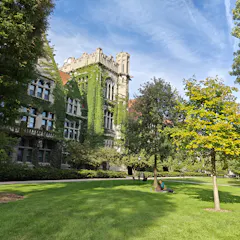
A sociologist who researches AI’s impact on work and education argues there are ethical dimensions to generative AI that institutions are not considering.

AI agents can navigate course sites, consume materials and complete assignments, effectively simulating student engagement.
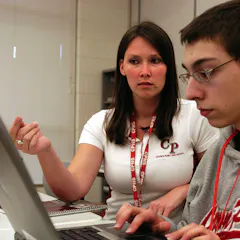
If educators want to make valid inferences about what students know and can do, assessments like drafts, works-in-progress and repeated observations of student learning are needed.
Only by considering conditions specific to post-secondary education today can educators reimagine more engaged and critical learning.

About two-thirds of students admit to plagiarizing material. Faculty are expected to know better, but they do it, too. How should universities respond?

Since ChatGPT was released a year ago, we have been asking Australian university students and academics about their use of generative AI.
There has been a huge amount of speculation about what ChatGPT means for university study. But has actually been happening? A new survey looks at the first semester with this new technology.

Do you own a literary work that ChatGPT helped you write? Does OpenAI? The legal questions are thorny, and the answers unclear.

We ought to want student essays to reflect understanding, judgment and caring, something beyond ChatGPT.

Some fear ChatGPT will increase student cheating. But education academics say it can also save time preparing lessons and create new opportunities for learning.

Educators need to carefully consider ChatGPT and issues of academic integrity to move toward an assessment system that leverages AI tools.

Research about both social and technical aspects of work can guide critical thinking about when and how business leaders and MBA students might use generative AI.

In Indonesia, contract cheaters take advantage of a culture of academic competition, a lack of legal clarity, and the move to online testing and assignments.

AI models can now produce meaningful responses to exam and assignment questions. We’ll have to embrace them if we want the next few years to go smoothly.
Top contributors
-

Professor and Research Chair, Werklund School of Education, University of Calgary
-
Professor of Management, University of Johannesburg
-
Assistant Professor, Faculty of Education, Brock University
-
Senior Lecturer, Melbourne Graduate School Of Education, The University of Melbourne
-
Associate Professor, College of Information & Communication Technology, School of Engineering and Technology, CQUniversity Australia
-
Associate Professor, Director of Speech Pathology, Deakin University, Deakin University
-
Assistant Professor, Faculty of Education, Brock University
-
Co-Director: Centre for Competition Law and Economics, Stellenbosch University
-
Associate Professor; Director: Academic Integrity, Adelaide University
-
Deputy Vice-Chancellor, Education, Murdoch University; Professor of Measurement, Assessment and Evaluation, Murdoch University
-
Philosophy PhD Student, University of Guelph
-
Pro Vice-Chancellor, Educational Innovation, University of Sydney
-
Pro vice-chancellor (Education and Quality), Swinburne University of Technology
-
Professeur agrégé, École d'études politique, Directeur, Centre d'études en gouvernance / Associate professor, School of Political Studies, Director, Centre on Governance, L’Université d’Ottawa/University of Ottawa
-
Associate Dean, School of Graduate Studies & Professor, Faculty of Education, Queen's University, Ontario