

Moving can change the conditions that shape health, so health and social policy must plan for a mobile population.
Articles on Agincourt
Displaying all articles

A significant number of older adults in rural South Africa are HIV-positive. Awareness programmes and self-testing would reduce cases.

Nearly half of South Africa’s 60 million people receive social grants. Health experts say they improve cognitive health among the elderly.
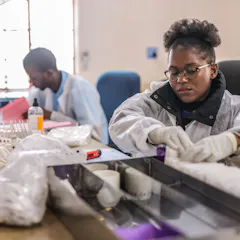
Agincourt, the University of the Witwatersrand’s rural research centre 500km from Johannesburg, has documented the lives of 120,000 people over decades.

Rapid population ageing has prompted researchers to study disease trends in older South Africans. The aim is to understand the role that specific health conditions play in ageing among rural people.

Research done over the past 26 years
provides insights into changes across people’s lives, helps evaluate interventions, and provides information for local, provincial and national planning.

It’s evident from research that while health influences economic well-being, the inverse is also true, economic well-being influences health.

Health and demographic surveillance systems are important to understand people and the societies that they live in.
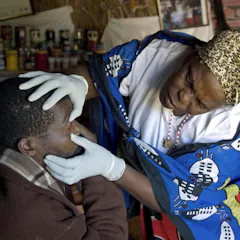
In rural areas where there are often fewer healthcare professionals available, traditional healers can have a role to play in promoting HIV treatment.

Shakespeare’s plays have kept “this glorious and well-foughten field” alive, championing its power as a myth of national unity and heroism.
Top contributors
-

Professor: Health and Population Division, School of Public Health, University of the Witwatersrand
-
Reader in Population and Public Health, MRC/Wits Rural Public Health and Health Transitions Research Unit, School of Public Health, University of the Witwatersrand
-
Research Manager at MRC/Wits Agincourt Research Unit, University of the Witwatersrand
-
Associate Professor (Reader), Wits School of Public Health, University of the Witwatersrand
-
Senior Researcher Rural Health in Transition and Agincourt Research Unit, University of the Witwatersrand
-
Director: MRC/Wits Rural Public Health and Health Transitions Research Unit (Agincourt), University of the Witwatersrand
-
Physician-scientist, Harvard University
-
Assistant Professor, Department of Epidemiology, University of Michigan, University of Michigan
-
Researcher, University of the Witwatersrand
-
Research Scientist, Harvard University
-
Associate Professor of Epidemiology, Indiana University
-
Professor, University of Heidelberg
-
Senior Researcher in Public Health, University of the Witwatersrand
-
Assistant Professor in Urban Public Health, UMass Boston
-
Research Fellow in Medicine, Harvard University