
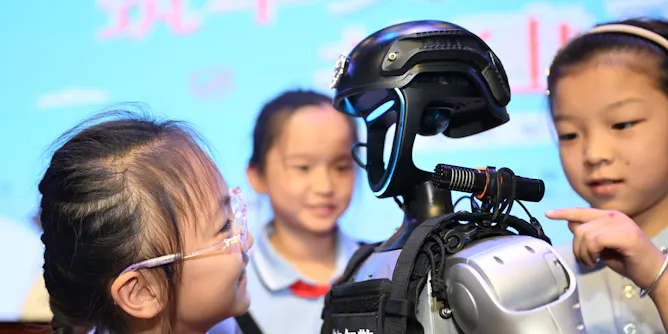
A recent study into China’s innovation boom found patenting activity has been accelerating for years and is built on a whole ecosystem, not a few lone heroes.
Articles on Artificial intelligence (AI)
Displaying 241 - 260 of 2971 articles

The abrupt disappearance of a lake is one clear sign that the ice below is melting, and a clue to wider permafrost changes.
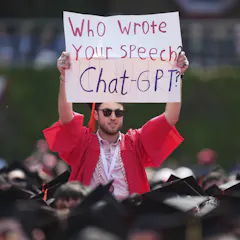
There’s no single giveaway. But there are patterns.

AI could speed up some police work, but trusting it with evidence raises difficult questions about accuracy, accountability and justice.

The federal government will push for new national laws with rules for where data centres can go, how they must be powered and where their water comes from.

Interviews with data workers in China and Australia reveal the precarious, exploitative conditions of this new branch of the gig economy.

‘Pics or it didn’t happen’ is no longer a reliable test for what’s real.

AI listening devices could help find New Zealand’s last remaining possums – but only if they don’t mistake bird calls for pests. Here’s how a new fix works.

Automation is expected to make air traffic controllers’ jobs a bit easier. But instead it could add more work and lead to more mistakes being made.

Educators can confront AI head on by distinguishing its pattern-recognition skills from its inability to daydream, embody other people and authentically express itself.

The resignation and death of the Cambridge professor is the latest chapter in a centuries-old struggle over originality and intellectual ownership – one intensified by the rise of generative AI.

Technical fixes to AI systems aren’t enough. What’s needed is an overhaul of AI eco-systems to ensure they’re more inclusive.

The current debate risks turning into a zero-sum choice between screens and pen and paper.

Piping water into the server halls could be a much more efficient way to remove waste heat.

We risk replacing genuine knowledge with ‘work slop’.

A recent ruling suggests that if used well, AI offers an opportunity to improve access to justice. Courts and tribunals will have to perform a careful balancing act.

If this new development – designed to show if a text is AI-generated – sounds too good to be true, that’s because it is.

Beyond technical fluency, Canadian students need judgment to decide how to use AI and when it should not be used at all.

A survey and workshop project is designed to help educators reflect on their comfort with genAI, assessment and educational practices and their fears and challenges.

Automated systems need to be watched carefully to ensure they are in fact operating in the public interest.
Top contributors
-

Professor of AI, Research Group Leader, UNSW
-
Professorial Fellow, University of Canberra
-
Associate Professor of Visual Communication & Digital Media, RMIT University
-
Adjunct Senior Lecturer, Applied Ethics and CyberSecurity, Griffith University
-
Professor of Information Systems, Michigan State University
-
Professor in Robotics, Queensland University of Technology
-
Adjunct Lecturer in Public Policy, Harvard Kennedy School; University of Toronto
-
Senior Research Fellow in AI Accountability, Queensland University of Technology
-
Professor of Philosophy and Director of Applied Ethics Center, UMass Boston
-
Director of Sydney Executive Plus, Business School, University of Sydney
-
Professor in Computational Intelligence, Australian Catholic University
-
Professor in Business Information Systems, University of Sydney
-
Guest Research Fellow, School of Computing and Information Systems, The University of Melbourne
-
Professor of Information Technology and Organisation, University of Sydney
-
Senior Lecturer, School of Engineering, Australian National University