

A survey and workshop project is designed to help educators reflect on their comfort with genAI, assessment and educational practices and their fears and challenges.
Articles on Artificial Intelligence ethics
Displaying 1 - 20 of 125 articles

AI systems can now improve themselves by themselves. Is this the dawn of machine superintelligence?

Authoritarian governments, including the Trump administration, are reorienting AI safety provisions away from protecting the public toward coercing support for the regime.

Human therapists have a legal duty to warn authorities and potential targets when patients say they plan to harm someone. The same can – in theory – be required of AI chatbots .

Before the end of the year, dating app Bumble will be getting rid of the swipe and introducing an AI powered dating assistant.
Large index-tracking funds could soon gain automatic exposure to AI giants as companies such as OpenAI edge toward public markets.

Once powerful AI models are released, it’s nearly impossible to keep them from being misused. Minimizing the risk means making safety the top priority in developing the systems.
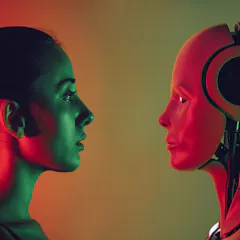
AI now makes it possible to communicate with the dead. But these digital avatars raise significant ethical questions about our relationship with mortality.

When people know someone used AI to write a message, they see the person as lazy or insincere.

What Canada’s response to AI protocols in the wake of the Tumbler Ridge tragedy gets wrong, and what durable governance actually requires.

The speed and scale of war are being enhanced by AI systems – but they also bring new risks for civilians and military combatants.

AI is creating new opportunities for some and new vulnerabilities for others, deepening the socioeconomic inequalities already embedded in the labour market.

Canada’s long history with public service media offers a useful model for thinking about how AI could serve the public.
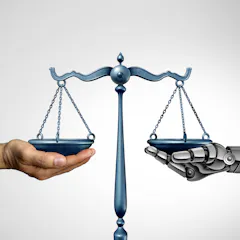
The Colorado AI Act goes into effect next year, but legislators are attempting to repeal and replace it.
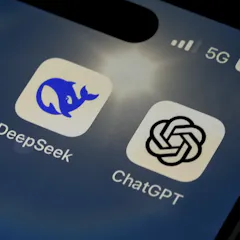
Generative AI may appear to offer a shortcut, but without verification and expertise, it can easily mislead users.

Right now it’s something of an arms race as new technologies are developed – and detectors struggle to keep up.

AI-powered shopping is now live in the US and aiming to roll out overseas. So how does it work? And what are companies like Google planning to launch next?

Ethical AI starts with listening. If we want digital systems to be fair, safe and trusted, we must give young people a seat at the table and treat their voices as essential, not optional.

AI weapons present many challenges – but these ultimately stem back to people.
Higher education’s embrace of AI reveals deeper trends in institutional priorities − and what’s at risk.
Top contributors
-

Associate Professor of Visual Communication & Digital Media, RMIT University
-
Adjunct professor, Carleton University
-
Associate Professor, School of Media and Communication, RMIT University
-
Lecturer in Philosophy, University of East Anglia
-
Senior Lecturer, School of Engineering, Australian National University
-
Senior Lecturer in Philosophy, University of the Witwatersrand
-
Lecturer, Business School & Centre for Policy Futures, The University of Queensland
-
Postdoctoral Research Fellow, Melbourne Business School
-
Chair in Trust, Professor of Management, The University of Melbourne; Melbourne Business School
-
Professor of English Language and Literature; University Research Chair & Founding Director, Critical Media Lab, University of Waterloo
-
Professor in Information and Communication Technology Policy, Concordia University
-
Industry Professor of Emerging Technology and Co-Director, Human Technology Institute, University of Technology Sydney
-
Co-Founder of The Data Tank and Co-Founder and Chief Research and Development Officer of the Governance Laboratory (GovLab), New York University
-
Senior Research Fellow in AI Accountability, Queensland University of Technology
-
Senior Lecturer in Psychology and Sex and Relationship Therapist, University of Westminster