

Trying to understand how the brain is so good at focusing on one conversation has kept auditory neuroscientists occupied since the 1950s.
Articles on Auditory processing
Displaying all articles

The lack of an inner monologue seems linked to a lower ability to recall words and predict their sound.
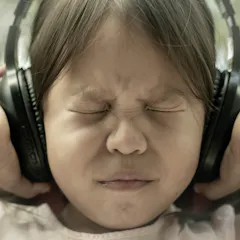
Some devices simply block sound. Others cancel out noises using sound engineering. There is positive, but limited, research that suggests they might be useful for autistic or ADHD people.
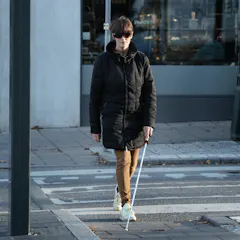
Detecting and tracking motion is key to survival. The ability to extract auditory information from a noisy environment changes when your brain isn’t wired to rely on vision.

Internal combustion engine cars still dominate global sales – it could be to do with the emotive influence they hold over drivers.

Auditory processing disorders and aphasia can make spoken speech difficult to produce and understand. But these challenges alone do not imply cognitive impairments.
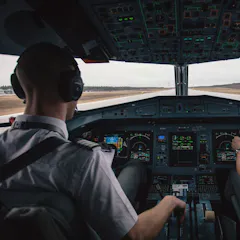
Aviation safety has much to gain from neuroscience: studying how our brains become “deaf” to alarms allows us to adapt the pilot’s flight instruments.

Listen up. Today we’re hearing all about why your ears pop when you go up, up, up and away.

Where you come down on the latest internet hullabaloo depends on how your brain fills in gaps in the sounds you hear.
Top contributors
-

Assistant Professor of Communication Sciences, Case Western Reserve University
-
Prof F. Dehais , titulaire de la chaire AXA - ISAE "Neuroergonomics for flight safety", ISAE-SUPAERO
-
Head of Ear and Hearing Health, The Kids Research Institute Australia, Curtin University
-
Research Scientist, University of Washington
-
Senior Lecturer in Operations and Supply Chain Management, Anglia Ruskin University
-
Senior Research Fellow, Mater Research Institute, The University of Queensland
-
Professor of Neurology and Public Health Sciences, University of Virginia
-
Professor of Psychology, University of Washington
-
Professor, School of Psychology, The University of Queensland
-
Assistant Professor in Intelligent Systems, School of Computer Science and Statistics, Trinity College Dublin
-
PhD Candidate in Computer Science, School of Computer Science and Statistics, Trinity College Dublin