
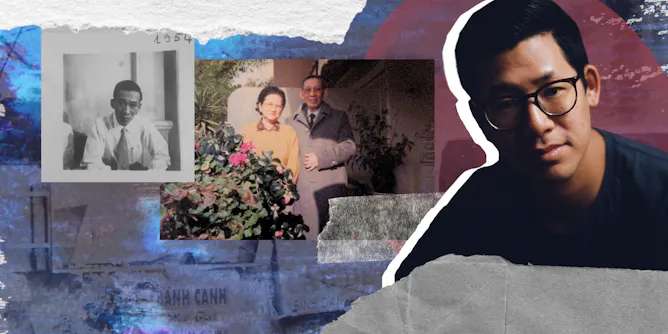
André Dao has kept the legacy of his grandparents alive in Anam, a brilliant novel of immense scope that became a full quest for the truth of his family history, which spans the two Vietnam Wars.
Articles on Australian fiction
Displaying 61 - 73 of 73 articles
Resistance, like Rachel Cusk’s Outline trilogy, uses its main character – a therapist, Nina – as a vehicle for others’ stories.
Novels aren’t responsible for the climate crisis and probably won’t solve it, but there is plenty they can do. They can make us feel for lives unlike our own; modelling careful thinking and analysis.

Kath O'Connor’s debut novel, Inheritance, follows two women – an IVF hopeful and her grandmother – who carry the BRCA1 gene and contract ovarian cancer. It’s very close to being memoir.
Renowned YA author Vikki Wakefield delves into the complex pressures of motherhood with her first adult novel – a psychological thriller.
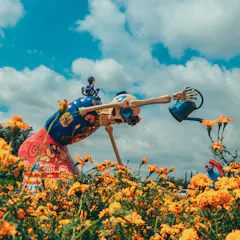
A bear eats a teenager, and inherits his memories. An ageing woman writer buys a tower of her own – where she reimagines the crone from Rapunzel. Two inventive new books resonate with our reviewer.
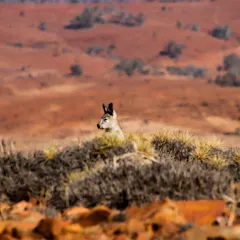
Fiona McFarlane’s ‘masterful, complicated’ novel explores the exploitative nature of storytelling. She asks us to consider the truth of the tales we tell about ourselves and our identities.
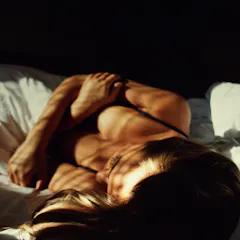
The latest novel by twice Miles Franklin winner Alex Miller traces one woman’s journey from self-absorption and isolation, to generosity and friendship.

Tracey Lien’s debut novel investigates a murder of a model student in a Cabramatta restaurant. Anh Nguyen Austen says it brilliantly conveys the complexities of the Vietnamese refugee experience.
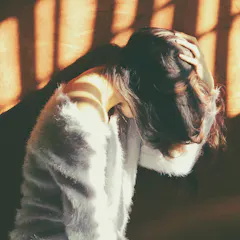
Major plot points explode like hand grenades in Adrianne Howell’s Hydra, which is ‘never dull’, but implausible. And Alice Nelson’s Faithless, about love and literature, operates in a rarefied world.

Peggy Frew’s masterful control of Wildflowers, her fourth novel – about three sisters, once close, now estranged – promises not to engulf readers in the sorrow it must expose. Debra Adelaide reviews.
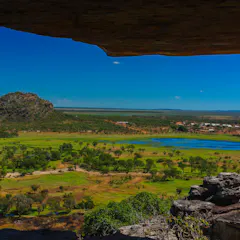
Tim Rowse concludes that Paul Daley’s new novel, inspired by true events in Arnhem Land, is fluent and skilfully paced – but doesn’t risk complicating the critical narrative of our colonial history.
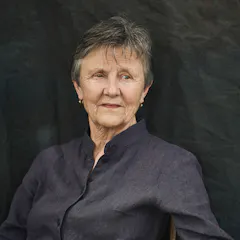
Helen Garner is the pioneer of fearless self-revelation in Australian literature. Writer Sean O'Beirne examines his own literary fear and fearlessness: should he ‘give’ more, as Garner does?
Top contributors
-

Assistant Researcher, School of Languages and Culture, The University of Queensland
-
Adjunct Researcher, English and Writing, University of Tasmania
-
Associate Professor, Creative Writing, University of Wollongong
-
Researcher, School of Art, Communication and English, University of Sydney
-
Senior Lecturer, Writing, Department of Media and Communication, Swinburne University of Technology
-
Distinguished Professor Emerita of Creative Practice, Faculty of Arts and Design, University of Canberra
-
PhD Creative Writing, School of Humanities, Adelaide University
-
Emeritus Professor of Creative Writing, The University of Melbourne
-
Lecturer in Writing, The University of Queensland
-
Emeritus Professor, Institute for Culture and Society, Western Sydney University
-
Lecturer, Creative Writing, Adelaide University
-
PhD Candidate, Creative Writing, The University of Melbourne
-
Lecturer, Creative Writing, University of Technology Sydney
-
Professor of History, School of Humanities, Creative Industries and Social Sciences, University of Newcastle
-
Adjunct Associate Professor, Creative Writing, University of Technology Sydney