
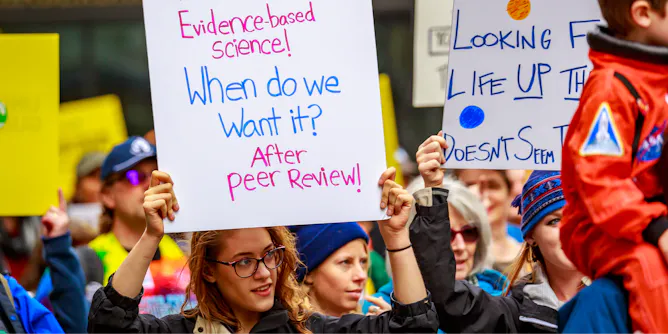
Trust in science seems compatible with believing almost anything, so long as it is expressed in plausibly scientific terms.
Articles on Bad science
Displaying all articles

It was the biases of its ‘first world’ which prevented South Africa from mobilising the energies and talents of most of its people against COVID-19.

Whenever you hear about a new bit of science news, these suggestions will help you assess whether it’s more fact or fiction.
The only place to find the Golden Age of Science is in the future, but we need some help in getting there.
We are observing two new phenomena. On one hand doubt is shed on the quality of entire scientific fields or sub-fields. On the other this doubt is played out in the open, in the media and blogosphere.

A leading website that monitored predatory open access journals has closed. This will make it harder to keep tabs on this corrosive force within science.
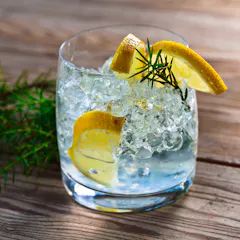
Claims that gin lovers are more likely to be psychopaths are just another case of science media misreporting - which should be a tonic to any tipplers who were worried by the news.

New studies on the quality of published research shows we could be wasting billions of dollars a year on bad science, to the neglect of good science projects.

Science can be fascinating and exciting. But much science writing is dull and obscure. Here are some of the tricks scientists often use to suck the joy out of science.

Reported “evidence” that the proposed fuel-free “EmDrive” works (and breaks the known laws of physics) is nothing of the sort.
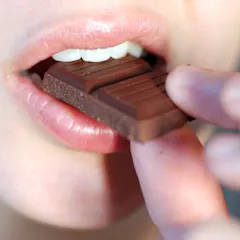
A recent hoax study suggesting chocolate helps people lose weight highlights many problems with the way science is conducted and reported by the media.
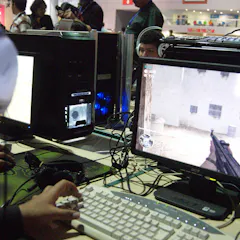
Imagine you’re a scientist. You’re interested in testing the hypothesis that playing violent video games makes people more likely to be violent in real life. This is a straightforward theory, but there…
Top contributors
-

Associate Professor in Astronomy, Monash University
-
Associate Professor, School of Behavioural and Health Sciences, Australian Catholic University
-
Senior Lecturer, Australian National Centre for the Public Awareness of Science, Australian National University
-
Deputy Director, Neuroscience Research Australia
-
Open Evidence Research, UOC - Universitat Oberta de Catalunya
-
Senior Lecturer in Quantitative Sociology in the School of Social Policy, Sociology, and Social Research, University of Kent
-
Chair of ARC Centre of Excellence for Quantum Biotechnology, The University of Queensland
-
Professor of Political Studies, University of Johannesburg
-
PhD Researcher, Department of Sociology, Trinity College Dublin
-
Professor of Chemistry, Connecticut College
-
Postdoctoral Reseacher, University of St Andrews
-
Workday Professor of Technology and Society, Trinity College Dublin