

Philadelphia has more fatal traffic accidents than other big US cities, and they’re concentrated in poor neighborhoods.
Articles on Bicycle safety
Displaying 1 - 20 of 68 articles
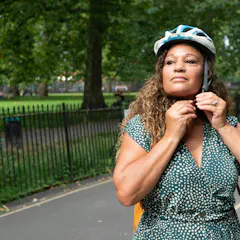
Plan your route, keep your bike by the door, and don’t worry about Lycra – small habits can get you back on the bike.

There is a lack of regulation across Australia when it comes to e-bike use, with young riders often paying the price.

A traffic engineer argues that, contrary to his profession’s view, ‘human error’ is not the main cause of deaths in car crashes in the US.
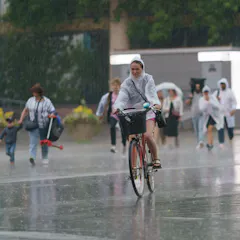
Male cyclists greatly outnumber female cyclists in Australia. New research points to ways to close the gap.
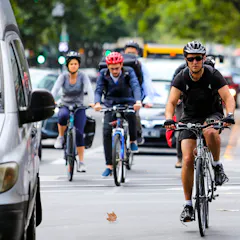
We want healthy, liveable cities and to cut emissions to net zero. Getting more people to use bicycles instead of cars will go a long way towards achieving these goals.
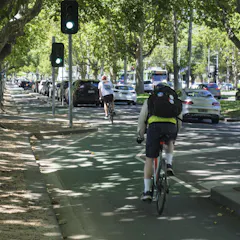
Early in the pandemic, when there was much less traffic on the roads, people took to their bikes. But since then, fewer people are cycling, with rates now lower than in 2011.
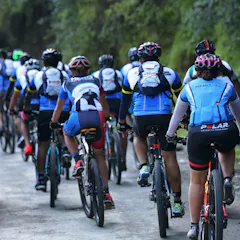
Ensure your helmet complies with the national or international bicycle helmet standards, which should be stated on the label inside the helmet.
Cars are getting bigger on US roads, and that’s increasing pedestrian and cyclist deaths. A transport scholar identifies community-level strategies for making streets safer.
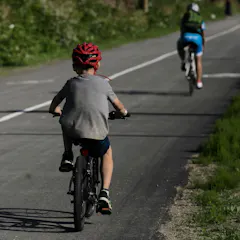
Cycling in Canada has been experiencing a great boom in recent years. Yet, there was no consistent and complete way to measure cycling infrastructure, until now.
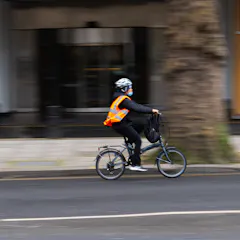
Bike riders wear helmets and high-vis vests to reduce their vulnerability on the road. Problem is a new study finds this dehumanises cyclists, putting them more at risk of aggression from drivers.
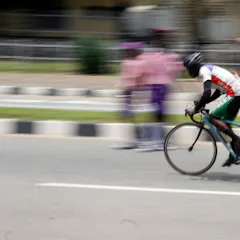
Lagos is famous for its congested traffic. Cycling could help change this image.

Men outnumber women by two-to-one on bikes in Australia. It’s time more women were involved in planning new bike paths and protected lanes to feel safer on the road.

Reliance on the support of others after an accident showed philosopher David Newheiser the power of solidarity. We need a similar sense of communal connection in our approach to COVID, he writes.
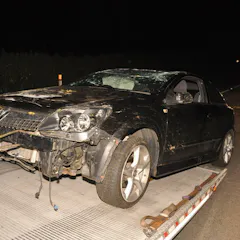
Fatal road injuries are among the top 10 causes of death in Ghana.
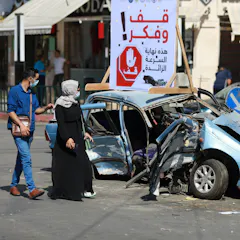
Traffic crashes kill and injure millions worldwide every year and are a major drain on economic development. Improving road safety would produce huge payoffs, especially in lower-income countries.
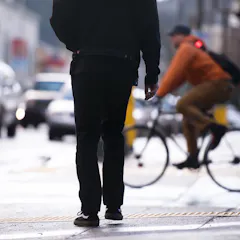
Changes to the Highway Code have created a hierarchy of road users, prioritising the most vulnerable.

For many years, concussion treatment followed a rest-is-best approach. But research now suggests that low-to-moderate intensity exercise is a safe and useful approach to managing concussion symptoms.

We surveyed over 4,000 Victorians and found more than three-quarters are interested in riding a bike, but only in infrastructure that separates people from cars – such as protected bike lanes.
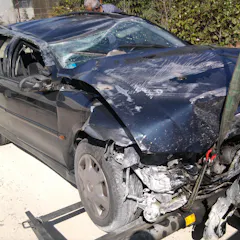
Current methods of road carnage prevention in Ghana have proved unsuccessful .
Top contributors
-
 Chris Rissel is a Friend of The Conversation.
Senior Research Fellow, College of Medicine and Public Health, Flinders University
-
Associate Professor and Head of Sustainable Mobility and Safety Research, Monash University
-
Postdoctoral Research Fellow, Monash University
-
Senior Research Fellow, Road Safety and Injury Prevention, UNSW
-
Senior Researcher, Institute of Transport Studies, Monash University
-
Professor, School of Mathematics and Statistics, UNSW
-
Professor of Transport, University of Westminster
-
Senior Research Associate, University of Oxford
-
Adjunct Associate Professor of Public Health, Victoria University
-
Lecturer in Law, The Open University
-
Associate Professor in Marketing, Keele University
-
Deputy vice-chancellor (Research), Edith Cowan University
-
Lecturer, La Trobe Law School, La Trobe University
-
Professor of Human Factors, University of the Sunshine Coast
-
Post Doctoral Fellow, Faculty of Engineering, McMaster University