

Even when courts are provided with race-informed clinical assessments designed to contextualize trauma and systemic vulnerability, Black youth are still seen as a risk.
Articles on Black youth
Displaying all articles

Given the large amount of taxpayer dollars invested to address youth violence by incarcerating young people — and its lack of success — another less punitive option could be beneficial for everyone.

Mentorship programs serving Black youth are an important part of addressing anti-Black racism in Canada.

Young Black men are being denied employment for multifaceted reasons, and when they do find work, are often trapped in low-paying jobs.

Asian martial arts and films functioned as mythic models which inspired Black and brown youth in the making of ‘urban warriors,’ and later the Wu-Tang Clan.
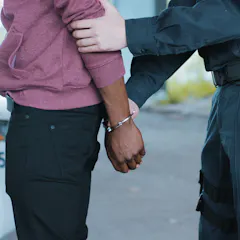
Black youth felt their age and inexperience were often disregarded by police officers who held them wholly responsible for knowing and abiding by the law.
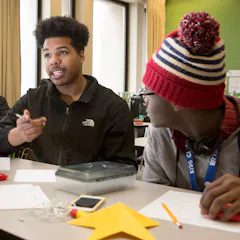
A leadership program for Black youth sees students participate in research related to their communities and education to propose solutions to issues that affect their lives.

New research points to feelings of failure, hopelessness, loneliness and sadness as some of the potential reasons Black young people are considering or carrying out suicide at unprecedented rates.

Self-blame was found to be associated with experiencing suicidal thoughts.

Ensuring that every Black youth sees Back teachers at school is one critical piece of addressing systemic racism in schools.

The evidence is growing that experiencing both systemic and everyday race-based discrimination may lead some Black Americans to become depressed and think about suicide.

Although school boards have yet to find a systemic way to combat anti-Black racism, educators are in a unique position to correct these injustices.

For Black youth, death by suicide has become a leading cause of death. And they face social problems that give rise to depression and isolation that their white counterparts do not.
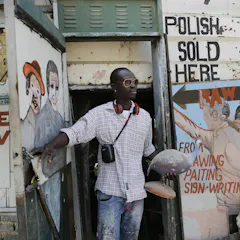
Young black men are often viewed through a criminal lens. A new book based on an 11-year-long study of adolescent men in a South African township upends the stereotypes.

Toronto Mayor John Tory’s use of race-coded words to describe gun violence in Toronto, including “thugs, sewer rats and gangsters,” stokes racism and serves to justify policing Black communities.

Black youth need programs that develop emotional intelligence – to combat institutional racism, social exclusion and white supremacy. The government’s promised $19 million is not enough.

Cyberbullying has become destructive and feels unstoppable. Here is a five-step technique for dealing with it.

A recent Pew survey reported that young African-Americans are more likely to be both victims and perpetrators of cyberbullying. Why?
Top contributors
-

Assistant Professor of Social Work, Policy, and Practice, University of Chicago
-
Researcher in Black education, policy, and community development, University of Toronto
-
Associate Professor, Sociology, Brock University
-
Assistant Professor of Sociology, Old Dominion University
-
Research Associate, School of Social Work, Toronto Metropolitan University
-
Assistant Professor, Department of Social Science, York University, Canada
-
Assistant Professor, Anthropology, University of Manitoba
-
Associate professor, Graduate Program Director, School of Social Work, Toronto Metropolitan University
-
PhD. Department of Religious Studies, McMaster University
-
Academic Teaching Staff Assistant Lecturer, Faculty of Education, University of Alberta
-
Professor, Department of Community Health Sciences, University of Calgary
-
Research Manager, Department of Community Health Sciences, University of Calgary
-
Assistant Professor, Department of Psychiatry and Behavioral Neurosciences, Wayne State University
-
Associate Professor of Psychology, University of the Witwatersrand
-
Associate Professor, Faculty of Education, Wilfrid Laurier University