
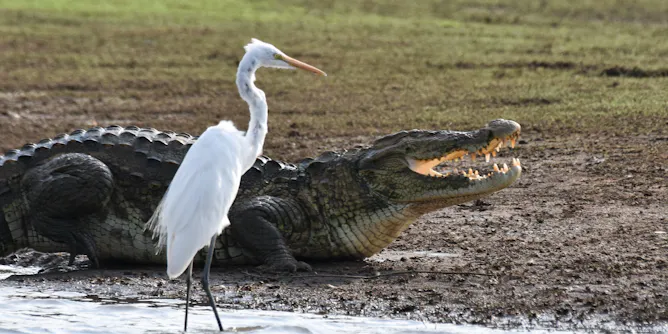
New research suggests crocodiles used to have hot blood and fast metabolisms, but gave it all up to lurk underwater waiting for prey.
Articles on Blood flow
Displaying all articles

Sometimes the body knows what’s best for us, even if we’re not aware of the science.

Big blow up boots that squeeze your legs really tightly might look silly but can be a useful addition to sports recovery.

For the majority of patients, blood collections are not a problem, just a minor inconvenience. Others may feel uneasy and anxious about the process.

Small holes in baby dinosaur bones add to the growing mass of evidence that the ancient creatures were warm-blooded and highly active.

Neuroscientists have typically thought of energy supply to the brain as demand-based. A supply-limited view offers another perspective toward aging and why multitasking can be difficult.
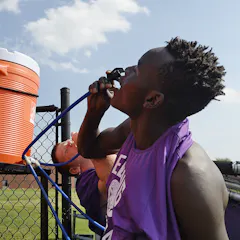
The first two weeks of preseason training are the toughest as players’ bodies acclimatize to running hard in the heat. An exercise scientist explains the risks.

Try to avoid eating an hour or two before a workout.

You’re working out, feeling great – until your stomach starts to churn and you’re sidelined with a bout of nausea. Here’s what’s happening in your body and how to avoid this common effect of exercise.

Leg pain while walking is a common symptom of peripheral artery disease.

Wearing a tie that causes slight discomfort can reduce blood flow to the brain by 7.5%, but the reduction is unlikely to cause any physical symptoms, which generally begin at a reduction of 10%.
Top contributors
-

Professor Emeritus of Physiology, Adelaide University
-
Laboratory Head of Translational Cardiovascular and Renal Research Group, Florey Institute of Neuroscience and Mental Health
-
Associate Professor of Athletic Training, University of South Carolina
-
Professor of Clinical Exercise Science, York St John University
-
Associate Professor of Health and Sport Science, University of Dayton
-
Research Fellow, Clinical and Exercise Sciences, Coventry University
-
Postdoctoral fellow, Neuroscience Research Australia
-
Associate Professor of Psychology, Vanderbilt University
-
Senior lecturer in Laboratory Medicine , RMIT University
-
Senior Lecturer in Physiotherapy, University of Stirling
-
Professor of Exercise Medicine, Edith Cowan University
-
Ken Nosaka is a Friend of The Conversation.
Professor of Exercise and Sports Science, Edith Cowan University
-
Professor of Anatomy, Lancaster University