
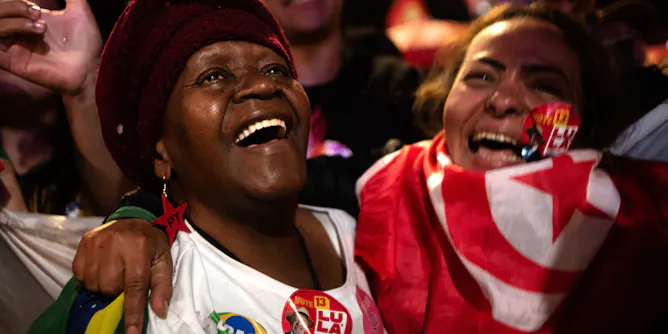
More Black women will be sworn in to Brazil’s Congress in February 2027 – a breakthrough for the traditionally underrepresented group.
Articles on Brazil election 2026
Displaying all articles
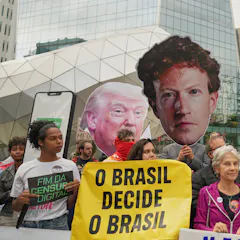
The company’s actions show that, above users’ rights, public interest, and democracy itself, prevails its economic interests and the maximization of their profits
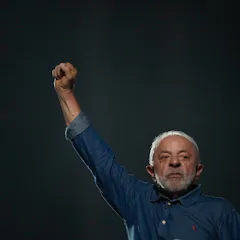
First round result was a warning against complacency, but the runoof comeback does not resolve the structural tensions facing a fourth Lula administration.

The shock and fear of the victory of far right candidate Flávio Bolsonaro in the first round brought about a change in attitudes and a spontaneous mobilization in the street and social media.
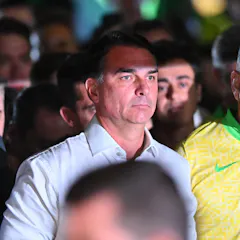
Despite losing the presidency, the right has made gains in Congress. And both sides face big decisions about which leaders should take their movements forward.
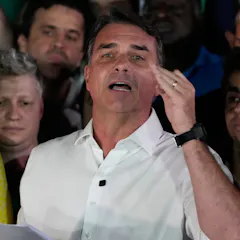
Flávio Bolsonaro is no mere conservative, but a representative of the radical right and a member of an international movement that critics say threatens democracies around the world.
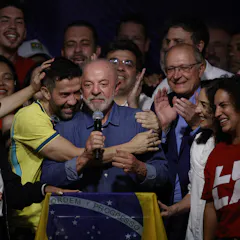
The real antidote to polarisation will not come from a single election or a single leader.

Iván Cepeda’s defeat in Colombia served as a wake-up call for the left in Brazil. The campaign shifted its focus from rhetoric about sovereignty to issues that directly affect people’s daily lives, pushing foreign policy into the background
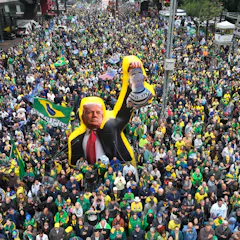
A victory for Flávio Bolsonaro could keep Brazil trapped in a model of extractivism that has been part of the country’s history since the arrival of the Portuguese settlers in the 16th century.
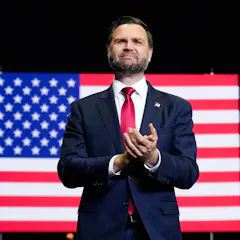
Co-founded by U.S. Vice President J.D. Vance, Rockbridge offers candidate Flávio Bolsonaro, son of former and now jailed President Jair Bolsonaro, strategic advantages in the tight race against incumbent President Lula
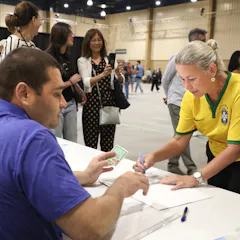
Brazilian voters abroad mirror the deep polarization shaping politics in their home country.
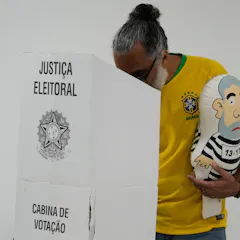
Far-right lead in the presdential race and landslide victories in legislative and local elections have affective, value-based, and political-ideological explanations.

Political project born in the mid-1980s from the debris of a 21-year military dictatorship in Brazil is over, and the question now is what will replace it.
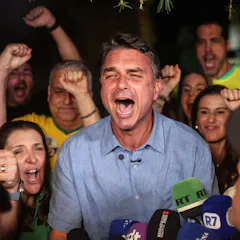
Once the 2026 election is over, Brazil must ensure the strength of its institutions far beyond simply guaranteeing fair elections.

With the upcoming Oct. 5 elections, the country has a new opportunity to strengthen scientific research as a foundation for addressing today’s challenges and bolstering its sovereignty.
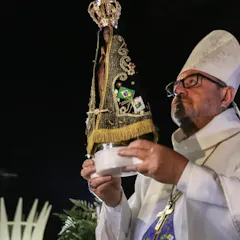
In Brazil, religion is the dominant cultural grammar. More than a simple expression of individual faith, religion functions in politics as a sociolinguistic marker of order and authority.
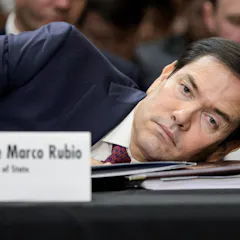
Research shows that electoral threats do not only affect the ballot box, but also hijack public debate, using polarization to erode trust in democratic institutions.
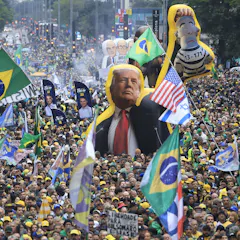
With the two presidential candidates running neck-and-neck, this election has stakes beyond Brazil. The growing power of US big tech is also in the spotlight.
Top contributors
-

Associate Professor of Brazilian Studies, Florida International University
-
Ex-professor titular do IUPERJ/Uerj e ex-professor visitante no Departamento de Economia e Administração (FEA), Universidade Federal do Rio de Janeiro (UFRJ)
-
Pesquisadora de Doutorado, Universidade Federal de São Paulo (UNIFESP)
-
Mestre em Comunicação Social, PUC-Rio
-
Presidente, Academia Brasileira de Ciências (ABC); Universidade Federal de São Paulo (UNIFESP)
-
Professor Associado de Comunicação Política, PUC-Rio; University of Arizona
-
Professora, Instituto Brasileiro de Ensino, Desenvolvimento e Pesquisa (IDP) ; Fundação Getulio Vargas (FGV); Associação Brasileira de Ciência Política (ABCP)
-
Professor of Modern Latin America History, University of Denver
-
Associate Professor of International Relations, Universidade Federal de Uberlândia (UFU)
-
Latin America and Caribbean Center, Florida International University
-
Professor de Política Internacional e Comparada, Universidade Federal de Minas Gerais (UFMG)
-
Jornalista, doutorando em Política Comparada, Universidade de Lisboa
-
Associate Professor in Politics and International Relations, UNSW
-
Professora Adjunta de Relações Internacionais, Universidade Federal Rural do Rio de Janeiro (UFRRJ); PUC-Rio
-
Coordenador de projetos do NetLab, Universidade Federal do Rio de Janeiro (UFRJ)