

The quality of educator-child interactions is among the strongest predictors of children’s developmental and learning outcomes.
Articles on Canada-wide early learning and care agreement
Displaying all articles

Vouchers shift responsibility from public systems to individual families, leaving access to child care in the hands of private companies.

As Canada’s current $10-a-day plan is being built, working toward its goals — affordability, accessibility, quality and inclusivity — is the best way to ensure child care now and in the future.

Ontario must seize the promise of Canada-wide early learning and child-care funding before it becomes another missed opportunity.

The Early Childhood Education Report offers detailed profiles capturing how each province and territory are doing with implementing Canada-wide early learning and child care.

It makes good economic sense to lean on the neighbourhood public school in the push to expand early learning.

Access to schooling for four-year-olds is inconsistent across Canada. Families need to know children are immersed in high-quality early learning, and they shouldn’t be exhausted searching for it.
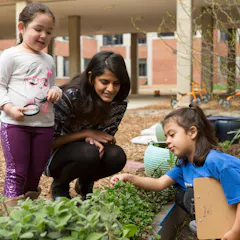
Early childhood education isn’t about warehousing children so adults can go to work. There is an ethical imperative to support a paradigm shift in how our society values educating young children.

Canada has much to learn from other countries about better ways of providing learning and care for children.

Where new early learning and child-care programs are located, how they are designed, built and resourced, and what they teach can either add to the problem of climate change or help mitigate it.

Ontario’s flat fee for child care should be replaced by an income-tested fee reflecting family incomes.
Top contributors
-

Fellow in Early Childhood Policy, Atkinson Centre, Ontario Institute for Studies in Education, University of Toronto
-
Adjunct Professor, Department of Applied Psychology and Human Development at Ontario Institute for the Study of Education (OISE) and Executive Director at the Atkinson Centre, University of Toronto
-
Professor of Applied Psychology and Human Development, University of Toronto
-
Professor, Special Education, Memorial University of Newfoundland
-
Assistant Professor of Early Childhood Studies, Toronto Metropolitan University
-
Associate Professor Emeritus, Economics, University of Toronto
-
Policy Researcher, Atkinson Centre for Society and Child Development, University of Toronto
-
Professor, Department of Political Science, University of Toronto, University of Toronto
-
Assistant Researcher, Perlman Lab, Ontario Institute for the Studies of Education, University of Toronto
-
Chair, Education and Childhood Studies, Capilano University
-
Lecturer, Early Childhood Development, Université du Québec à Montréal (UQAM)