
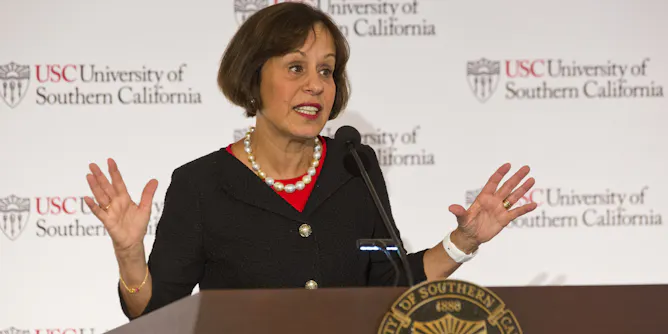
New systems with stricter rules would make it easier to hold colleges and universities accountable on behalf of the taxpayers who support them.
Articles on College admissions
Displaying 41 - 60 of 79 articles
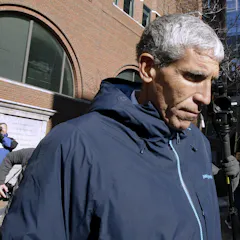
An expert explains the many reasons why people behave in an unethical manner and what research shows on why the wealthy have a need to maintain their higher status.
There is no system in place to detect charitable fraud on the scale allegedly committed by a counseling company and its sham nonprofit.
Even if wealthy parents don’t resort to the kind of illegal tactics in the recent college cheating scandal revealed by the FBI, the college admission process still favors the rich, scholars argue.

The college admission cheating scandal recently announced by the Department of Justice shows why colleges should admit students via lottery, argues an expert on college admissions.

The college admission scandal that involved big bribes, coaches and Hollywood actors grew out of a system that favors rich parents and gives coaches too much leeway in admissions, a scholar argues.

Colleges and universities are often criticized for how they admit students from diverse groups. A college admissions scholar suggests an admissions lottery could help make the process more fair.

Test prep is a prominent feature in Asian-American communities, which helps explain recent gains that Asian-Americans made in the SAT and ACT college entrance exams, a higher education scholar argues.

College rankings are set up to make you believe one college is better than another. But a closer look reveals college rankings may be measuring something entirely different.

New research by sociologist Ted Thornhill shows that black students who indicate they plan to fight for racial justice are more likely to be ignored by white admissions counselors.
In tandem with affirmative action, policies that guarantee college admission to students in the top 10 percent of their class could be a viable way to achieve diversity, a law professor argues.

The Trump administration recently announced it will reverse several policy memos outlining how colleges and universities can use race as a factor in admissions. Will diversity on campus take a hit?

When students attend a college where the student body is academically weaker than the one where they went to high school, they are more likely to show symptoms of depression, new research finds.

Although proponents of making the SAT optional hoped it would expand college access for low-income and minority students, research shows that hasn’t happened.
The number of colleges that have test-optional admissions policies has now surpassed 1,000. An admissions specialist explains why that milestone is a welcome one.
Students and government officials alike hope Harvard’s admission files will yield clues about who gets in and why, but a Harvard researcher says their efforts will be in vain.

Race-conscious admissions policies are still the best way to achieve diversity on campus. Yet, some race-neutral methods could help colleges improve diversity – and stand up to legal scrutiny.
For colleges and universities that lack the multi-billion-dollar endowments of schools like Harvard, the mere threat of legal action may be enough to put an end to race-conscious admissions policies.
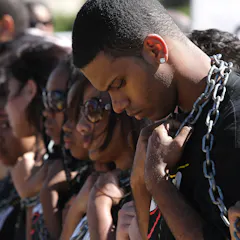
‘Positive discrimination’ policies around the world are on the rise. What might other countries teach the U.S. about attaining racial, economic and gender equality in higher education?
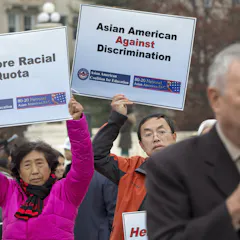
Scholars argue that the complaint of bias against Harvard reflects a flawed understanding of affirmative action policies.
Top contributors
-

Lenore Stern Professor in the Humanities and Social Sciences, Tufts University
-
Professor of Education, The University of Texas at Austin
-
Professor of Educational Foundations, Policy and Practice, University of Colorado Boulder
-
Adjunct Professor of History, University of North Carolina – Charlotte
-
Professor of Law and Don L. & Mabel F. Endowed Chair in Law, University of New Mexico
-
Associate Professor of Education Policy and Psychology and 21st Century Chair, University of Arkansas
-
Professor of Political Science, University of Cincinnati
-
Professor of Higher Education; Executive Director, Center for Enrollment Research, Policy, and Practice, University of Southern California
-
Professor of Sociology, Villanova University
-
Associate Professor of Ethnic Studies, University of Colorado Boulder
-
Associate Professor of Higher Education; Associate Dean for Faculty Development and Diversity; Director of Access and Equity, Steinhardt Institute for Higher Education Policy, New York University
-
Assistant Professor, Florida Gulf Coast University
-
Professor of Sociology, Wake Forest University
-
Post Doctoral Fellow, Colorado State University
-
Professor Emeritus of Legal Studies and Business Ethics; Faculty Director, Wharton Coalition for Equity & Opportunity, University of Pennsylvania