
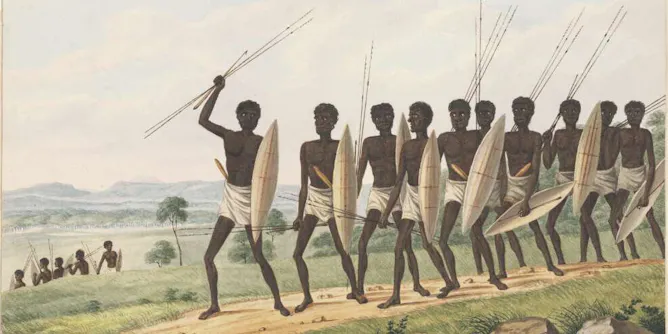
The widespread conflict that accompanied Australian life for 140 years was arguably our most important war. We need a museum telling this story, funded on a par with The Australian War Memorial.
Articles on Colonisation
Displaying 61 - 80 of 97 articles
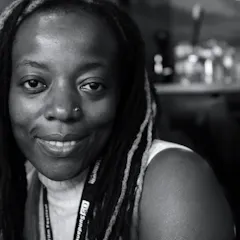
Her new book “This Mournable Body” was announced as a Booker Prize contender just days before her arrest for protesting against a government clampdown.

A new film canvasses Indigenous Australian accounts of, and responses to, Captain Cook’s arrival.
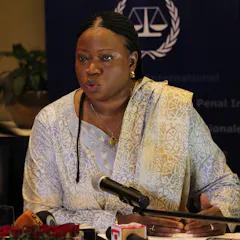
The court has focused on African cases to the exclusion of developed countries, as well as developing regions such as Latin America.
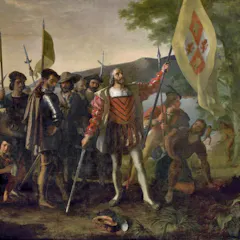
It marked the point when humans began to exert a geologically-huge influence on the environment.

Many teachers want to teach Indigenous perspectives but often lack confidence or know-how. Teachers must be willing to confront the ongoing effects of colonialism in and outside the classroom.
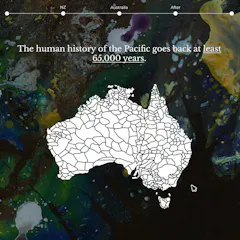
Explore Cook’s journey through the Pacific, the orders that brought him in search of the ‘Great Southern Land’ and the impact of his arrival in our new interactive.
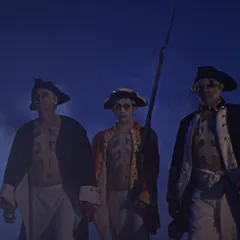
Incidents from Cook’s first voyage highlight themes relevant in Indigenous-settler relations today: environmental care, reconciliation and governance. This collision of beliefs, it seems, wasn’t lost on Cook.

Unpicking the threads of the stories told about Captain Cook’s arrival is vital to find agreement on the provenance of materials that changed hands during colonisation.

This year’s twin crises have left Australians reeling. The concept of ‘rupture’ can help us understand what’s happening.

A new book gives a full account of Tasmanian Indigenous woman Truganini’s life. In this extract, she is taken to Melbourne and caught up in the murders behind Victoria’s first public execution.

Thanks to one historic victory, Ethiopia became the only African country never to be colonised.
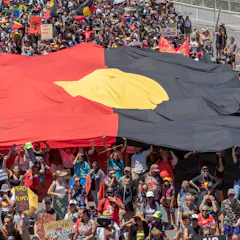
Even by the European-centric standards of 18th and 19th century international law, Indigenous people here passed the test for having sovereignty.
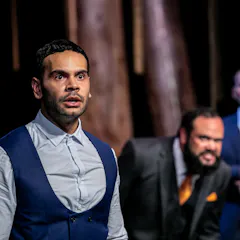
Playwright Jane Harrison’s The Visitors shows audiences how a group of Indigenous leaders might have debated what to do when the First Fleet landed in 1788 - but where are the women?

The world premiere of Nardi Simpson’s Black Drop Effect takes in the complex histories of Aboriginal responses to commemoration, and makes space for protest, cultural reclamation and negotiation.

A grave stands in Bicheno, paid for by locals in the 1800s. It stands as a testament to the lifesaving ocean feats and tragic life of Indigenous woman Wauba Debar.
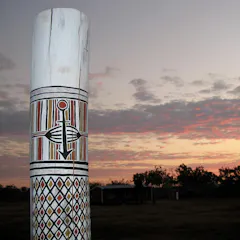
Yothu Yindi’s music introduced the world to the Yolŋu clan traditions of northeast Arnhem Land. But few listeners know these songs echo long histories of engagement with Southeast Asian visitors.

If the representations we see of black women in Australia only focus on disadvantage and deficit – not success and excellence – how do we expect power imbalances and stereotypes to change?
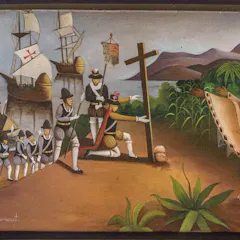
No records of the size of Native American populations before 1492 and the arrival of Europeans survive. A new study has found answers.

When the remains of Aboriginal people who died more than a century ago were found, the local Aboriginal community wanted to know more about these past lives.
Top contributors
-

Professor of Global Change Science at University of Leeds, UCL
-
Professor, Australian and Aboriginal History, Faculty of Arts, Design and Architecture, Convenor: Indigenous Land & Justice Research Group, UNSW
-
Professor in Public History, University of Technology Sydney
-
Co-Director, Australian Centre for Indigenous History, Australian National University
-
DeWitt Wallace Professor of Geography, Director of Food, Agriculture & Society Program, Macalester College
-
Associate Professor in Archaeology and Space Studies, Flinders University
-
Associate Professor of Political Science, Colorado State University
-
Senior Lecturer, Anthropology, Goldsmiths, University of London
-
Professor of Earth System Science, UCL
-
Adjunct Associate Professor, University of Technology Sydney
-
Professor, Critical Indigenous Studies and Director of The Centre for Global Indigenous Futures, Macquarie University
-
Professor of Archaeology and Biological Anthropology, School of Social Science, The University of Queensland
-
Professor of African Literature, University of the Witwatersrand
-
Senior Lecturer in French and Francophone Studies, University of the Witwatersrand
-