
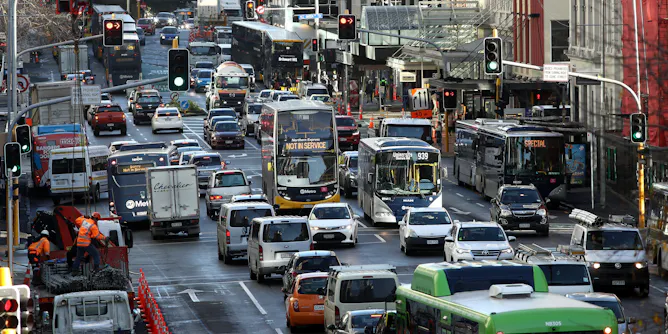
Auckland has settled on how congestion charging could work. But overseas experience shows the alternatives to driving are just as important.
Articles on Congestion charges
Displaying 1 - 20 of 28 articles
Gov. Kathy Hochul hit the brakes on congestion pricing in June but now is ready to roll, with a lower fee. Critics, including New Jersey officials and President-elect Donald Trump, remain opposed.
The audio version of an in-depth article on the 12 best ways to get cars out of cities.
Studies show that when people can ride in a car without having to operate it, they increase their car use. That could increase traffic and pollution, unless government puts a price on car travel.
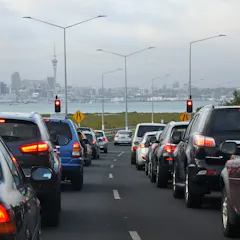
To reduce pressure on cities and the environment, drivers should face a charge that reflects the actual costs of clogged roads, air pollution, climate change, injury and death.
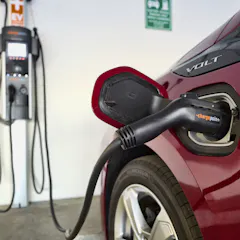
The benefits of road-user charging are now well established. And including electric vehicles doesn’t have to be a deterrent to their uptake, as New Zealand and other nations have shown.
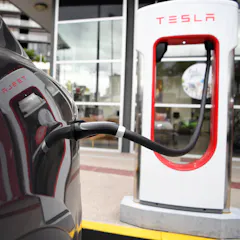
Electric vehicles would lower emissions, but if their lower running costs lead to increased car use that creates a whole lot of other costs for our cities.

COVID led to commuting time savings worth over $2,000 a year for each driver and $5,000 per public transport user. But as workplaces reopen, we may need road user charges to keep traffic flowing.
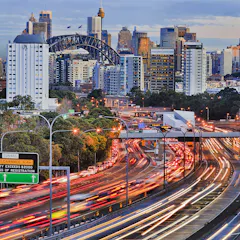
Commuters who drive to and from the CBD typically earn much more than most. Concerns about the fairness of charging drivers who use these busy roads at peak times are overblown.
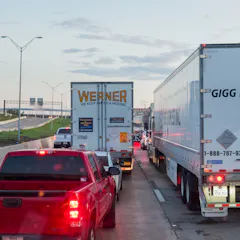
Despite efforts to encourage a shift to sustainable transportation, traffic congestion is often the focus of debates over mobility. Motorists endlessly demand more roads, but is this really a solution?
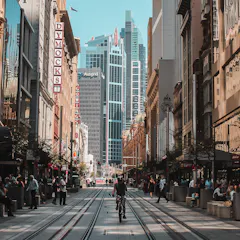
The car revolutionised the way people travel – but at a heavy cost. Now, car-free cities will only work when there’s reliable public transit and access for all.
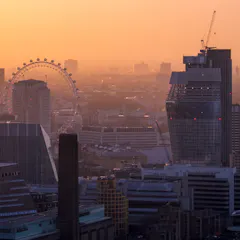
Drivers of polluting vehicles will face a daily charge, but evidence suggests it’s a price worth paying.
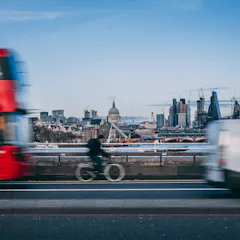
Find out what the Ultra Low Emission Zone is, how it works and what Londoners make of the new measures.
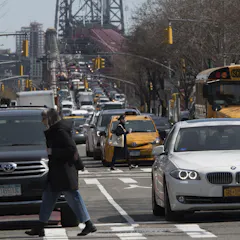
Starting in 2021, drivers will pay a fee to enter midtown and lower Manhattan during busy times of day. Will this clear New York’s air and streets?
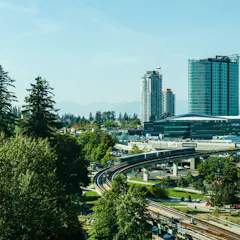
Instead of spending ever more on roads, we can learn from Vancouver’s use of congestion as a ‘friend’ in managing the development of transport networks and of the city itself.
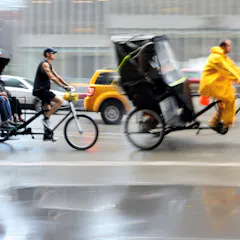
To cut emissions within the 12 years or so we have left to avoid disastrous global warming, we will need to change our old transport habits, using a combination of strategies to achieve this.
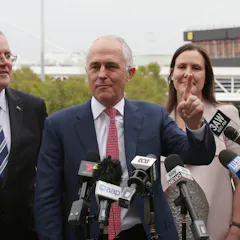
Billions of taxpayer dollars are committed before all the evidence for, and against, infrastructure projects is in. As well as missing business cases, basic rules of economic modelling are broken.
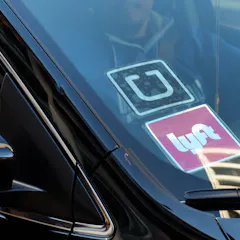
In many US cities, ride-hailing apps are luring riders away from public transit and increasing traffic congestion. But with the right rules, they could enhance public transit instead.
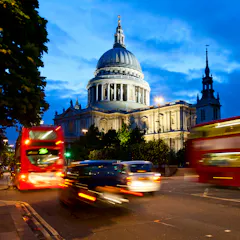
The congestion charge has helped to ease traffic and raise funds. But the rise of Uber and other private hire vehicles have raised unforeseen challenges.
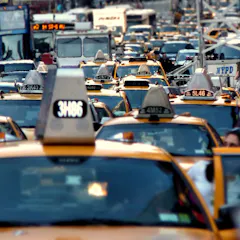
New York soon may charge a fee to drive into central Manhattan as a way of reducing traffic and raising funds for public transit. An urban scholar says this step is overdue in the United States.
Top contributors
-

Transport and Cities Program Director, Grattan Institute
-
John Rennie Short is a Friend of The Conversation.
Professor Emeritus of Public Policy, University of Maryland, Baltimore County
-
Professor and Director, Institute of Transport and Logistics Studies, University of Sydney
-
Transport Fellow, Grattan Institute
-
Researcher in Transport Policy and Governance, UCL
-
Senior Lecturer in Urban Planning, University of Auckland, Waipapa Taumata Rau
-
Policy Director, 3 Revolutions Future Mobility Program, Institute of Transportation Studies, University of California, Davis
-
Distinguished Blue Planet Prize Professor of Civil and Environmental Engineering and Founding Director, Institute of Transportation Studies, University of California, Davis
-
Associate professor, GEM
-
Professional Researcher, Electric Vehicle Research Center, University of California, Davis
-
Honorary Principal Fellow, University of Wollongong
-
Senior Associate, Disability Program, Grattan Institute
-
Professor of Sustainability Science, Lund University
-
Adjunct Fellow, School of Earth and Environmental Sciences, The University of Queensland
-
Associate Professor in Infrastructure Management, University of Sydney