
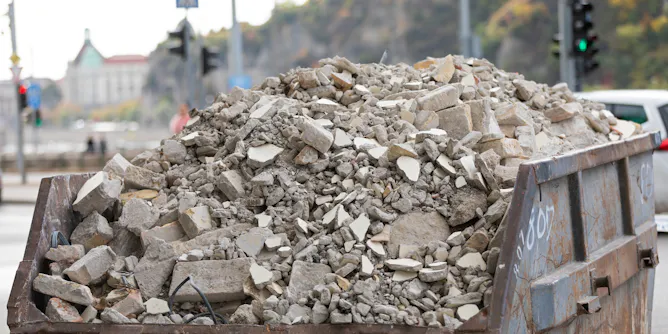
Construction waste can be turned into valuable new materials.
Articles on Construction waste
Displaying all articles
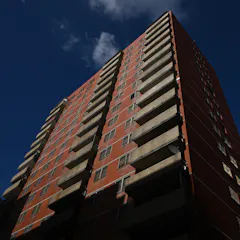
Plans to knock down and rebuild 44 public housing towers are flawed. Retrofitting and upgrading is feasible, cheaper and better for people and the planet.

Urban mining recovers valuable resources from the vast amounts of waste cities produce.

Current construction approaches are too slow to achieve the ambitious national housing target. But there’s a proven alternative building technology that’s more efficient, faster and greener.
Our research shows decisions on the fate of public housing towers that are based on a proper process of considering all the evidence could go either way: demolish and rebuild, or retrofit.

Existing laws and regulations failed to prevent asbestos contamination of mulch. What’s missing is mandatory certification of recycled products so users can be sure they’ve been tested and are safe.

Modular building techniques offer sustainable, affordable and adaptable solutions for a rapidly changing world.
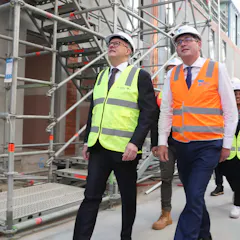
We can construct buildings that reduce atmospheric CO₂ by more than their lifetime emissions. They now don’t cost much more – and a project involving 1.2 million homes would drive costs down further.

A new report outlines a comprehensive strategy for Australia to reduce the carbon footprint of our homes while making them more comfortable and affordable.
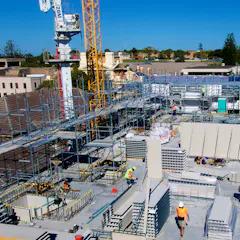
Our buildings and infrastructure can only become sustainable if the sector shares, leases, reuses, repairs, refurbishes and recycles materials and products. A new report maps out out how to get there.

The recovery rate from construction and demolition waste has been rising steadily in Australia. However, the use of recycled materials is still not the norm across the construction industry.

The energy-intensive process of producing cement and concrete contributes significantly to global warming while depleting resources. Much more sustainable alternatives are being developed.
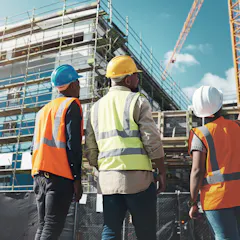
The complexity of construction projects has driven an increase in building waste, which is difficult to recycle and reuse. But there are ways to minimise the problem.
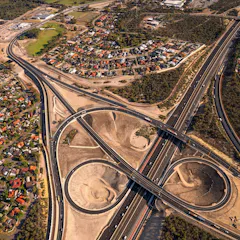
Government procurement policies are the key to reducing Australia’s mountain of construction waste.
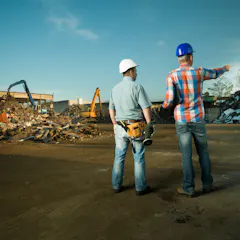
Construction and demolition creates more waste than any other sector, but much of it can be recycled. However, public resistance to setting up new plants stands in the way of a sustainable market.

A building designed to be easily taken apart so the components can be reused is a model for much less wasteful construction. It reduces resource use and environmental impacts, and can be cheaper too.
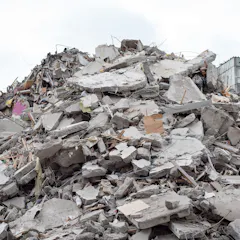
China has put the onus back on Australia to take responsibility for our waste, and Germany has shown us the way with extended producer responsibility for construction and demolition waste.
Top contributors
-

Senior Lecturer, School of Property, Construction and Project Management, RMIT University
-
Associate Dean and Head of Project Management, RMIT University
-
Professor and Associate Dean, School of Property, Construction and Project Management, RMIT University
-
Associate Professor in Property, Construction and Project Management, RMIT University
-
Lecturer in Architecture, Western Sydney University
-
Associate Deputy Vice Chancellor in Research & Innovation, RMIT University
-
Senior Lecturer in Sustainability and Circular Economy of Buildings, Curtin University
-
Retired Honorary Associate Professor in the School of Civil and Environmental Engineering, University of the Witwatersrand
-
Senior Lecturer in Civil and Structural Engineering, Flinders University
-
Associate Professor, Property, Construction and Project Management, RMIT University
-
Associate Professor & Global Challenge Lead, Urban Transformations Research Centre, Western Sydney University; University of British Columbia
-
PhD researcher, Curtin University
-
Adjunct Professor, Centre for Urban Research, RMIT University
-
Senior Lecturer, Property, Construction and Project Management, RMIT University
-
Professor of Construction and Environmental Assessment, The University of Melbourne