

Using robots to simulate stabbings can enhance forensic accuracy – and the pursuit of justice.
Articles on Crime Scene Investigation
Displaying all articles
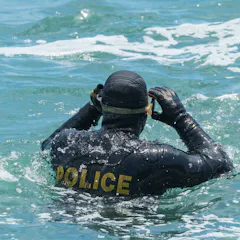
You can’t tape off an entire ocean. But ‘aquatic forensics’ is an emerging field, with techniques borrowed from archaeology, marine biology and more.
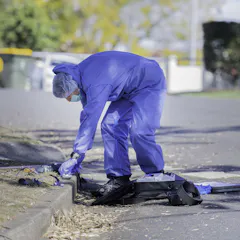
There are no COVID-specific protocols for forensic officers collecting evidence from crime scenes. New recommendations suggest how teams and their equipment can be reorganised to minimise the risk.
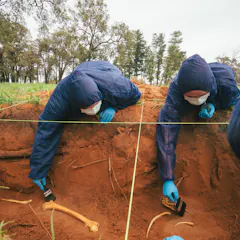
As a forensic scientist who has worked at thousands of homicide, sexual assault and serious crime scenes, I can tell you the process is not as straightforward as depicted on popular true crime shows.
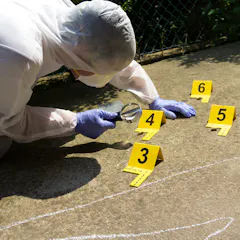
New research shows fibres can transfer between people without any contact.
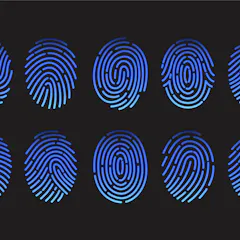
Research into contextual bias needs to be more rigorous so recommendations can be made about its effect on forensic analysis.

Bereaved families strive to comprehend that there is nothing they could have done to prevent the death of their loved one. Viewing the crime-and-accident scene images can offer a path to healing.
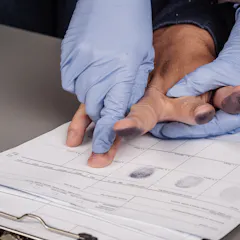
Fingerprinting is a valuable police tool for tracking down suspects, but it’s not perfect. However, we can reduce the risk of any mistaken identity if we work within the limits of fingerprinting.
Blood-detection dogs work paw in hand with scientists and Australia’s police to solve crimes and missing persons cases.
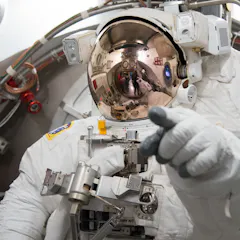
Using terrestrial forensic science to point the finger of blame to criminals in space will be much harder than it looks.
It could even help crack long-forgotten cold cases.
Top contributors
-

Associate Professor of Forensic Science, Murdoch University
-
Senior Lecturer, The University of Western Australia
-
Assistant Professor, Northumbria University, Newcastle
-
Lecturer in Social Work, UNSW
-
Associate Professor in Media and Cultural Studies, Macquarie University
-
Professor, Centre for Forensic Science, University of Technology Sydney
-
Adjunct Professor of Law, UNSW
-
PhD candidate, University of Technology Sydney
-
Senior Lecturer in Forensic Science, Murdoch University
-
Assistant Professor in Forensic Chemistry, King's College London
-
Lecturer in Psychology, Glasgow Caledonian University
-
Adjunct Lecturer in Forensic Sciences, Murdoch University
-
Associate Professor in Forensic Science, Northumbria University, Newcastle
-
Psychology Researcher, Edinburgh Napier University
-
PhD candidate, University of Cagliari, James Cook University