

‘Pics or it didn’t happen’ is no longer a reliable test for what’s real.
Articles on Deepfakes
Displaying 1 - 20 of 121 articles

AI’s risks and harms are already affecting Australians. There are new ones coming.
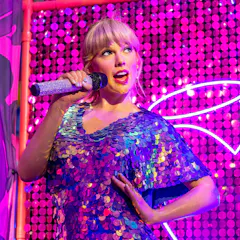
Listen to intellectual property expert Graeme Austin talk about the legal routes celebrites are using to fight back against AI deepfakes.
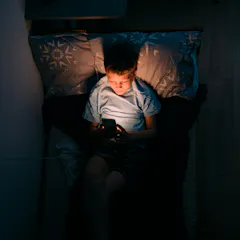
The language used in response to gender-based violence erases who’s doing the harm and who’s experiencing it, making it harder to report on and easier to excuse.
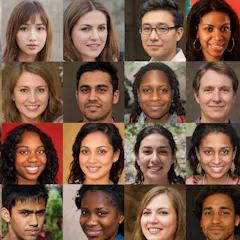
AI-generated faces don’t look weird anymore – they’re ‘hyperaverage’, which is a giveaway to the trained eye.

Sextortion is a form of online blackmail where a perpetrator coerces or tricks a victim into sending intimate images. New research shows it’s on the rise.

AI poses serious risks to Holocaust memory through denial, distortion and clickbait. AI-literate younger generations may be our best tool for combating the misinformation it enables.

Anthems generate emotional responses, tying communities together, and deepfake, inauthentic and foreign-generated videos are part of what’s circulating.
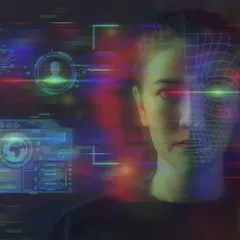
The rapid development of new technologies means criminalisation alone is unlikely to stop the spread of sexualised deepfakes.

Government and tech firms need to step up.

Indian courts are leading the way in extending the law of torts to include harms caused by deepfakes – if you can afford it.

Information has always been a weapon of war, and misinformation evolves alongside technology.

The Pacific has some of the highest rates of gender-based violence in the world. Smartphones, social media and AI deepfakes are where much of the abuse plays out.

Private use of AI porn may not be illegal, but it doesn’t make it morally right. Here’s why.
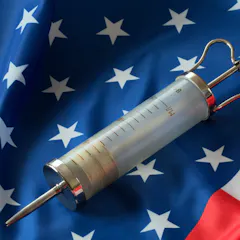
Priming people to watch out for political deepfakes helps them question the AI-generated videos.
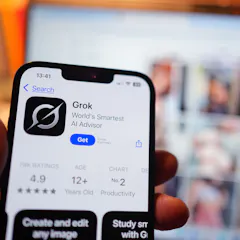
While the UK reins in deepfakes on Elon Musk’s X, NZ’s outdated laws leave women exposed and platforms unaccountable.

From Bondi to Venezuela, Gaza to Ukraine, AI supercharges online misinformation. But understanding exactly how it impacts voters is a challenge.

Publicly bombarding women with these images exerts control over how they present themselves online.

These images are being shared in an attempt to harass, demean or silence individuals.

After a year of fast advances, deepfakes are entering a new era defined by real-time interaction with people.
Top contributors
-

Professor of Global & Language Studies, RMIT University
-
Director, Institute for AI and Data Science, Distinguished Professor, Computer Science and Engineering, University at Buffalo
-
Professor of Law, Durham University
-
Professor of Criminology, Monash University
-
Professor of Computer Science, University of California, Berkeley
-
Professor of Law, University of Melbourne; Chair of Private Law, Te Herenga Waka — Victoria University of Wellington
-
Professor of Family and Sexual Violence, RMIT University
-
Professor of Philosophy and Director of Applied Ethics Center, UMass Boston
-
Assistant Professor of Journalism and Emerging Media Studies, Boston University
-
Research Scientist in Cybersecurity, Rochester Institute of Technology
-
Professor and Chair of Cybersecurity, Rochester Institute of Technology
-
Associate Professor, Educational Technology, Université Laval
-
Adjunct Lecturer in Public Policy, Harvard Kennedy School; University of Toronto
-
Senior Lecturer in Artificial Intelligence, Te Herenga Waka — Victoria University of Wellington
-
Professor of Community Information, University of Michigan