
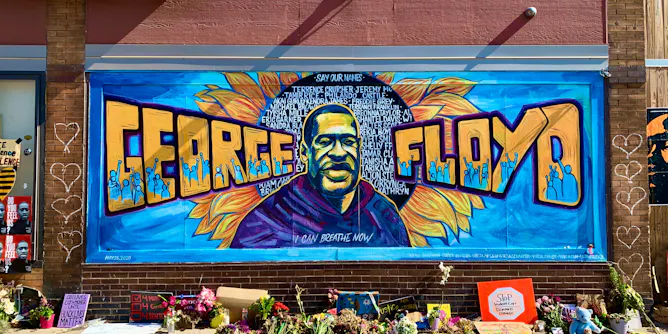
Digital artwork has helped campaigns such as the #ClimateStrikeOnline thrive on social media. Through three examples, I explore why digital arts can sustain political engagement amid the pandemic.
Articles on Demonstrations
Displaying 21 - 34 of 34 articles

Avoiding drones’ prying eyes can be as complicated as donning a high-tech hoodie and as simple as ducking under a tree.
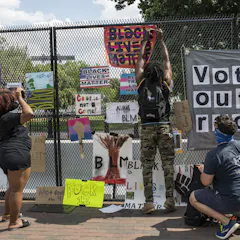
A political scientist says the protests against police violence that have swept the US signal welcome social change – and could dramatically alter the work she’s done for five years.

Scholars who study policing explain what they have found that could help reduce police prejudice and violence.
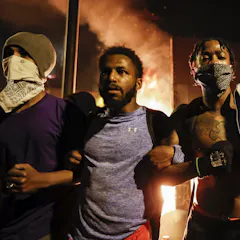
Opinions about demonstrations are formed in large part by what people read or see in the media. This gives journalists a lot of power when it comes to driving the narrative.
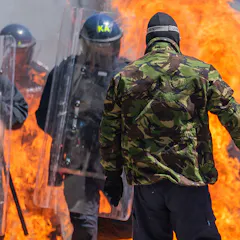
Politicians who refuse to listen to popular demands have a reason to be concerned.
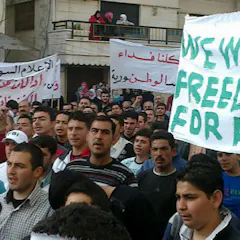
On the eighth anniversary of the Syrian uprising, scholar Wendy Pearlman writes about the people who risked their lives and raised their voices to fight the oppressive rule of Bashar al-Assad.
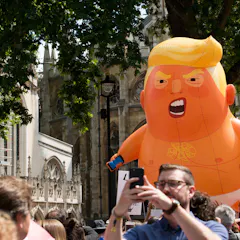
Comrade Cheetolino, Mango Mussolini, Agent Orange … just a few of Trump’s fake tan induced nicknames.
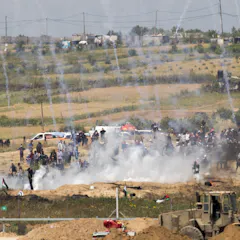
Thanks to a violent fringe of protesters backed by Hamas, a far larger non-violent movement is struggling to control the narrative of what’s happening in Gaza.
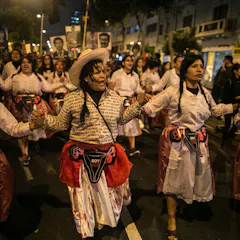
In order to tackle inequality, we need to understand what drives resistance to it and government responsiveness.
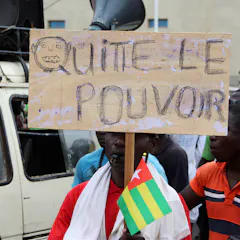
The seeds of discord that were planted in independent Togo have resulted in ethnic divisions, and a state that has long been ruled by family. But recent protests could mean things are about to change.
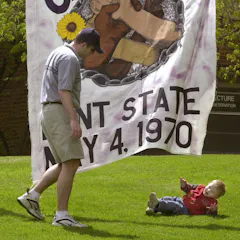
The May 4, 1970 shootings at Kent State still loom large in our national conscience. What do these events tell us about the role of the university in today’s climate of student protest?
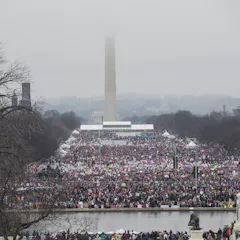
As a privileged mainstream protest movement rises, it should heed the experiences and triumphs of its more radical counterparts

People risk being physically harmed during violent protests. But there is also an emotional element at play.
Top contributors
-

Professor of Journalism, Michigan State University
-
Presidential Chair in Modern Jewish Studies, University of California, Los Angeles
-
Krieger-Mueller Joint Professor in History, Case Western Reserve University
-
Professor and Head, Department of Psychiatry, University of the Witwatersrand
-
Senior Lecturer in International Politics, City St George's, University of London
-
Associate Fellow in History, University of Warwick
-
Professor Emeritus of Criminal Justice, University of Alabama at Birmingham
-
Assistant Professor of Sociology, Trinity College Dublin
-
Lecturer in International Development, King's College London
-
Assistant Professor of Political Science, University of Arizona
-
Professor of Political Science, California State University, Long Beach
-
Professeur des Universités, Université de Versailles Saint-Quentin-en-Yvelines (UVSQ) – Université Paris-Saclay
-
Associate Researcher, Arnold Bergstraesser Institute
-
Professor of Sociology, University of Arizona
-
Research Associate Centre for African Studies, University of Mumbai