

The boom in women’s strength training has also led to an increase in steroid use. There are ways to turn this trend around, though.
Articles on Drugs in sport
Displaying 1 - 20 of 86 articles

WADA’s fight against doping in sport is under threat due to its funding model and challenges maintaining its independence and impartiality.
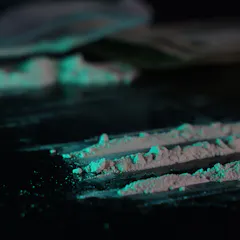
The attributes that make many athletes great, like risk-taking and aggression, are a reason why some turn to illegal drugs.

The AFL’s illicit drugs policy has been criticised after Sport Integrity Australia’s recent investigation. However, critics should cast a broader eye when it comes to drugs in Australian sports.

The World Anti-Doping Agency stands by its handling of the allegations. So, why have some in the media and in the US been so quick to point the finger at China?

The AFL has had several cocaine-centred controversies recently, but why is the drug considered performance enhancing?
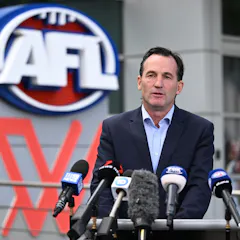
The confidential, medical nature of the AFL’s illicit drug policy has triggered critics – is the policy working, and how can it be improved?

If the Australian cricketers involved in a ball-tampering scandal manage to return to the game, and do so triumphantly, it is likely they will be forgiven – and some may even forget their role in it.

Athletes have, on occasion, mounted successful defences of sabotage in doping cases.

Doping scandals have dominated the build-up to the 2018 Pyeongchang Olympics.

The ban on Russia competing in the 2018 Winter Olympics is unique: it is directly linked to the country’s lack of sporting integrity.

There are concerns that performance-enhancing drug use is quickly becoming a public health crisis.

From a social media post that cracked open a decades-old abuse scandal in the UK and Australia, through to tracking asylum seekers, social media can be vital in breaking investigative news stories.

The AFL season opened this week. But on the day that Collingwood was slated to play Sydney, the media was focusing on much more than the footy. The Herald Sun alleged that 11 Collingwood players had positive…

After a routine drug test at the Australian Open tennis tournament, Maria Sharapova tested positive to a banned substance, meldonium. Upon being notified of the result she called a press conference, accepting…

Maria Sharapova faces a ban from tennis after testing positive for a banned substance. But there is reason to believe that both she and her sponsors will make a comeback.

We have an intuitive bias against “artificial” drugs in favour of “natural” drugs, but that distinction is not only false, it is dangerous.
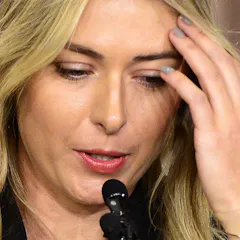
Overnight, Maria Sharapova called a press conference to announce she had tested positive for a banned substance (mildronate) during this year’s Australian Open.
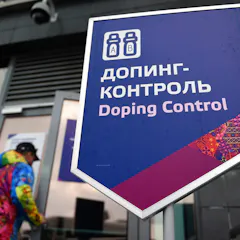
Having learned some hard lessons with the Essendon case, Australia should lead the way in developing a better approach to drug control and anti-doping in sport.
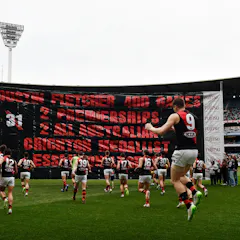
Some might think the anti-doping principle of strict liability is too harsh. But the banned Essendon players unfortunately may be barking up the wrong tree if they think they are innocent victims.
Top contributors
-

Associate Professor of Sport Management, University of Technology Sydney
-
Honorary Associate, Faculty of Business, School of Management, University of Technology Sydney
-
Adjunct Senior Lecturer, School of Business, UNSW-Canberra, UNSW
-
Honorary Professor and Research Fellow, Victoria University
-
Senior Lecturer in Pharmacology, Adelaide University
-
Professor of Sports Law, Melbourne Law School, The University of Melbourne
-
Postdoctoral research fellow, University of Sydney
-
Chen Su Lan Centennial Professor in Medical Ethics, National University of Singapore; Distinguished Visiting Professor in Law, University of Melbourne; Uehiro Chair in Practical Ethics, The University of Melbourne
-
Visiting Fellow, La Trobe University
-
Emeritus Professor of Sociology, Murdoch University
-
Lecturer in Law, Deakin University
-
Senior Lecturer, Faculty of Health Sciences and Sport, University of Stirling
-
Associate Professor, Faculty of Law, Monash University
-
Associate Professor, Deakin University
-
Adjunct Associate Professor of Public Health, Victoria University