
Secretaries of state are at the center of growing conflict over how election authority should be divided between states and the federal government. There are 26 elections for the job this November.
Articles on Election administration
Displaying 1 - 20 of 26 articles
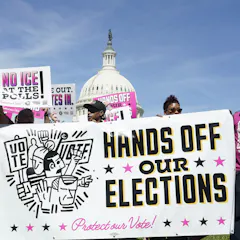
Mayhem at the polls on Election Day 2026? Americans are worried. But a scholar of election law who has also run a nationwide election protection program says he doesn’t believe it will happen.

A midterm election is coming. In the face of wavering voter trust – some of it driven by forces outside their control – what can election officials actually do to keep elections credible?

Will an Aug. 24, 2026, Supreme Court decision lead to chaos in the midterm elections? An election law scholar dissects the decision, its background and possible effects.
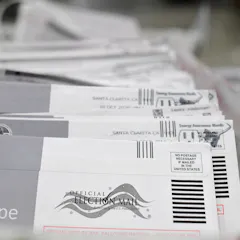
The US Constitution gives states control of elections. An executive order by President Trump aims to take away that control. A former federal judge says a president can’t just deny the Constitution.
The DOJ wants states to send it copies of voters’ names and addresses as well as sensitive information such as driver’s license and Social Security numbers. Here’s why many states have refused.

An FBI raid on a Georgia elections facility has sparked concern about Trump administration interference in the 2026 midterms. An obscure 1970s Supreme Court case provides guardrails against that.
Voters have cast their ballots. Now the 2024 US presidential election comes down to the Electoral College.

Political parties sign up volunteers to observe what happens at polling places – which can improve transparency or cause problems.

Take a deep breath: Having to wait for election results means the system is working as it should, with safeguards and double-checks.
Americans might have to wait for days, weeks or months to get an accurate determination of the winner of the presidency.
As Florida and North Carolina change voting rules because of the hurricanes, they might face legal challenges – and open the doors to false claims of election fraud.
The people who run US elections are, according to a scholar who studies them, politically neutral professionals who uphold the law with transparency and integrity − and do it in tough circumstances.
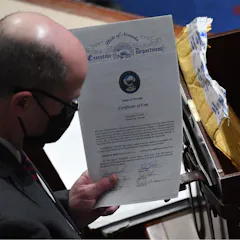
The Electoral College system puts most of the attention on just a few states – and paints a target on those states’ voting systems.

If the presidential election ends in a tie, then what? The winner might not even be 1 of the 2 people who tied for the most votes.
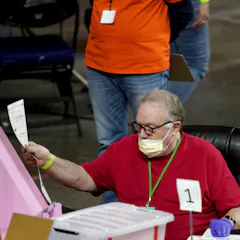
Hand-counting every ballot might sound like a great idea, but it’s both slower and less accurate than machine-counting votes.
Voters mostly did not cast their ballots for chief election administration officials who deny the 2020 election. But the hyperpartisan trend could further erode trust in elections.
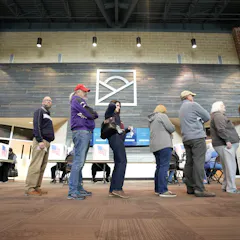
What’s it like for an election law scholar to work at a polling place on Election Day? A law school professor sees how election laws work – or keep election workers guessing – at the ground level.
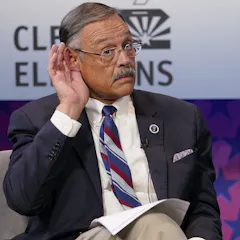
What happens if the public loses faith in fair elections? That’s the question being asked as candidates influenced by Donald Trump aim to become the chief election officials in their states.
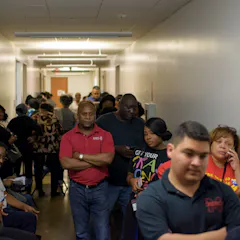
A 2014 US Presidential Commission set a guideline that voters should not have to wait more than 30 minutes to cast their ballots. In some voting districts, it’s taking longer than an hour.
Top contributors
-

Professor of Law, University of Notre Dame
-
Professor and Co-Director of the Center for an Independent and Sustainable Democracy; School of Public Affairs, Arizona State University
-
Professor of Political Science and Director of the Elections Research Center, University of Wisconsin-Madison
-
Interim Dean and James F. Ackerman Professor; College of Education, Purdue University, Purdue University
-
Assistant Professor of Law, Quinnipiac University
-
Associate Professor of Political Science, Westminster College
-
Professor of Communication, University of Illinois Urbana-Champaign
-
Assistant Professor of Law, Florida State University
-
Associate Professor of Political Science, University of Pittsburgh
-
Associate Professor of Political Science, University of Georgia
-
Professor of Mathematics, Director of Institute for Mathematics and Democracy, Wellesley College
-
Ph.D. Student in History, Johns Hopkins University
-
Assistant Professor of Law, University of Houston
-
President, Dickinson College
-
Associate Professor of Political Science and Honors, University of Maine