

A linguistic expert explains the techniques Enron traders used to build and retain trust in their criminal strategies.
Articles on Enron
Displaying all articles

Government prosecutors, ruled the Supreme Court, stretched the meaning of a law that’s been used to prosecute those alleged to have participated in the Jan. 6 riot at the US Capitol.

In the Charitable Corporation Scandal, a group of politically connected directors leveraged the company’s altruistic image to attract investors – before raiding the funds to prop up other ventures.
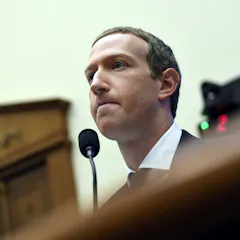
Recent reporting suggests Facebook and CEO Mark Zuckerberg presented different versions of the company’s policies in private and public. That could draw the scrutiny of regulators.

A new study involving extensive interviews with dozens of directors shows that they see their roles as more about supporting executives, not challenging them.

Both ‘cum ex’ and Enron scandals show how traders can manipulate complex financial regulations to their advantage.
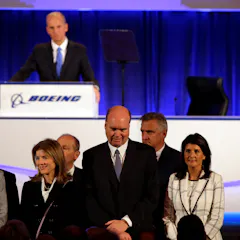
The consequences for board members of corporations found to violate the law and ethical norms are rare and usually minor.

Once-leading firms such as Chrysler, Citigroup, Dunlop and Nokia have one thing in common: they failed. While each case seems unique, research points to key processes that lead to corporate failures.

Steinhoff was the darling of investors, asset managers, analysts and financial journalists. But its success was built on shaky foundations.

Enron stands as one of the most infamous scandals in business history. With a growing charter school sector and lax regulation, the same kind of corruption and fraud is rearing its ugly head.

Ethical dilemmas arise not because someone did not know the ethical rules. Instead, they arise when individuals are unable to identify the relevant ethical principle at the time of crisis.
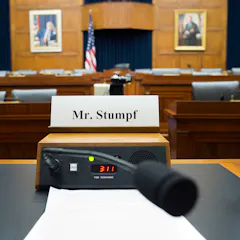
The bank’s recent scandal probably would never have happened had senior management only listened to Wells Fargo’s whistleblowers.

Society needs intelligent and mature leaders. Acquiring such skills is a lifelong process.

Employers still love a smart MBA graduate, but business schools are increasingly accused of not meeting the needs of a changing market.

Surveys show that 95% of high school students and 70% of college students are involved in some form of cheating.
A new study may explain why corporate managers, like those in the Enron scandal, lie about their companies’ earnings, even…
Top contributors
-

Professor of Law and Director of the Center for Professional Ethics, Case Western Reserve University
-
Professor of Law, University of Oregon
-
Associate Dean, Director Student Conduct and Conflict Resolution, University of Florida
-
Allan Gray Chair in Values Based Leadership and Director of the UCT Graduate School of Business, University of Cape Town
-
Former Professor and Head, Department of Industrial Psychology and People Management, University of Johannesburg
-
Professor: International Business & Strategy, Wits Business School, University of the Witwatersrand
-
John and Maria Neag Professor of Urban Education, University of Connecticut
-
Professor of History & Director of the Dresher Center for the Humanities, University of Maryland, Baltimore County
-
Professor in History and Strategy, University of Bristol
-
Assistant Professor of Entrepreneurial Strategy, ESCP Business School
-
Assistant Professor of Law, University of Richmond
-
Professor of Law, St. Mary's University
-
Lecturer in Responsible Business, University of Birmingham
-
Professor of Management, Texas A&M University
-
Associate Dean, Research and External Relations; Executive Director, Madden Center for Value Creation; Phil Smith Professor of Entrepreneurship, Florida Atlantic University; Institute for Humane Studies