

Dodo skull scans show the famously extinct birds were no less brainy than their surviving relatives – and may have roamed at dusk and dawn.
Articles on Extinct animals
Displaying all articles
Modern North American porcupines are at least twice the size of their southern cousins and have stronger jaws. But how long have they looked that way?
Is the beastie lurking in the watery depths of Loch Ness?
A paleobiologist on why he appreciates the franchise despite its inaccuracies.
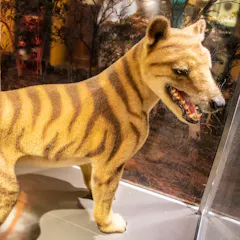
Brain samples of a thylacine that died in 1880 in Berlin were kept safe by researchers for decades. Now, they have finally been analysed.
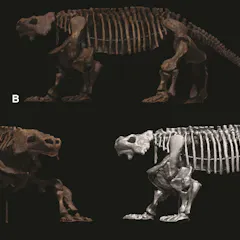
Large pareiasaurs are among the earliest huge plant-eating tetrapods to appear in the history of the development of life on Earth.
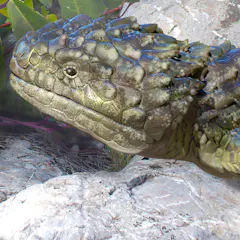
Researchers have found an armoured fossil skink 1,000 times heavier than the ones in your garden. Its closest living relative is the shingleback lizard.
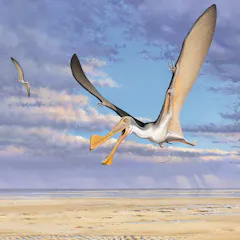
In the dinosaur era, flying reptiles soared in the skies of what is now Australia – but we have barely any fossil records of them.

Nimbadon lived 15 million years ago, in forests with flesh-eating kangaroos and tree-climbing crocodiles. Our first look inside their fossilised bones has revealed how these giants grew.
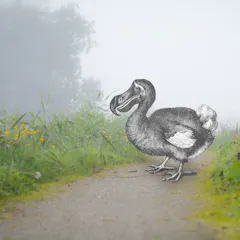
Two conservation scholars break down what de-extinction looks like – and the debate over whether it could do any good.

The largest birds that ever lived on Earth, elephant birds have a spotty fossil record. But understanding them could help protect Madagascar’s biodiversity.
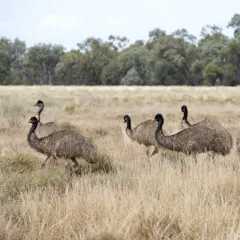
Tasmania’s emus were hunted to extinction in the mid-1800s but we could have them back – and their return could help other species survive climate change.
All the evidence points to one thing: humans and woolly mammoths certainly lived side by side. But did humans hunt mammoths too?
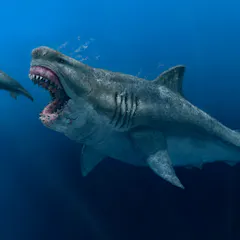
The largest shark to ever live on Earth, megalodon terrorised the world’s oceans, and could eat a killer whale in just a few bites.
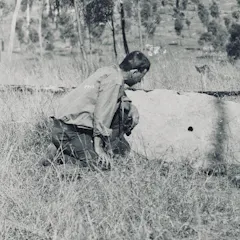
The paradise parrot was rediscovered by Cyril Jerrard, a Queensland grazier, in December 1921. But its return was fleeting.
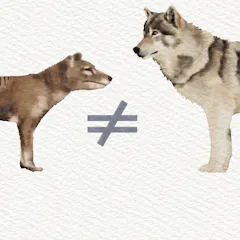
The Tasmanian tiger’s superficial appearance was so similar to a wolf’s that European colonisers assumed it was a threat and hunted it to extinction.
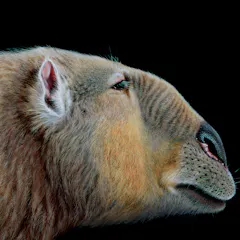
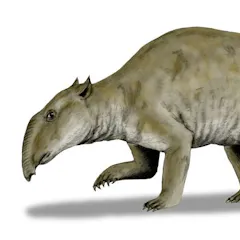
A new study shows Palorchestes had unique elbows unlike any other mammal, which may have contributed to its extinction.
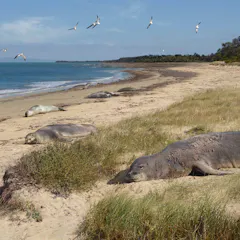
Our new research has more than doubled the known fossil record of seals in Australia.
It is plausible to suppose that human memories of long-extinct creatures today underpin many stories we have generally regarded as fiction.
Top contributors
-

Senior Lecturer, Department of Anatomy and Developmental Biology, Monash University
-
Professor, School of Biological Sciences, Monash University
-
Doctoral researcher in Palaeobiology, Swansea University
-
PhD candidate, Monash University
-
Associate Professor, School of Natural Sciences, Macquarie University
-
Adjunct Professor of History, James Cook University
-
Postdoctoral Research Fellow at the Evolutionary Studies Institute (ESI), University of the Witwatersrand, Johannesburg., University of the Witwatersrand
-
Professor, Earth and Sustainability Science Research Centre, UNSW
-
Research Associate, School of Earth and Planetary Sciences, Curtin University
-
Professor of Geography, School of Law and Society, University of the Sunshine Coast
-
Senior Lecturer- School of Biomedical Sciences and Queensland Brain Institute, The University of Queensland
-
Casual academic, Flinders University
-
Professor of Paleontology, Sapienza University of Rome
-
Professor, Biological Sciences Department, University of Cape Town
-
Professor of Geology and Paleontology, Universidade Federal do Estado do Rio de Janeiro (UNIRIO)