
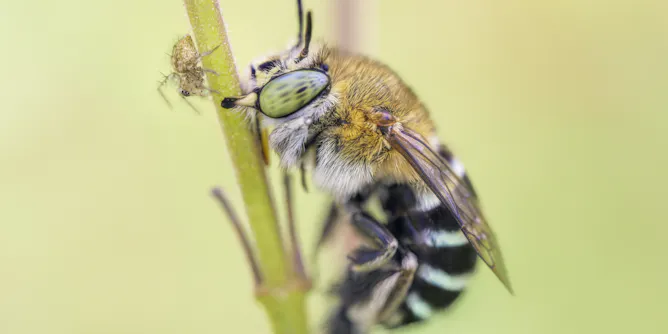
Some of the most impressive visual performances measured in a new study came from rarely studied, solitary species.
Articles on Eyes
Displaying 1 - 20 of 90 articles

As one piece of more than a century of baseball traditions, eye black is part science experiment, part routine and part uniform.

Aging plays a significant role in the development of conditions that can lead to blindness. However, most of these can be prevented or delayed.
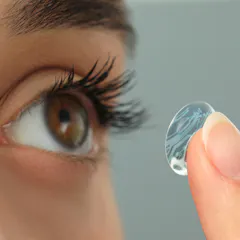
Contact lenses that treat depression? The idea is tantalising, but the science is still in its earliest stages.
There’s a lot going on in your brain all the time. To power your imagination, the neurons need some silence.

Genetically transmitted eye diseases affect around 1 in 2,000 people.
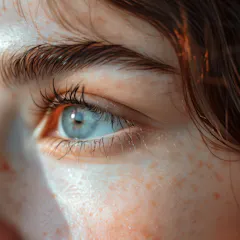
The now extinct worm-like animal first lost paired eyes, then re-evolved them.
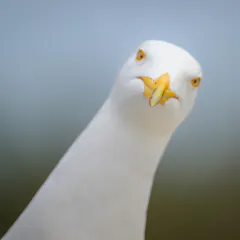
New research shows that displaying a pair of eyes on food packaging can be enough to stop some gulls pinching your food.
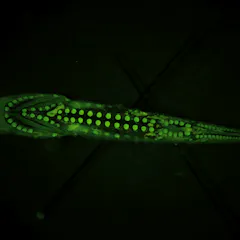
Deep-sea fish larvae combine features of both rods and cones into a single, highly specialised cell that is optimised for life in between light and darkness.
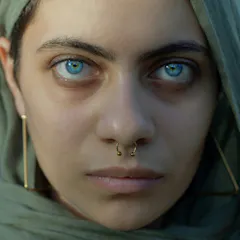
A pigment called melanin that’s found in the iris does most of the work.
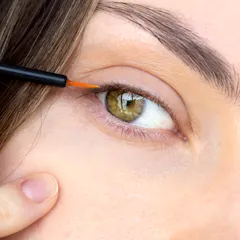
Lash serums promise longer lashes – but some contain glaucoma drugs that can cause darkened skin, sunken eyes and even permanent eye colour change.

In romance novels and online advice columns, enlarged pupils are commonly enlisted as imagery to indicate sexual arousal and attraction. So, what’s the science say?
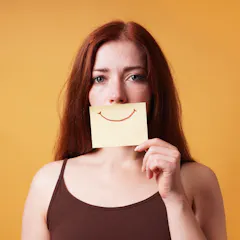
The surprising effort behind a genuine smile.

Light comes in through our eyes upside down – but we can still interact with the world just fine.
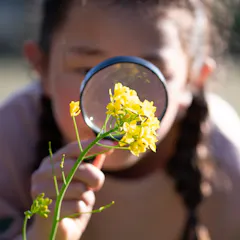
Curiosity-driven research is exactly what it sounds like: research driven by the goal of understanding nature without regard for application.

Up to 50% of computer users face symptoms of digital eye strain. This condition isn’t just a matter of discomfort, it can significantly affect your quality of life.

In December, the U.S.-based National Academy of Sciences published a report classifying myopia, for the first time, as a disease and no longer as a refractive error.
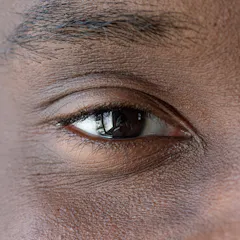
It was previously believed that our pupil size was only affected by three things: light, focusing on nearby objects and cognitive effects.
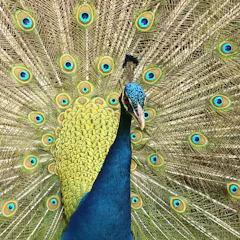
If evolution had taken a different turn, nature would be missing some colours.

We have trillions of body clocks – a central one in the brain and others in each cell of our body. Here’s how they work with light to control our health.
Top contributors
-

Professeur Titulaire. École d'optométrie. Expertise en santé oculaire et usage des lentilles cornéennes spécialisées, Université de Montréal
-
Professor of Anatomy, Lancaster University
-
Professor of Pediatrics and Ophthalmology, West Virginia University
-
Professor and Deputy Dean, Research and Innovation, Anglia Ruskin University
-
Clinical Associate Lecturer, University of Sydney
-
Postdoctoral Research Associate, Florida International University
-
Associate Professor of Dermatology, Bond University
-
Professor, Director of the Centre for Robotics, Queensland University of Technology
-
Professor of Clinical Ophthalmology & Eye Health, Central Clinical School, Save Sight Institute, University of Sydney
-
PhD student, The University of Queensland
-
Ecologist, bee researcher and stingless bee keeper, The University of Queensland
-
Professor in Psychology, University of Florida
-
Assistant Professor of Ophthalmology, University of Pittsburgh
-
Professor of Psychology, University of California, Berkeley
-
Professor of Ophthalmology, The University of Western Australia