

Leaked documents of a secret ‘taskforce’ to reform public hospital funding reveal some controversial proposals. So how are hospitals funded and why might this need changing?
Articles on Federalism
Displaying 81 - 100 of 189 articles

President Trump has ordered a review of national monuments protected by his predecessors, and may try to abolish or shrink some. But four legal experts say that only Congress has that authority.

Trump has ordered a task force to look into the federal government’s role in schools. Where does this executive order fit in the country’s long history of federal versus state educational policies?

Corruption has become entrenched in Ethiopia because of the political dominance of a single party – the Ethiopian People’s Revolutionary Democratic Front.

Twenty years ago, a sheriff won a lawsuit against a federal gun control law. Today, San Francisco is betting the same argument for state’s rights will stop Trump from defunding sanctuary cities.

Former Colorado Gov. Bill Ritter, now leading a clean energy research center at Colorado State University, explains why clean energy will keep growing despite President Trump’s focus on fossil fuel.

A new federalism? Trump’s decision to green-light the Dakota Access Pipeline and early battles with states show a disregard for the sovereignty of domestic government bodies.

California has set ambitious goals for cutting carbon emissions and shifting to a clean energy economy. How will this strategy affect the state’s huge economy? An economist weighs the evidence.

No state wants to see its revenue base decline – particularly when the jurisdiction benefiting doesn’t even tax (or regulate) its bookies as well as it might.

Federal politicians and the public like the idea of abolishing the states. But consider the likely result: a more powerful Canberra, with regional governments amounting to glorified shire councils.

Leaving aside party-politics, there are good reasons why Australia should consider changing its Constitution to abolish state governments.

As the National Park Service turns 100 years old, two conservation scholars and former park rangers respond to critics who support privatizing national parks or putting them under state control.
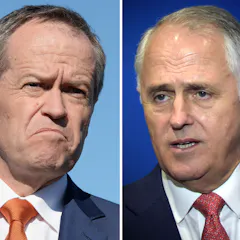
The path back to surplus inevitably winds through state finances. And it’s a potholed road.

Commitment to a stronger, ongoing and more bipartisan federal reform process is one of the true tests of modern political leadership.

The reality is that intergovernmental relations are not the strong point of federal systems generally. But some do it better than others.

The role both state and federal governments play in Australia’s urban regions is often incompatible with effective metropolitan governance.

A better tax system and long-term budget sustainability starts with this blueprint.

If the system was fixed project funding would be more likely to be based on merit.

If states controlled more of their school funding, competition could lead to innovation where the best ideas are adopted nationwide.

Giving states the power to levy income tax won’t make up for the shortfall in health and education funding and it could mean poorer states are worse off.
Top contributors
-

Professorial Fellow, University of Canberra
-
Visiting Professor of Tax Law, New York University, and Professor of Law, The University of Melbourne
-
Dean and Professor of Law, UNSW
-
Professor, Department of Economics, The University of Melbourne
-
Professor of Politics, Curtin University
-
UNSW
-
Adjunct Principal Research Fellow, Policy Innovation Hub, Griffith University
-
Senior Lecturer of Political Science, Georgia Gwinnett College
-
Cecil D. Andrus Endowed Chair for Environment and Public Lands and University Distinguished Professor, Boise State University
-
Associate Professor of Law, Arizona State University
-
Professor of Public Policy & Law, Centre for Governance & Public Policy, Griffith University
-
Professor of Political Science; Director, Tasmanian Policy Exchange, University of Tasmania
-
Honorary Enterprise Professor, School of Population and Global Health, and Department of General Practice and Primary Care, The University of Melbourne
-
Director of Research and Development, Pivot Professional Learning; and Honorary Fellow, The University of Melbourne
-
Assistant Professor of Educational Leadership and Policy Studies, University of Memphis