

The gap between AI and a human adviser is narrowest for commonsense guidance.
Articles on Financial fraud
Displaying 1 - 20 of 27 articles

AI is now the machine deciding whether your payment goes through. And when it makes a mistake, the system isn’t designed to tell you why.
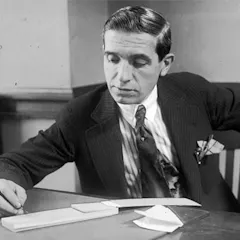
Technology bubbles have often concealed major frauds. From the railway boom to the Madoff affair, are there warning signs at the heart of the current AI frenzy?

These findings support a paradox: When a business handles a problem well, its customers can become more loyal than if no problem had occurred.

Growing use of technology and our willingness to trust it is putting Australians at greater risk of being scammed.

Improving financial literacy among the population could make a big dent in scammers’ profits.

Federal investigations into irregular election spending can uncover wild stories. Politicians have used campaign money to pay rent, fund family vacations, book hotel rooms for mistresses − and worse.

The UK tried a voluntary code before making banks accountable for scam losses. Australia can learn from that lesson.

Avoid ‘get-rich-quick’ schemes. They are, more often than not, bogus and fraudulent business ventures.

New Zealand came very close to having an independent sentencing council to help set sentencing guidelines for crimes. For the sake of consistency, it might be time to revive the idea.

In the Charitable Corporation Scandal, a group of politically connected directors leveraged the company’s altruistic image to attract investors – before raiding the funds to prop up other ventures.

To combat the rise in deepfakes used in fraud, employees and investigators need to be aware of the threats involved.

The government has civil and criminal tools to try and recover billions of pounds.

Earnings management is one of those genteel business terms that looks a lot less innocent the more you study it.

Big Four firms were hit with £16.5 million in fines for audit failings in 2019 alone.

Last year, men were more likely to report losses to investment fraud, while women were the main target for romance fraud. Overall, men reported higher financial loss.

Investment advisers who passed a licensing exam with more ethics questions were one-fourth less likely to engage in misconduct than those with less ethics training, according to a new study.

A New Zealand Court of Appeal decision set a precedent last month. Offenders who can prove their personal addiction played a role in their crime are now eligible for a shorter sentence.

Why do even the rich cheat on their taxes? Roesearch suggests some people may be genetically predisposed to break the rules for their own financial gain.

Cryptocurrency fraudsters have swindled their victims out of hundreds of millions – even billions – of dollars. What do they do to earn people’s trust and then take their money?
Top contributors
-

Professor of Taxation, Te Herenga Waka — Victoria University of Wellington
-
Professor of Clinical Education, St. John's University
-
Professor of Clinical Education, St. John's University
-
Senior Lecturer in Finance, University of Stirling
-
Part-Time Professor of Economics, The New School
-
Assistant Professor of Computer Science and Tandy Chair of Cyber Security and Information Assurance, University of Tulsa
-
Director of the Centre for Post Qualifying Social Work, Bournemouth University
-
Professor of Law, St. John's University
-
Professor of Social Care, Bournemouth University
-
Reader in Signal Analysis, University of Kent
-
Professor in Accounting (forensic accounting), Université du Québec à Montréal (UQAM)
-
Professor of Agricultural Economics and Director Human Behavior Laboratory, Texas A&M University
-
Professor of Development Finance & Insurance, University of Cape Town
-
Professor of Finance; (Banking, Fintech, Corporate Governance, Intangible Assets), EM Normandie
-
Professor of Economics, Tel Aviv University