

Detroit had 20,370 eviction cases filed in 2025. But evictions that do not go through the formal court process are not included in the city’s official eviction data.
Articles on Food insecurity
Displaying 1 - 20 of 264 articles

While the National Food Security Strategy does include important food systems initiatives, it fails to address the root causes of food insecurity or its health consequences.

Partnerships need to grapple with the tension between what to preserve and what to change rather than be paralysed by it.
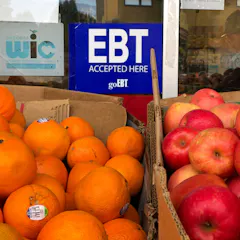
Nearly 14,000 people in one Pittsburgh-area county could lose a benefit that’s long been considered one of the country’s most effective anti-poverty tools.

A resilient food system requires connecting affordability, trade, food safety, biosecurity, regional infrastructure and preparedness before the next disruption.
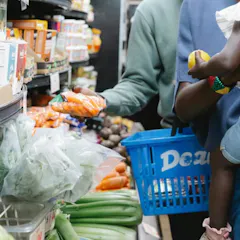
Early exposure to malnutrition from conception to a child’s second birthday can have an irreversible effect on their long-term health and development.
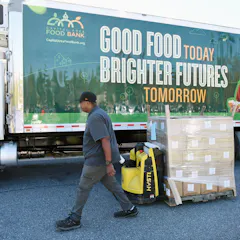
Picking up food more frequently from supermarkets doesn’t close the gap between what’s donated and could be donated, a supply chain scholar explains.

A powerful Super El Niño is looming. Africa has learned hard lessons from past climate disasters that could help the world prepare.

As climate crises deepen, Africa must turn its hard-won experience and local knowledge into global leadership on climate, health, food systems and clean energy.

Every city is different but they can learn from each other.

Policy frameworks shaping farming in the EU and beyond are suffering from funding misalignment and fragmented priorities, resulting in ineffective global climate efforts.

Dominant nutrition wellness narratives wrongly focus on individual behaviour and personal responsibility, which obscures the structural causes of hunger and delays policy changes.
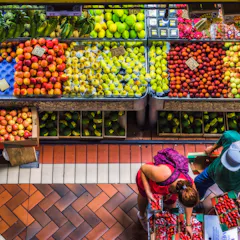
The expansion of global food supply chains can reduce food security, while improving regional food systems can improve food security.
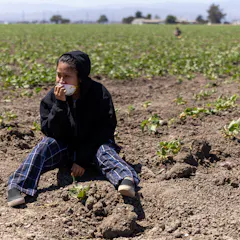
Despite the administration’s claim of streamlining the government to make its operations more efficient, a range of recent federal policies have, in fact, exacerbated food wastage.
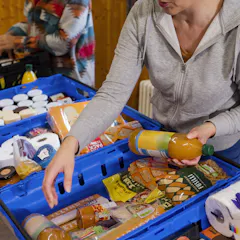
Free food may fill your stomach, but it doesn’t always satisfy the desire to feel fully human.
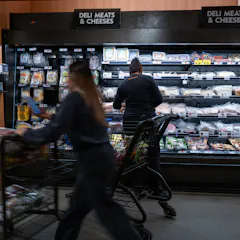
Having stable access to nutritious food sets children up for better mental and physical health into adulthood.
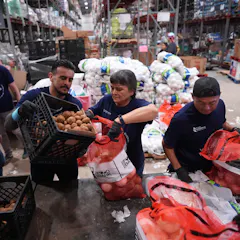
As the government shutdown wore on in October, calls began surging, signaling that Americans are very concerned about paying their bills and feeding their families.
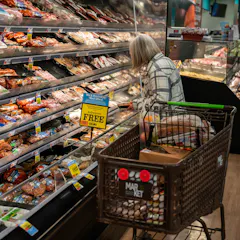
Nearly 60% of Americans enrolled in the Supplemental Nutrition Assistance Program are either children under 18 or adults who are 60 or older.
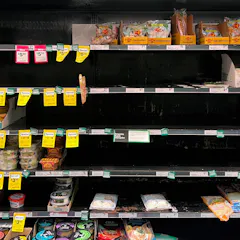
An analysis of 420 million supermarket transactions shows that understanding what people buy – not just where they live – is key to creating healthier communities.

In regional NSW, 1 in 3 people experienced food insecurity in the past year. The rate was double for those who were socially isolated or had a mental illness.
Top contributors
-

Associate Professor of Political Science, University of Richmond
-
Professor of Economics, Baylor University
-
Professor of Social Development Studies, University of Johannesburg
-
Professor of Human Development and Family Sciences, University of Connecticut
-
Senior Lecturer in Nutrition and Dietetics, University of Wollongong
-
Professor of Health Studies, Queen's University, Ontario
-
Senior Researcher, Associate Professor: Economic Management Sciences, University of Pretoria
-
Assistant Professor of Nutrition, Texas State University
-
Associate Professor of Allied Health Sciences, University of Connecticut
-
Assistant Professor of Public Health, Indiana University
-
Assistant Professor of Dietetics and Nutrition, University of Dayton
-
Professor of Nutritional Sciences, University of Toronto
-
DSTI/NRF Research Chair in Welfare and Social Development, University of Johannesburg
-
Research Program Coordinator, Food Insecurity, University of Toronto
-
Associate Professor of Nutrition Science, Purdue University