

Misinformation and a shifting legal landscape have left many families with trans children uncertain about what care doctors can still provide.
Articles on Gender-affirming healthcare
Displaying 1 - 20 of 28 articles

As Alberta shields its ban on youth gender-affirming care from legal challenge, new research raises urgent questions about the real-world consequences of restricting access.

Controversies often arise over pharmacists refusing to dispense medication, from Plan B to unproven COVID-19 treatments. Each one raises questions about professional rights and responsibilities.

Without rebates, surgeries for trans people can cost between $20,000 and $100,000.

For some trans and gender diverse adolescents, physical changes in puberty can be distressing and lead to a sense of disconnection from their true sense of self.

The mental health of trans, nonbinary and gender-diverse Australians is suffering and getting worse.

Surgery was rare and risky in the medieval period. Though medical options were limited, trans people were able to take transitioning into their own hands.

From access to preventive care to workplace protections, public policies affect the health of LGBTQ+ people and the general public in both direct and indirect ways.

While it doesn’t constitute a national ban on gender-affirming care for minors, the executive order contains provisions that could have a chilling effect on health care providers around the country.

Puberty blockers don’t necessarily result in a measurable effect at the time they are taken. The main impact is seen when people are older and may need to seek surgery and hormone treatments.

Republicans are seeking to define ‘sex’ in federal law. But after centuries of debate, doctors, scientists and judges haven’t come to a clear consensus on what the definition of sex should be.

Gender-affirming care assesses psychological, social, medical and surgical options for gender-diverse people.

Gender fluidity and detransition deserve nuanced understanding. Polarization that presents detransitioners as either ‘misinformation’ or victims of ‘gender ideology’ hurts all gender-diverse people.

On both sides of the transgender care debate, what is presented as ‘fact’ distorts real complexities of gender-affirming health care, leaving many in the dark about what is really at stake.

Alberta Premier Danielle Smith’s anti-trans policies are likely meant to satisfy her base, but her government will now have to go head-to-head with the evidence in future legal battles.
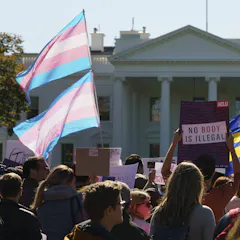
For as long as trans medicine has been around, so has its opposition. The tactics of prior waves of anti-trans policies are still in play today.

Because of ethical considerations, there are no clinical trials comparing the effects of hormone therapy to conversion therapy on trans youths. But a set of recent studies tease out cause and effect.

Improving the health of people who are trans and gender diverse means improving access to family doctors who are supportive, competent and confident in providing access to gender-affirming care.

The rainbow Pride flags flying this month obscure the ongoing legislative attacks threatening the health and well-being of transgender and nonbinary people and their families.

This year, there are more than 400 active anti-trans bills across the U.S. What do things look like in Canada? Are we a safe haven or are we following those same trends?
Top contributors
-

Associate Professor of History, Roanoke College
-
Professor, Women's and Gender Studies, Mount Royal University
-
Senior Lecturer, Department of Primary Health Care and General Practice, University of Otago
-
Professor in the Faculty of Business & Communication Studies, Mount Royal University
-
Predoctoral researcher in Psychology, Universidad del País Vasco / Euskal Herriko Unibertsitatea
-
Assistant Professor of Health Policy and Administration, University of Illinois Chicago
-
Assistant Professor, School of Social Work, York University, Canada
-
PhD candidate in English and research assistant with the Trans Research and Navigation Saskatchewan (TRANS) project, University of Saskatchewan
-
PhD Candidate in Counseling Psychology, University of Florida
-
Assistant Professor, Faculty of Law and John Dossetor Health Ethics Centre, University of Alberta
-
Professor of Social Work, Université de Montréal
-
Assistant Professor of Epidemiology, Drexel University
-
Assistant Professor and Canada Research Chair in the Politics of Reproduction, University of Waterloo
-
PhD Candidate in Epidemiology, University of Washington
-
University of Washington