
Spain’s passing triangles did more than create space: they forced France into making constant choices.
Articles on Geometry
Displaying 1 - 20 of 33 articles
Hungarian mathematician Paul Erdős’ ‘planar unit distance conjecture’ has stood since 1946 – but an AI disproof has made mathematicians pay attention.
Topologists categorize all the possible shapes in each dimension.

Artists and scientists explore how we subconsciously perceive subtle proportions in trees.

The solution might lie in improving children’s spatial skills.
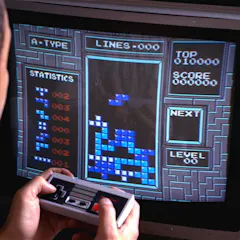
People young and old love the classic video game Tetris. A working knowledge of the spatial reasoning concepts underlying Tetris can set students up for success in mathematics.
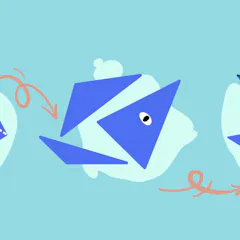
This is a story about geometry, algebra and many different dimensions, best read with construction paper, scissors and tape on hand.

Math is more than memorizing times tables and doing homework problems. It is woven into more aspects of your life than you might think.
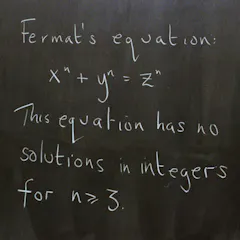
In 1993, a British mathematician solved a centuries-old problem. But he couldn’t have done it without the help of many other mathematicians, both historical and modern.
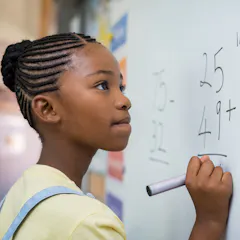
Nearly four decades after President Ronald Reagan proclaimed the first National Math Awareness Week, math readiness and enrollment in college math programs continue to decline.
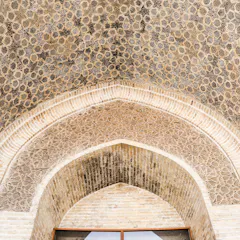
The House of Wisdom was populated by a number of multitalented thinkers – at a time marked by fervent collaboration and intellectual prosperity in the Arabic-speaking world.
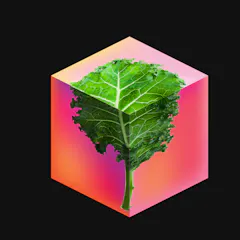
Mathematicians are like anatomists learning how a body works, or navigators charting new waters.

It has long been thought the ancient Greeks used the Golden Ratio to beautify their art and architecture. Turns out that’s not really true.

I’m a mathematician whose hobby is origami. It has inspired mathematicians to solve problems once thought impossible, and create folding telescope lenses, airbags and solar panels.
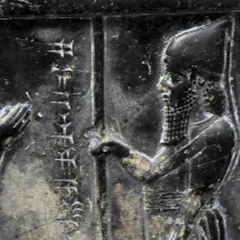
Ancient Babylonians achieved a practical application of trigonometry that was massively advanced for the time.
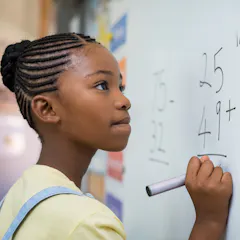
The proposed maths curriculum would result in a deeper understanding of key concepts. It expects students to explain their maths reasoning rather than present their answer without justification.
What did Pythagoras do with all those triangles, anyway?

Improving a child’s sense of numbers, and their understanding of probability, fractions, ratios, shapes and patterns, can all be incorporated into daily life or with simple games.
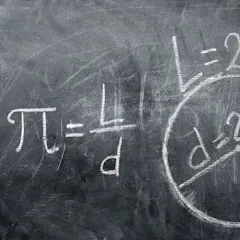
Technology in the math classroom should enhance and extend, rather than replace, how to think mathematically.

Supreme Court justices have previously called statistical methods of measuring partisan gerrymandering ‘sociological gobbledygook’ and ‘a bunch of baloney.’
Top contributors
-

Professor of Mathematics and Statistics, University of Maryland, Baltimore County
-
Ph.D. Candidate in Mathematics, University of Pennsylvania
-
Senior lecturer, UNSW
-
Professor of Mathematics, University of California, Davis
-
Lecturer in Mathematics, Monash University
-
Professor and Dean of Architecture, University of Newcastle
-
Research Analyst, Prince George's Community College
-
Assistant Professor of Mathematics, Carthage College
-
Professor of Transdisciplinary Studies, University of Huddersfield
-
Vice-Chancellor’s Fellow in Science Communication, The University of Melbourne
-
Ruth Coulter Heede Professor of Art History, Case Western Reserve University
-
Associate Professor of Mathematics and Senior Fellow of Tisch College of Civic Life, Tufts University
-
Doctoral Student in Applied Developmental Psychology, University of Maryland, Baltimore County
-
Assistant Professor, Department of Mathematics, The Ohio State University
-
Lillian Gilbreth Postdoctoral Fellow, Purdue University