

Being viewed as a good corporate citizen can be good for the bottom line.
Articles on Gini Coefficient
Displaying 1 - 20 of 28 articles

Compared to countries we might benchmark against, New Zealand ranks poorly for inequality and the redistributive measures that would fix it. But other countries have shown it is possible to change.

Australia’s tax and transfer systems do less to redistribute income than those in Canada, the United States, the United Kingdom and New Zealand.

Money may not buy you happiness, but a favourite keepsake can boost happiness and wellbeing.

The United States has more economic inequality than other wealthy nations.

It’s individuals, communities, and institutions who build the necessary confidence to pursue complex and challenging solutions to their problems.

Equality and corruption perceptions appear to explain more than 80% of the differences in trust levels between nations.

Promoting entrepreneurship will help reduce unemployment in South Africa. But the government has to step up its game.

New Zealand’s government seems to trust scientists the most, the US government, the least.
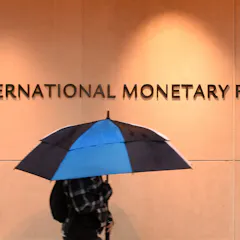
The IMF has increasingly turned its focus to growing inequality worldwide. Ironically, research shows that policy reforms it mandated exacerbated income inequalities.

As the rich get richer in India, many voters seem willing to overlook their everyday struggles, hoping that the trickle-down effect of a “business friendly” government will help the overall economy.

Initiatives to boost South Africa’s economy could reinforce structural weaknesses without addressing the high levels of inequality.

Increasing police patrols won’t solve South Africa’s high rates of violent crime. Underlying problems need to be addressed.

Extensive research has been done on poverty and inequality in South Africa but more is needed to better understand the status quo and mainly inter-sectional factors that drive inequality.

The populism politics adopted by South Africa’s ruling party, African National Congress, mask a strategy to deflect attention from the party’s policy failures and to hide its many scandals.

Although politicians claim to place a great deal of importance on the idea of the fair go, there are still significant ways in which Australian society seems to depart from this idea.

Guyana can show how distractions or buffers are a powerful means to concentrate and maintain economic power.
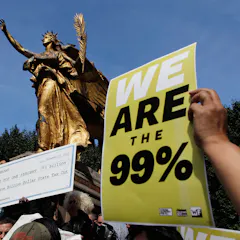
An analysis of what’s known as the Gini coefficient offers some clues on what makes one society more unequal in terms of income than another.

Some hard-to-hear facts are not included in the World Bank’s new discussion note on poverty and inequality in South Africa.

International experiences indicate that South Africa could reduce income inequality by introducing a national minimun wage.
Top contributors
-

Fellow in Historical Studies, The University of Melbourne
-
Pro Vice-Chancellor, Climate, Sustainability and Inequality and Director, Southern Centre for Inequality Studies, University of the Witwatersrand
-
Professor of Political Economy, University of the Witwatersrand
-
Associate professor, University of Cape Town
-
Professor of Economics and South African Research Chair in the Economics of Social Policy, Stellenbosch University
-
Professor of Economics and Director of the Development Policy Research Unit, University of Cape Town
-
Director and Professor, Australia-China Relations Institute (UTS:ACRI), University of Technology Sydney
-
Senior researcher, University of Cape Town
-
Principal Research Scientist, CSIRO
-
Professor Emeritus, Economics & Finance, University of Houston-Clear Lake
-
Professor/Senior Research Fellow, Centre for Advancement of Scholarship, University of Pretoria
-
Professor of Agricultural and Resource Economics, La Trobe University
-
Co-Director, Institute for Economic Justice, University of the Witwatersrand
-
PhD Candidate, University of the Witwatersrand
-
Distinguished Reserach Professor, Southern Centre for Inequality Studies, University of the Witwatersrand