
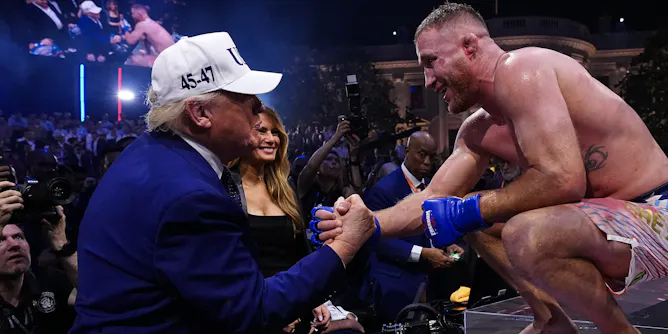
For both Roman gladiators and modern-day mixed martial arts participants, physical contests become moral dramas about sacrifice and human limits. That has led today’s fighters to right-wing politics.
Articles on Gladiators
Displaying all articles
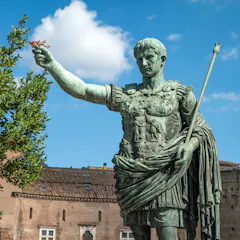
While Roman emperors dominated the institutions of state, they were still constrained by them.
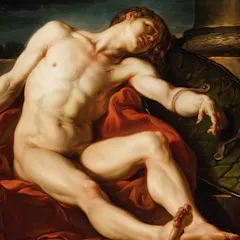
To early Christians, ancient gladiators were potent symbols of martyrdom, embodying virtue and bravery despite being enslaved.
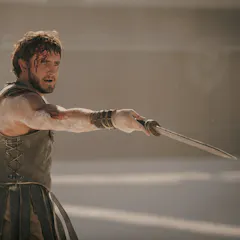
Politicians like Cicero saw gladiators as vain and self-indulgent, while the true warriors engaged in wars of words.
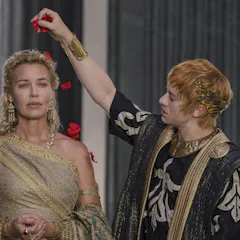
It’s clear Caracalla and Geta had an intense rivalry. This was kept in check while their father Septimius Severus was emperor. But once he died, their relationship devolved into outright hostility.
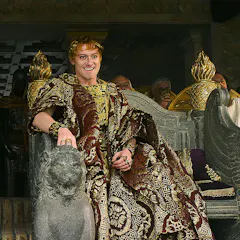
Much like modern-day football hooliganism, gladiator fandom could be weaponised in inter-communal violence.
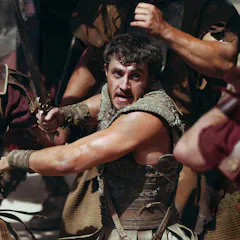
One thing that certainly did not happen was a warrior mounted on a rhinoceros (even a non-computer-generated one) charging at a group of gladiators.
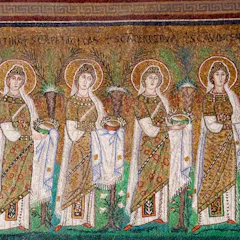
Perpetua was still breastfeeding her baby son when she was thrown in jail by Roman authorities. A Latin text movingly describes her suffering.
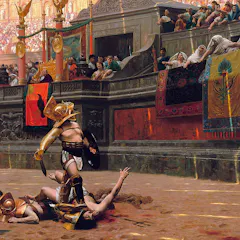
Death was always a possibility, but gladiator combat was controlled by referees.
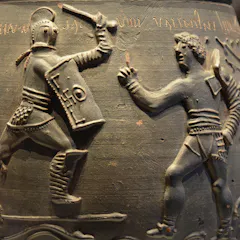
The Colchester vase contains the remains a male of about 40 years of age and not of local origin. Could he have been a gladiator?

Ninja Warrior is the latest attempt to appropriate an ancient artform for a mass audience. But the ancient ninja moved in silence. Anonymous, he never bothered to develop signature dance moves.
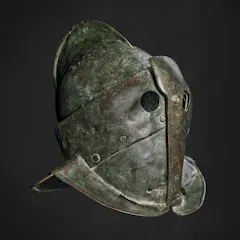
Roman gladiators were unique and complex characters, and certainly not the sporting heroes they’re depicted as in culture today.

Hollywood loves a Roman action film. And recent archaeological evidence offers fresh insight into the world of the hippodrome: from sprinklers to cool horses to a mosaic displaying the four phases of a chariot race.
Top contributors
-

Paul Eliadis Chair of Classics and Ancient History, The University of Queensland
-
Emeritus Professor of Sport, University of Stirling
-
Emeritus Professor of Roman Archaeology, University of Birmingham
-
Senior Lecturer in History, Australian National University
-
Reader in Archaeology, King's College London
-
Associate Professor of Classics, Wake Forest University
-
Associate Professor in Latin Christianity in Late Antiquity, Australian Catholic University
-
Professor of Religion and Classics, USC Dornsife College of Letters, Arts and Sciences
-
Associate Professor in Ancient History, Macquarie University
-
Head, Public Engagement, Chau Chak Wing Museum, University of Sydney
-
Research Professor, University of Michigan
-
Professor of Classics and Head of the Centre for Classical Studies, Australian National University