
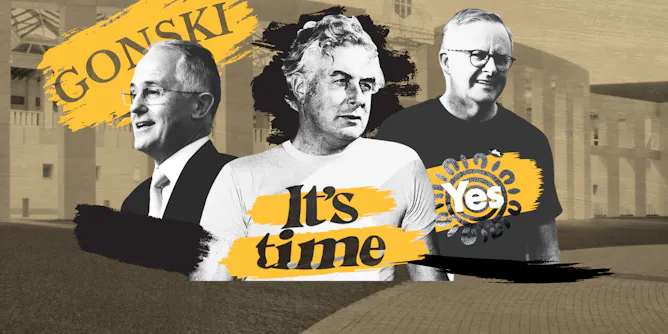
Governments are often criticised for lacking ambition and failing to tackle the long-term issues facing Australia. But it’s been done before, and can be again.
Articles on Gonski 2.0
Displaying 1 - 20 of 37 articles

Many rely on David Gonski’s ideas to shape the future of education policy. But his recommendation of personalised learning is a scripted, rigid version of education that will take us backwards.

The Coalition has had longer than a three year cycle to make some changes to education. But since the 2016 election, what has it actually done? And what is Labor proposing?
2018 was a mixed bag for schooling policy in Australia, with new ministers, a new organisation and auspicious anniversaries. It’s worth reflecting on the year that’s been.

Victorian schools could potentially be without federal funding after 31 December if the state government refuses to sign up to the Gonski 2.0 funding reforms.
Were the Victorian Greens correct about pubic school funding? We asked the experts to check the numbers.

Estimating parents’ capacity to contribute to their children’s schooling is both vital and politically sensitive. Schools with well-off parents get much less funding from government.
There are benefits and drawbacks to both formative and summative assessment. Both are important parts of a rigorous assessment program.

Michelle Grattan speaks with Deep Saini about the week in Australian politics.

Democratic schools already employ some of the recommendations from the Gonski report, chief among them individualisation of teaching.
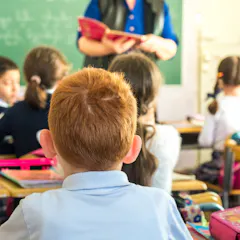
There is good evidence behind some of the recommendations from the Gonski review that will help all students, particularly those who get left behind.

The role of general capabilities in a subject-based curriculum has been a recurring theme in Australian curriculum history.

The recently released Gonski 2.0 report focuses on overhauling core aspects of curriculum and reporting, and proposes a move away from the industrial model of education towards individualisation.

A government review of regional, rural and remote education tells us we need to recognise the uniqueness of and understand successes in these communities to improve outcomes for these students.

Catholic schools say they’re losing money under Gonski 2.0, but this is only true for schools serving students in affluent areas – those in poorer areas will either be unaffected, or get more.
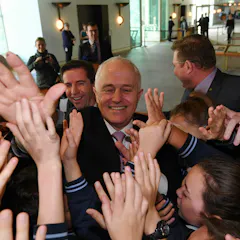
The shift in the education debate from “how much” to “how best” is a welcome change, but for students to feel the full benefit the federal government must resist intervening.

Some of Victoria’s wealthiest private schools have reported spikes in numbers of students with disability. We should only trust those numbers if they’re moderated by qualified staff.

For all concerned, the imbroglio surrounding Lee Rhiannon and her Greens colleagues turns on a fundamental disagreement over process and principle.
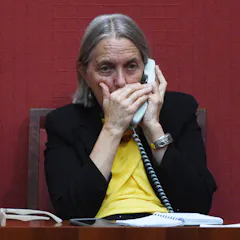
The issues with Lee Rhiannon involved trust in her, and the ability of the hardline NSW branch to bind MPs.
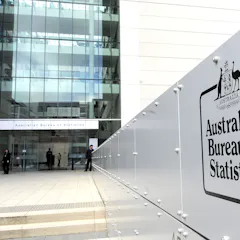
The 2016 Census reveals that Australia is becoming much more diverse – in terms of language, country of birth, Indigenous status, and religion.
Top contributors
-

Professorial Fellow, University of Canberra
-
School Education Program Director, Grattan Institute
-
Professor of Education Futures, The University of Melbourne
-
Vice-Chancellor and President, University of Canberra
-
Researcher in Inclusive Education, Monash University
-
Deputy Program Director, School Education, Grattan Institute
-
Associate Professor in Politics, Murdoch University
-
Professor of Economics and Public Policy, ANU College of Arts and Social Sciences, Australian National University
-
Senior Research Fellow, The Centre for Independent Studies; Associate Investigator, ARC Centre of Excellence in Cognition and its Disorders, Macquarie University
-
Senior lecturer, University of Sydney
-
Senior Lecturer in Educational Assessment, Macquarie University
-
Associate Professor, The University of Melbourne
-
Professor, Melbourne Graduate School of Education, The University of Melbourne
-
Professor (Curriculum Inquiry / Rural Education), University of Canberra
-
Professor Emeritus of Education, Adelaide University