

When penguin colonies are surrounded by sea ice, the penguins tend to eat more fish, rather than krill. And colonies that eat more fish are more successful at sustaining their numbers.
Articles on Guano
Displaying all articles

Long before synthetic fertilizers, the global guano trade reshaped farming, fueled American expansion and exposed the hidden human costs of feeding the modern world.

A 25-year-old local scientist captured rare footage showing how one of the world’s deadliest viruses could jump from bats to humans.

New ancient DNA research on Adélie penguin poo in Antarctica shows how several species respond to environmental change over time, including southern elephant seals.

When Frank Herbert sat down in 1963 to start writing ‘Dune,’ he wasn’t thinking about how to leave Earth behind. He was thinking about how to save it.
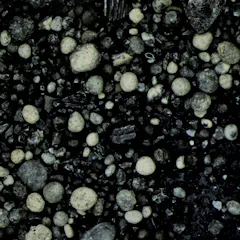
Studying these deposits gives scientists information about how past environments change. That, in turn, gives us informed estimates on how climates and environments will change in the near future.
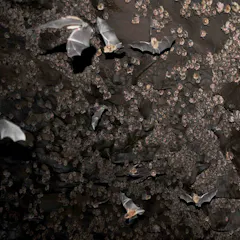
Laboratory experiments with bat poo reveal how archaeological materials in tropical caves have been chemically altered over the millennia.
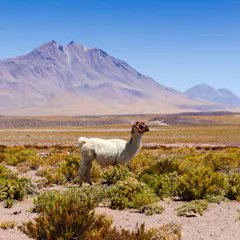
Guano helped humans farm the world’s driest desert, new research finds.

Seabird colonies are thought to be in rapid decline. But knowing just how severe the loss is can be a challenge, so some scientists are turning to bird poop for the answer.

New findings from the Chagos Islands are a perfect parable for the Anthropocene.
Top contributors
-

Professor of Palaeobiology, University of Leicester
-
Professor of Palaeobiology, University of Leicester
-
Senior Lecturer, North-West University
-
Associate Professor of English and Comparative Literature, USC Dornsife College of Letters, Arts and Sciences
-
Assistant lecturer, Universidad Católica de Chile
-
PhD Candidate, Paleoecological Environmental Assessment and Research Laboratory, Queen's University, Ontario
-
Ph.D. candidate, University of Wollongong
-
Emeritus Professor of Archaeological Science, University of Oxford
-
Associate Professor and Director, Flinders Microarchaeology Laboratory, Flinders University
-
Director, ARC Centre of Excellence for Australian Biodiversity and Heritage (CABAH), University of Wollongong
-
Professor of Scientific and Prehistoric Archaeology, University of Oxford
-
Distinguished University Professor and Canada Research Chair in Environmental Change, Queen's University, Ontario
-
William R. Kenan, Jr. Professor of History and Environmental Studies, Amherst College
-
Senior Lecturer in Ecology and Evolution, Adelaide University
-
Postdoctoral technician in environmental DNA, Adelaide University