

The backlash against DEI initiatives casts diversity itself as a threat. Here’s why that’s so dangerous in an era of rising authoritarianism.
Articles on Hannah Arendt
Displaying 1 - 20 of 29 articles

When officials lie time and again, people don’t know what to trust. And when this happens, citizens cannot deliberate, approve or dissent coherently, because a shared world no longer exists.
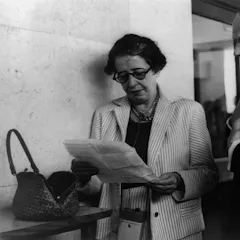
One of the main lessons of Arendt’s Origins of Totalitarianism is that we must actively think in the now, and try to grasp new realities on their own terms.

Usual approaches to addresing the climate crisis are not working, and as the world changes many are struggling to find a clear sense of place. Learning to love the world could help solve both issues.
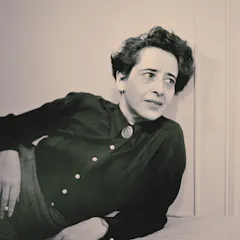
Arendt maintained that our ‘common sense’ depends on our good will and curiosity, our adventurous enjoyment of testing opinions and perspectives against those of others.
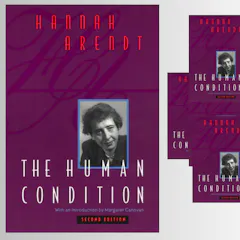
German-American philosopher Hannah Arendt’s masterwork foresaw the self-obsessed consumerist world that technology was creating.
Cultural historian Clair Wills reflects on the secret cousin born in Bessborough Mother and Baby Home, which at one point had a morality rate of 75% – and her family’s complicity in a national tragedy.
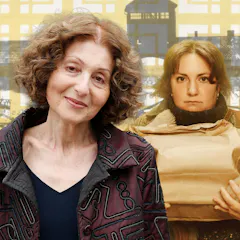
Too Many Men won acclaim for its depiction of a father and daughter and their different emotional responses to the crimes of the past. Tess Scholfield-Peters considers the book’s impact today.
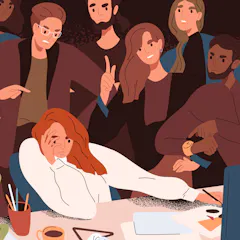
The political thought of Hannah Arendt reminds us that we are more than our successes and failures.
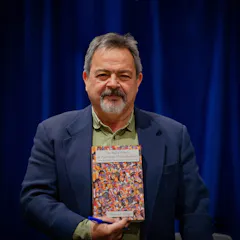
Ghassan Hage has been sacked by Germany’s prestigious Max Planck Foundation due to his trenchant criticism of Israel’s war. It’s just the latest in an ongoing culture war in Germany.
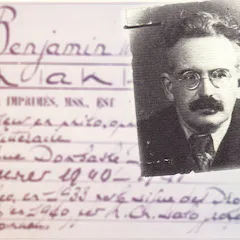
In his essays, Walter Benjamin sought to understand the nature of modernity. He drew on Marxism but was not contained by it, ranging across literature, art, popular culture, even Jewish mysticism.

Sixty years ago, philosopher Hannah Arendt argued an interplanetary perspective may be bad news for humanity as we know it.
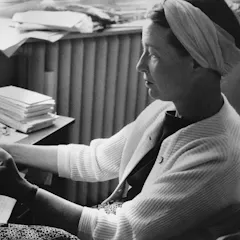
A new book follows four women philosophers through ten of the worst years in the 20th century, spanning 1933, the year Hitler was appointed Chancellor of Germany, to the thick of the second world war.
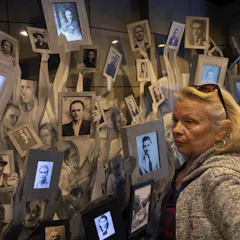
Nazi war criminal Adolf Eichmann was anything but banal. His case is an apt reminder of how evil agents can deflect accountability, denying victims even the thin consolation of the moral high ground.
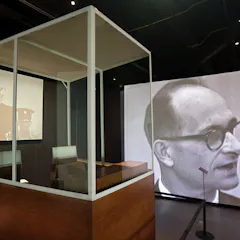
As a child of Hungarian Jews, reading Eichmann in Jerusalem was a revelation to Peter Christoff. Yet might the ‘Eichmann problem’ of criminal disregard apply, today to those exploiting fossil fuels?

Children live through the same wars as adults. The effects of the Russian invasion of Ukraine on children will have long-lasting effects, and underscores the urgency of a peaceful resolution now.

While AI is intended to help us, it tempts us to abandon judgment and moral responsibility. And without a proper understanding of how it works, we cannot circumvent its negative effects.

Once something bound up with other people, more recently ‘happiness’ is seen as something very individual. Has our dependence on each other during lockdown changed our sense of where happiness lies?

Despite the nihilism and pessimism of internet memes, people ultimately understand the direness of the danger posed by a powerful virus, climate change and global instability.
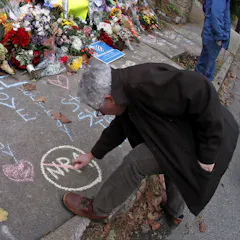
To grasp how extraordinary evils are often committed by ordinary people, we need to consider how we define evil, and most importantly, whom we consider to be the agents of evil.
Top contributors
-

Professor Emerita of Women's Studies, San Diego State University
-
Senior Lecturer, Edge Hill University
-
Associate Professor, School of Criminology, University of Leicester
-
Senior Lecturer in Islamic Studies, University of Birmingham
-
Senior Research Fellow, Centre for the Advancement of Scholarship, University of Pretoria., University of Pretoria
-
Associate Professor, School of Political Science and Economics, Waseda University
-
Lecturer in 20th and 21st Century Literature, University of Exeter
-
Lecturer and Teacher, Department of Politics and International Relations, Cardiff University
-
Assistant Professor, University of Alberta
-
Assistant researcher, University of Sydney
-
Distinguished Professor Emerita of Creative Practice, Faculty of Arts and Design, University of Canberra
-
Associate Professor of Education, York University, Canada
-
Associate Professor in Archaeology and Space Studies, Flinders University
-
PhD candidate, English Literature, Australian National University
-
Professor in department Law, Managment, and Social Sciences, EM Lyon Business School