
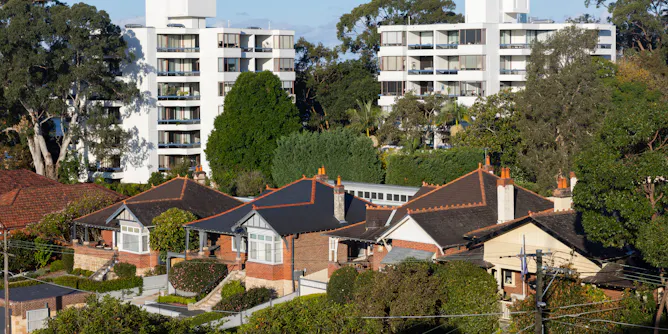
The high cost of housing is also keeping half of young adults up to age 29 living with their parents.
Articles on Housing stress
Displaying 1 - 20 of 36 articles

One Australian survey found more than a third of private renters feel their housing situation is harming their mental health.
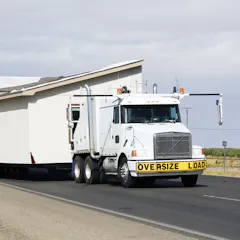
It sounds daunting: lifting a house onto a truck and moving it to an empty block. But house relocations can make sense for many would-be home owners.
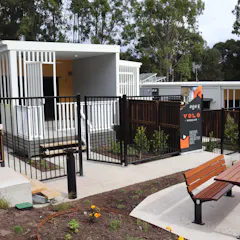
Governments’ policy inaction and complacency bear much of the blame for the lack of affordable housing. But a new report detects signs of hope in Queensland.

Even changing the tax system won’t end steadily-climbing property prices. They are the result of urbanisation, and while COVID has eased some of the pressures, it has added some more.

People wait years for social housing. In before-and-after interviews, the fortunate ones who were placed in secure, affordable housing describe the profound difference it has made in their lives.

An ageing population is caught in a perfect storm of rising house prices and rents, falling home ownership rates, mortgage debt carried into retirement, insecure rentals and a lack of social housing.

People in search of more affordable housing gravitate to the outer suburbs, but may then find higher transport costs erase the benefit of lower mortgage payments.
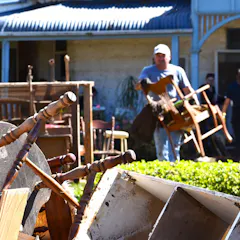
Renters with nowhere to go. Home owners forced into mortgage stress. If our homes are damaged by floods or fires, it damages our health for years afterwards

Brisbane rents are up nearly 50% more than the national average and homelessness in Queensland is increasing at the fastest rate in the country. The state can take several steps to turn things around.

Why are some of the problems with housing stress and homelessness worse in New South Wales than in other states?
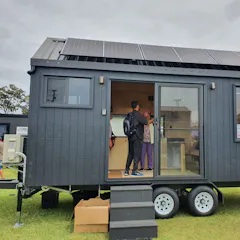
Despite a common belief that councils won’t approve tiny houses and modular and container homes, early findings from a national survey suggest planners are increasingly open to these housing options.

A report uses an international benchmark of no more than 7% of disposable income spent on childcare to determine affordability. It finds childcare is unaffordable for 386,000 Australian families.

High rents and insecurity are constant sources of financial and emotional stress for low-income women. They describe what it’s like struggling to survive and being one step away from being homeless.

Older women have been the fastest-growing group of homeless people in recent years. New research shows about 240,000 women aged 55 or older and another 165,000 women aged 45-54 are at risk.

Of 2,646 hectares of public land being prepared for sale in Victoria, 24 sites are suitable for building high-quality public housing in places of high need. Why isn’t the land being used for this?

After paying rent, more than half of low-income tenants don’t have enough left over for other essentials. And the latest evidence shows nearly half of them are stuck in this situation for years.

Once rent is paid, having to live on only $14 a day doesn’t cover the costs of job seeking. The evidence of the need to increase Newstart and Rent Allowance is overwhelming.

The government is being pressed to bring back a particularly ineffective and wasteful scheme.

The difficulties for people facing housing disadvantage don’t end as soon as their situation improves. They are at higher risk of poorer mental health years or even decades later.
Top contributors
-

Emeritus Professor of Housing, UNSW
-
Professor of Social Epidemiology and Director of the Centre of Research Excellence in Healthy Housing at the Melbourne School of Population and Global Health, The University of Melbourne
-
Professor of Housing Research, Adelaide University
-
Professor, City Futures Research Centre, Faculty of the Built Environment, UNSW
-
Professor of Housing & Social Policy, HHAUS Housing, Homelessness & Urban Studies, Swinburne University of Technology
-
Senior Research Fellow, Housing, Homelessness & Urban Studies (HHAUS) research group, Swinburne University of Technology
-
Associate Professor, Geography and Urban Studies, Western Sydney University
-
Alan Morris is a Friend of The Conversation.
Professor, Institute for Public Policy and Governance, University of Technology Sydney
-
Associate professor in urbanism, University of Sydney
-
Senior Lecturer City Planning, UNSW
-
Lecturer in GIS and Planning, Griffith University
-
Emeritus Professor of Housing and Housing Studies, RMIT University
-
Senior Lecturer, Department of Economics, Monash University
-
Professorial Fellow and Co-Director, HILDA Survey, Melbourne Institute of Applied Economic and Social Research, The University of Melbourne
-
Honorary Professor of Housing Policy and Practice, City Futures Research Centre, UNSW