
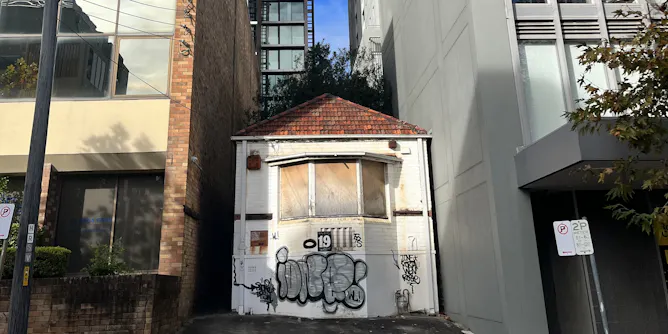
Healthy planning debates shape our cities for the better and should not exclude anyone based on crude characterisations of their motives.
Articles on Infill development
Displaying all articles

Current construction approaches are too slow to achieve the ambitious national housing target. But there’s a proven alternative building technology that’s more efficient, faster and greener.
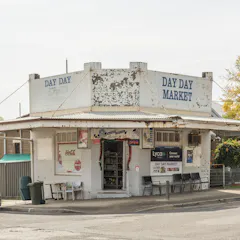
Development is claiming so many of our old suburban homes that tell the story of Australia.
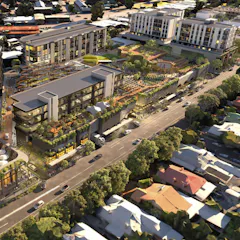
Infill development is patchy across Australian cities, as is its quality. Bigger and better projects are needed to hit planning targets and reduce urban sprawl.

Ad hoc, lot-by-lot efforts to house more people in our ageing suburbs are failing to increase liveability and sustainability. Our cities need strategic, precinct-scale regeneration.

Residents of the ‘leafy suburbs’ will continue to fear what they might lose to increasing urban density without an explicit planning approach that enhances green space in affected neighbourhoods.
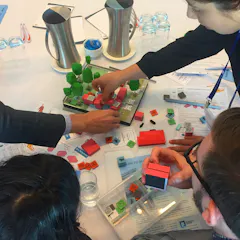
Faced with local planning changes like infill development people often fear they could lose the neighbourhood they love. But serious games are proving effective in giving locals a say in their future.
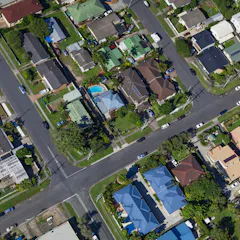
Residents of established middle suburbs are slowly coming round to the idea, but governments and the property sector lack the capacity to deliver compact cities that are acceptable to the community.

Traditionally, new communities first get hard infrastructure – schools, hospitals, transport – and ‘soft’ social infrastructure comes later. Liveability and public health suffer as a result.
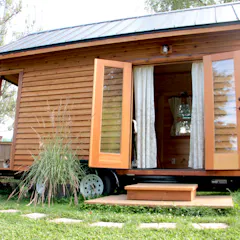
New research has found a marked increase in people, particularly among women over 50, who are building or want to build a tiny house. However, inflexible planning rules often stand in their way.
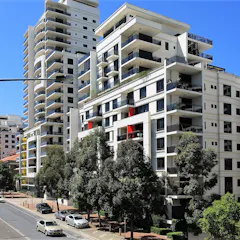
Many new housing developments are being built along busy roads and rail lines, but lack design features that would reduce occupants’ exposure to harmful traffic pollution.
Government and industry need to demonstrate the benefits of well-designed higher-density housing. Rich residential display projects may be the ideal catalyst for creating smarter cities.
If the sharing economy is here to stay, planners and designers must respond with imagination to spread the positive effects of the tourism economy for the benefit of residents as well as tourists.
Top contributors
-

Emeritus Professor in Sustainable Urbanism, Swinburne University of Technology
-
Professor, Director Australian Urban Observatory, Centre for Urban Research, RMIT University
-
GIS Analyst, Centre for Urban Research, RMIT University
-
Lecturer in Architecture, Monash University
-
Professor of Architecture, The University of Western Australia
-
Senior Research Fellow, Healthy Liveable Cities Group, Centre for Urban Research, RMIT University
-
Scientia Professor, Faculty of Medicine and Health, UNSW
-
Senior Research Fellow, Woolcock Institute of Medical Research, Macquarie University and the South West Sydney Clinical School, UNSW Sydney. Affiliate, Centre for Safe Air., UNSW
-
Research Fellow, Centre for Urban Research, RMIT University
-
Postdoctoral Research Fellow, Centre for Urban Research, RMIT University
-
Industry Professor, Environment and Sustainability, Macquarie University
-
Senior Research Fellow, Centre for Urban Transitions, Swinburne University of Technology
-
Senior Lecturer, Creative Writing, Western Sydney University
-
Deputy Director, Australian Urban Design Research Centre, The University of Western Australia
-
Honorary Professor of Planning, The University of Queensland