

Most states know that without widely understood and accepted international laws and principles it would be harder to resolve their disagreements peacefully.
Articles on International laws
Displaying all articles
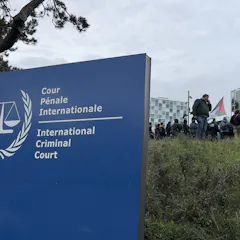
Prosecuting leaders indicted for war crimes is difficult. But the trial of Serbian leader Slobodan Milosevic in the early 2000s offers a potential playbook.

The bombing of the Iranian consulate in Damascus and storming of Mexico’s embassy in Quito breaks with accepted diplomatic norms − and could spell trouble.

Uganda, as the concerned state party, is expected to go out and find Dominic Ongwen’s victims.
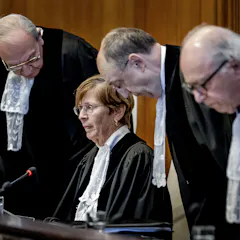
While the International Court of Justice lacks enforcement powers, its new provisional measure could heighten pressure on both Israel and Hamas to save civilian lives and free the hostages in Gaza.

The crime of genocide was first established in law by a Polish Jew who had fled the Nazis and wanted to hold them to account for the Holocaust.

International law states that states have to operate ‘due regard’ for the right of nations to fly drones above international waters. Washington claims Russia violated this standard in incident.
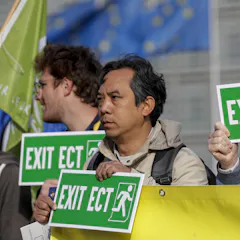
The Energy Charter Treaty allows fossil fuel investors to sue governments over climate action – prompting EU countries to withdraw.
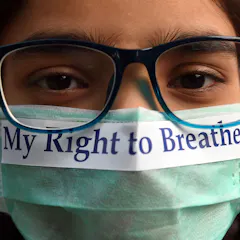
It’s more than moral posturing. Resolutions like this have a history of laying the foundation for effective treaties and national laws.

The prosecution and death sentences handed out to two British and one Moroccan national fighting alongside Ukrainian troops contravenes the Geneva Conventions.

The West isn’t exactly diligent about following international rules of law. It conveniently ignores or sidesteps global rules-based order when it’s convenient.

There aren’t enough international and domestic laws to address how the interests of humans and the needs of wildlife overlap.
Top contributors
-

Associate Professor of Politics and Global Studies, Arizona State University
-
Professor of International Law, University of Portsmouth
-
Assistant Professor, Human Dimensions of Natural Resources, Colorado State University
-
Lecturer in Law, University of Westminster
-
Lecturer in Law, University of East London
-
Professor of Scholarly Research in Law, University of Virginia
-
Lawyer, Queensland University of Technology
-
Scholar-in-Residence & Lecturer, SFU School for International Studies, Simon Fraser University
-
Professor of Law, American University
-
Assistant Professor in International Peace Studies, Trinity College Dublin
-
Outgoing Interim Director of the Frederick S. Pardee Center for the Study of the Longer-Range Future, Boston University
-
Professor/Senior Research Fellow, Centre for Advancement of Scholarship, University of Pretoria