

The action star’s death forced fans to reckon with his strange legacy: a real person with a complicated past, and a meme that made him into an immortal symbol of exaggerated masculinity.
Articles on Internet culture
Displaying 1 - 20 of 26 articles

The adoption of Draco Malfoy as a new year’s symbol has much to teach us about the complexities of Chinese wordplay.
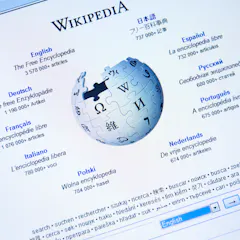
Wikipedia is built on a “neutral point of view”. But who decides what neutral means?

The author of the new book ‘Attention and Alienation’ wonders if the online world can ever become a place where kindness and human flourishing are the prevailing ethos.

Beyond the jokes and memes, this silly debate provides an opportunity to reflect on human evolution.
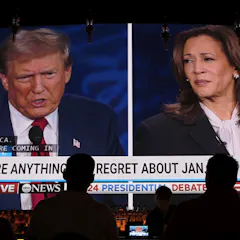
Popular memes debating Harris’ racial authenticity say less about the US’s first Black and Indian vice president and more about Americans’ complex cultural conversations.
The winners offer a window into the spirit of the times.

How do a country and its citizens deal with the trauma of a deadly invasion by an enemy? Memes, cats and TikToks are emerging – most recently in the Ukraine war – as a way to cope with tragedy.

Portions of the internet disappear every day. Preservation of this historical record requires a proactive approach by archivists and everyday citizens.

Internet sabbaths and surveillance capitalism in the COVID-era: William Powers on what’s changed since Hamlet’s Blackberry
The Conversation57.8 MB (download)
Journalist and author William Powers talks with Media Files about taking an internet sabbath, how the media covers tech and what's changed since his book Hamlet’s Blackberry was first published.

What started as a showcase for America’s drag queens is fast becoming a global sensation.
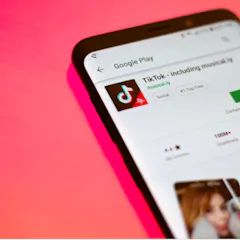
TikTok was one of 2018’s most downloaded mobile apps for Apple and Android devices in the US and Europe.

In the decades since the first shitpost, the practice has become widespread and sophisticated – especially among today’s young people.

Imma let you finish, but there’s more to memes than you think.

What happens to your Facebook account, your iTunes purchases and your email messages when you die?

Eating laundry detergent capsules online is not the fault of the younger generation. In modern society, attention is power.

Around the world, people are both increasingly dependent on, and distrustful of, digital technology. New research suggests ways this conflict could unfold.
Should reality stars be warned that everything they say can and will be used against them in a court of law? Turns out, it’s complicated.

From photoshopped images, to fake eye-witness accounts, to a real-life attempted murder, the Slenderman is the internet’s urban myth.
While the US is reeling from rampant fake online news, political movements in Europe are using the internet as a powerful democratic symbol to win elections. Will cyber-optimism or pessimism win?
Top contributors
-

Interdisciplinary researcher on hybrid space and peer-to-peer systems, ETH Zurich
-
Dean of Global Business, The Fletcher School, Tufts University
-
Associate Vice President for Entrepreneurship and Innovation, Clemson University
-
Research Fellow at the TONOMUS Global Center for AI and Digital Transformation, International Institute for Management Development (IMD)
-
Lecturer in Geographic Information Science, Birkbeck, University of London
-
Associate Professor of Law, Drake University
-
Professor, UCL
-
Associate Professor of Psychology, University of Oregon
-
Adjunct professor, Swinburne University of Technology
-
Associate Professor of Applied Linguistics, University of Reading
-
Assistant Professor of Journalism and Communication, Chinese University of Hong Kong
-
Professor of Innovation and Strategy, Cisco Chair in Digital Business Transformation, International Institute for Management Development (IMD)
-
Lecturer in Marketing, The University of Melbourne
-
Associate Professor in Media Theory and History, Università di Torino
-
Associate Professor in Education, University of East Anglia