

Right now, you can’t advertise a stock market debut before filing a prospectus. Could loosening this rule give shrinking public markets a boost?
Articles on IPOs
Displaying 1 - 20 of 41 articles

In the old days, companies went public early to access cash to grow. These days, soon-to-be-public companies are already flush with cash from private finance.

Markets only work when everyone plays by the same rules, and right now, not everyone is.

In the old days, companies like Apple and Amazon went public early to access cash to grow. These days, soon-to-be-public companies are already flush with cash from private finance.

The cost and red tape involved in preparing to list a company on the Australian stock market can deter businesses from listing.

The listing is a huge milestone for private equity firm Bain Capital, which acquired the airline in crisis five years ago.
The regulator is worried that risks may be lurking in less transparent private markets.

Does the controversial company really want the transparency demands that come with a listing?

Completing the $44 billion deal, following six months of turmoil, may be the easy part.

Why are so many entrepreneurs in Canada avoiding going public, and what are the consequences for our economy?

A finance scholar explains what an IPO is, how it works and a new way companies are going public that’s winning the hearts of WallStreetBets Redditors.

Airbnb is taking a very bold step by issuing a multi billion dollar IPO during a global economic slowdown – something that was unthinkable a few years ago.

Like the entire tourism industry, the coronavirus pandemic has had an enormous effect on Airbnb’s finances.
Investment in tech businesses is crumbling but the winners are eyeing up the losers.
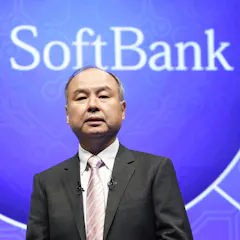
SoftBank is pouring another US$8 billion into WeWork, even though the office rental company is now valued at just US$8 billion.
WeWork’s uncertain future reflects how investors have wised up to the hype around Silicon Valley start ups.
Fundamentally, WeWork’s finances do not look good. It is still a long way from profitability.
Astronomic valuations for non-profitable companies are popular in Silicon Valley but how are they calculated and what do they reflect?
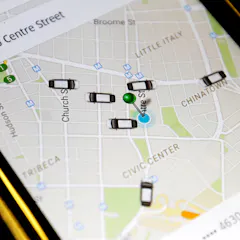
Uber’s IPO will value the company at more than $80 billion, yet the data it collects on its users may be worth even more – and creates the potential for dangerous manipulation.

Shareholder pressure and influence brings with it the quest for short-term returns at the expense of longer-term creativity and innovation.
Top contributors
-

Professor of Practice, Associate Dean, Warwick Business School, University of Warwick
-
Director of UWA Centre for Software Practice, The University of Western Australia
-
Senior lecturer, University of Glasgow
-
Professor of Accountancy, University of Notre Dame
-
Senior Lecturer, Monash Business School, Monash University
-
Associate Professor of Finance, UNSW
-
Research Associate, Keele University
-
Professor and Head, School of Business, Monash University Malaysia
-
Foundation Professor of Finance, University of Newcastle
-
Professor of Marketing and Innovation, Director, Marketing Innovation and The Chinese and Emerging Economies (MICEE) Network, Warwick Business School, University of Warwick
-
Associate Dean, Research and Innovation, University of Salford
-
Professor of Health Economics, University of Technology Sydney
-
Associate professor Head of Management Discipline Group UTS Business School, University of Technology Sydney
-
Associate Professor of Accounting, University of Nottingham
-
Professor, Accounting and Finance, City St George's, University of London