
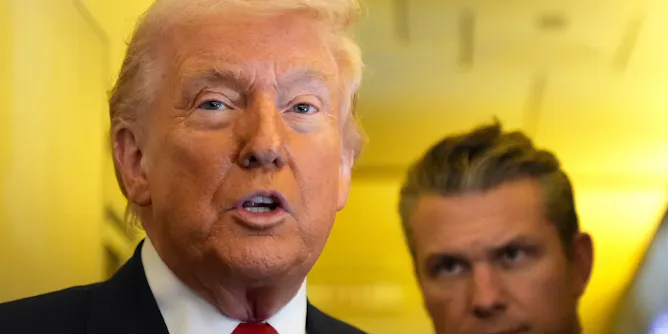
With midterm elections looming and cost of living pressures biting, Americans have little patience for being involved in a foreign war they don’t understand.
Articles on Israel-Iran War
Displaying 21 - 40 of 73 articles

The war on terror is among the Middle East conflicts that sparked a rise of anti-Muslim and anti-Arab discriminatory incidents in the US.

As critics question President Trump’s motivations for war on Iran, it’s not just about politics. It’s about the Constitution and whether Congress has any hope of checking the president’s warmaking.
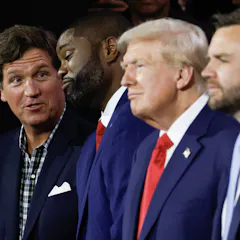
MAGA mouthpiece and kingmaker Tucker Carlson was an early voice on the Mexico wall, Putin, Orban and South Africa – as well as RFK Jr and Tulsi Gabbard. What next?

The short book makes a powerful statement about how authoritarianism begins in the household.
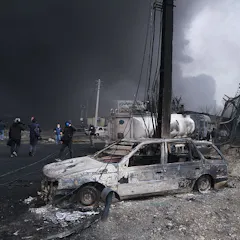
Gulf states have been opportunistic players in the Horn of Africa.
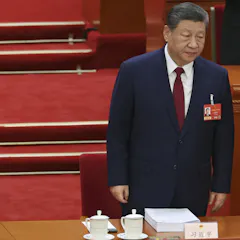
Beijing has denounced US-Israeli action in Iran, but has not rushed to come to the aid of its regional ally.
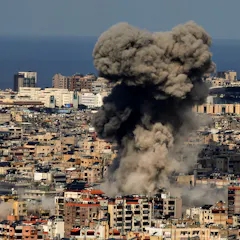
Hezbollah’s entry into the current war followed the killing of Ayatollah Ali Khamenei. The group has long been aligned with the Islamic Republic.
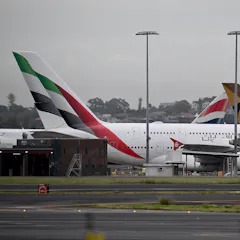
The government has deployed six “crisis response” teams to the Middle East to help deal with the overload caused by the huge number of Australians stranded.
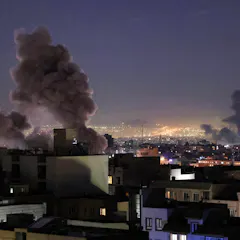
By appealing to international law and a ‘rules-based’ order, but not opposing the US-Israeli action, the government appears caught in the diplomatic crossfire.
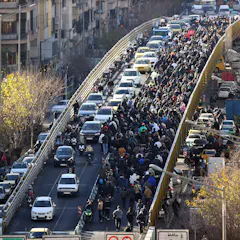
Iran’s leaders are more vulnerable than ever. Yet, they still have many tools of repression at their disposal.

Interviews with 30 Iranian Canadians help to untangle the roots of political tensions and evolving solidarities in the Iranian diaspora in Canada.
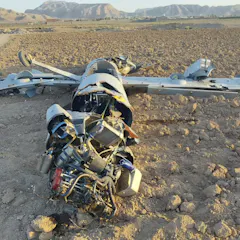
The use of armed drones is not new, but they are gaining importance in current conflicts as combat units. Their automation is likely to accentuate this phenomenon.
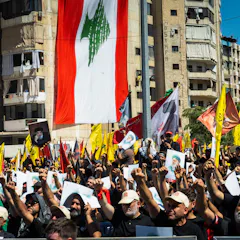
For decades, Lebanon has been torn apart by internal division and external conflict. There may currently be a narrow window for a different future.

In the majority of cases, diplomacy has played a pivotal role in convincing nuclear-seeking nations to relinquish their pursuit of nuclear weapons.
Both Donald Trump and Benjamin Netanyahu talked of regime change in Iran. Instead they may have left the Islamic Republic stronger.
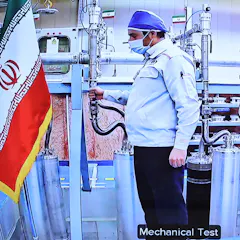
Both Israel and the US claim a nuclear-armed Iran would pose an existential threat. It wouldn’t. Here’s why.
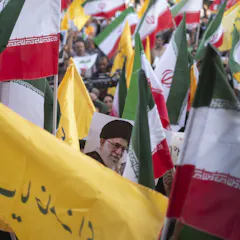
The Islamic Republic has a history of targeting minority ethnic groups, especially the Kurds, when it feels threatened.

Fears about supply, demand, profits and supply chains all combine into a volatile mix that delivers prices that are often higher in a crisis, but also change more rapidly and by larger amounts.
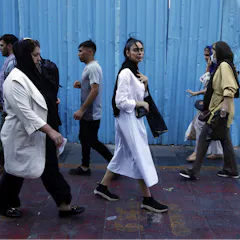
News reporting on Iran encourages a view of the regime as homogeneous, ideological and separate from the people. But many Iranians have ambivalent views on the state.
Top contributors
-

Research Fellow, Middle East Studies, Deakin University
-
Professorial Fellow, University of Canberra
-
Emeritus Professor of Middle Eastern Studies, Australian National University; The University of Western Australia; Victoria University
-
Director of Dickinson Program in New Zealand, Dickinson College; University of Otago
-
Senior Lecturer, Politics & International Relations, Monash University
-
Lecturer, Public Safety, University of Tasmania
-
Research Scholar, Middle East Studies, Australian National University
-
Associate Professor of Economics and Finance, University of Tasmania
-
Assistant Professor of International Relations, American University
-
Lecturer in Media and Communications, University of Sydney
-
Associate Professor, Khalifa University
-
Professor of Non-Proliferation & International Security, King's College London
-
Professor of International Security & Director of the Queen's Institute for Peace, Security and Justice, Queen's University Belfast
-
Adjunct Senior Lecturer, Applied Ethics and CyberSecurity, Griffith University
-
Lecturer in Middle East Studies, Deakin University