
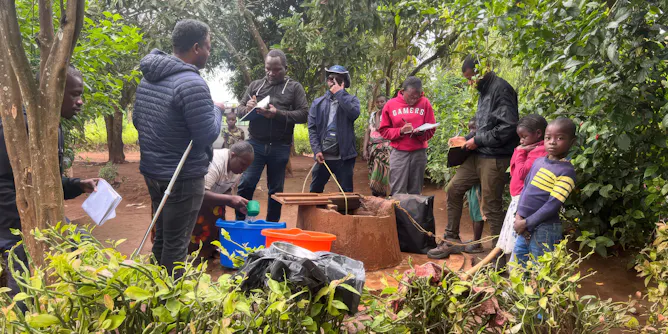
A new continent-wide map is helping identify where Africa’s groundwater can support drinking water and irrigation. Monitoring boreholes tracks aquifer health.
Articles on Liberia
Displaying 1 - 20 of 71 articles

Assessments are often treated as culturally neutral when they are not.
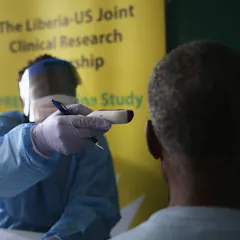
10 years after official end of the Ebola pandemic, very few people know that survivors have struggled to continue with their lives.
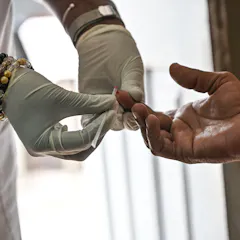
African countries must not sign away their health data or release their pathogens in exchange for donor funding.

The Trump administration’s move to withdraw the US from these organizations risks undercutting lasting peace and global human rights accountability.
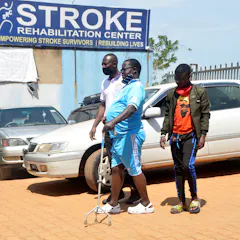
Despite the rising burden of stroke across Africa, there is no continent-wide framework or standardised protocol for stroke management.
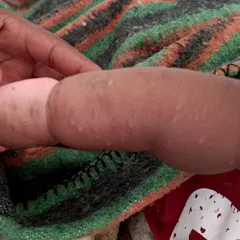
Sierra Leoneans are worried by the increasing number of mpox cases and deaths that have been recorded in 2025.

Child soldiers are victims, not villains. This is why children in conflict zones must be protected.

Women play a significant role in Liberia’s agriculture. But many don’t have enough to eat.
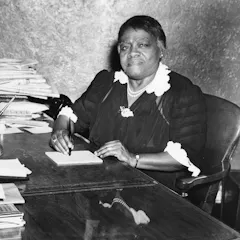
A former archivist at Mary McLeod Bethune’s home in Washington, DC, recounts how the experience led her to see Bethune as a global figure.

Fibre optic cables now literally encircle Africa, though some parts of the continent are far better connected than others.

As Liberia experiences yet another transfer of power, military neutrality in domestic politics, war fatigue and desire for reconciliation have been identified as reasons for sustained peace.
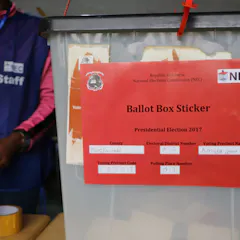
Liberia’s next president must restore national cohesion, tackle corruption, and strengthen state institutions.

People with diabetes in Liberia face a vicious cycle of hunger and neglect that can sometimes spiral out of control and put their lives in danger.

The new ECOWAS chairman must focus on strengthening democracy and security in west Africa.

As the United States government builds economic and security ties with African countries, some of those countries are encouraging African Americans to establish social and economic ties in Africa.

Kittrell’s legacy shows that home economics was always about more than cooking and sewing. It’s also a reminder that issues that affect families are simultaneously local and global.
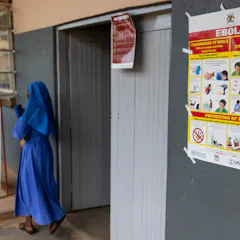
As with Ebola, it is often only when the harm is done that people working on the response realise health emergencies disproportionately harm women.
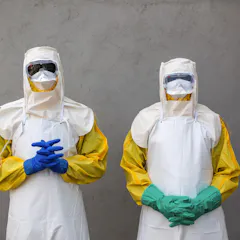
When tackling an Ebola outbreak speed is a critical element - every hour counts.
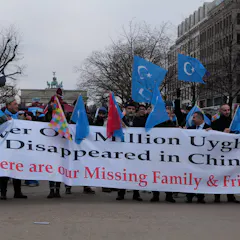
Is history really a triumphant march of progress? It depends on your point of view.
Top contributors
-

Part-time lecturer at the Global Health & Social Medicine, Harvard University, and Lecturer at the School of Public Health, College of Health Sciences, University of Liberia
-
Assistant Professor in International Social and Public Policy, London School of Economics and Political Science
-
Non-Resident Research Fellow, Igbinedion University
-
Fellow, Nigerian Academy of Science
-
Professor of Democracy, University of Birmingham
-
Researcher and PhD Candidate in Global Health, University of Sydney
-
Professor in Food Security; Head of the Department of Agricultural Economics, Extension and Rural Development, University of Pretoria
-
Professor of Evolutionary Biology and Science Engagement, University of East Anglia
-
Adjunct Professor of African Security Studies, University of Juba
-
Senior Lecturer in Medical Ethics and Law, St George's, University of London
-
Professor of Operations Research, Brock University
-
Research Assistant, University of Pretoria, University of Pretoria
-
Professor of World Politics, SOAS, University of London
-
Lecturer, Biomedical and Life Sciences, Lancaster University
-
Honorary Senior Lecturer, School of Social and Political Sciences, University of Sydney