
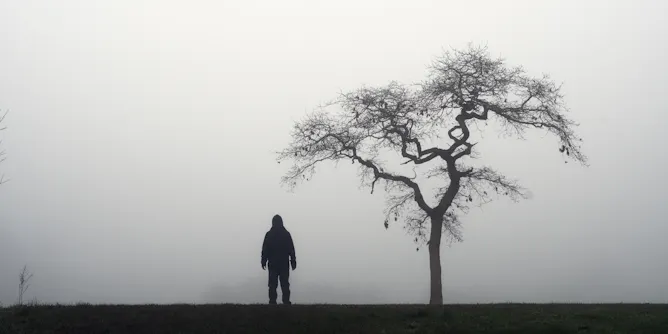
The catastrophic story is familiar, but the insight, and the ending, offer an opportunity, and perhaps motivation, for modern readers.
Articles on Mary Shelley
Displaying 1 - 20 of 26 articles
In the age of AI we are once again hearing about Luddites, the 19th-century textile workers who sought to protect their livelihoods in early industrial England.

Getting lost in a book is now regarded as an enriching experience – but a few hundred years ago, reading novels was considered a corrupting force.

Maggie Gyllenhaal’s The Bride! offers less a story about the bride of Frankenstein, and more a commentary on the lesser-known sad second life of Mary Shelley.

Del Toro’s film presents the Arctic of the 1800s as a barren wasteland, which overlooks the existence of Indigenous peoples who have lived there for millennia.

Guillermo Del Toro’s ‘Frankenstein’ reconsiders the cultural imagining of ‘the monster’ and how stories reflect attitudes about difference — especially difference in embodiment.
Lech Blaine grew up worrying a pair of nomadic Christian fanatics would appear to try to kidnap his foster siblings. One day, they showed up. His memoir tells the story.

She has largely been airbrushed from history, but a new novel seeks to make Claire Clairmont visible by imagining her life after Byron.
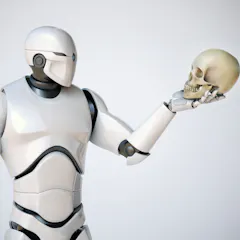
Humanity is the only species on earth for whom intelligence is also an ethical liability.
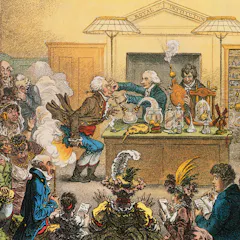
Davy’s famous lectures on the animating power of electricity may have inspired a young Mary Shelley as she came up with the idea for Frankenstein.

The possibilities of ‘more human than human’ artificial intelligence and the dangers of playing God and are not new – they’re the subjects of one of the world’s first science-fiction novels.
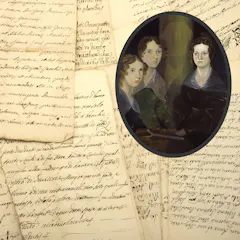
New research shows that literary relatives tend to share a similar writing style.

‘Dark Souls’ draws on the literary theme of the ‘last man’ that emerged from the work of French author Jean-Baptiste Cousin de Grainville and those inspired by him.

What would happen if plague destroyed all of humanity? Mary Shelley’s 1826 book suggests Earth would be better off.

From cholera outbreaks to public health actions, war metaphors have long been used to describe diseases, to show what we fear and to explain our world to ourselves.

In the project Erasing Frankenstein, students, educators and incarcerated women collaborated to created an erasure poem of Mary Shelley’s classic text, and publicly showcase their work.

It’s not just a modern fad – plant-based diets have a long and colourful political past.

Written in the same house party as Mary Shelley’s Frankenstein, Polidori’s creature was based on the “mad, bad and dangerous to know” Lord Byron.

The story of how Mary Shelley dreamed up Frankenstein is famous. Less well-known, however, is the reading material that inspired her to write.

Frankenstein might look like fantasy to modern eyes, but to its author and original readers there was nothing fantastic about it.
Top contributors
-

Professor of Romantic Literature, University of Sheffield
-
Professor of History, Department of History & Welsh History, Aberystwyth University
-
Lecturer in English, University of Exeter
-
Chancellor's Professor of Medicine, Liberal Arts, and Philanthropy, Indiana University
-
Head of Italian Studies, University of Warwick
-
Professor of English Literature, University of Dundee
-
Doctoral Student in Biochemistry, University of Washington
-
PhD Candidate of English, Dalhousie University
-
Senior Lecturer in Digital Humanities, University College Cork
-
Postdoctoral research fellow in English, University of Sydney
-
Associate Professor of Research, University of Hertfordshire
-
Professor of English, University of Victoria
-
Research Associate on the Davy Notebooks Project, Lancaster University
-
Associate professor, University of New Brunswick
-
Lecturer in Politics and International Relations, University of Sydney