

At a time when California’s farm operators are struggling to hire enough people, providing better benefits could attract more workers who are citizens or have legal immigration status.
Articles on Medicaid
Displaying 41 - 60 of 144 articles

Medicare Advantage − the private option that costs taxpayers extra and requires prior approval − is the default for some state agencies and corporations.

The court’s decision on whether Medicaid patients can choose their own health care provider could have consequences far beyond South Carolina.

Health Secretary Robert F. Kennedy Jr.’s new vision for US health policy prioritizes deregulation and leaves Americans with fewer benefits, services and protections.
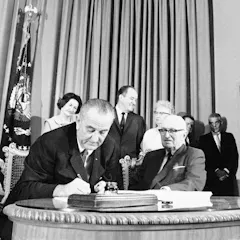
Left out of FDR’s New Deal, the health insurance program for the poor was finally established in 1965.

Two health law scholars explain how the public health insurance program for low-income people and people with disabilities works, and why cutting its cost would be hard to pull off.

Tracking disability policies has long been challenging − this will become a harder task under the Trump administration.

Access to health care is a big one as rural hospitals close. Two researchers who focus on rural issue explain how the federal government could help.

While it doesn’t constitute a national ban on gender-affirming care for minors, the executive order contains provisions that could have a chilling effect on health care providers around the country.

Overseeing the FDA, NIH and several other public health and medical research divisions, the HHS secretary is a powerful force in how the nation accesses health care.

Studies show that people who can easily access dental care are more likely to go for cleanings and other procedures.

Signing up for a Medicare plan when you turn 65 − or making changes in subsequent years – means wading through a thicket of consequential choices that can’t always be undone.

Some of these agencies told researchers that their organizations couldn’t afford to pay their workers enough money for them to cover basic living expenses.

When patients spend large sums on their cancer care, it can be hard for them to afford basics such as food and housing.

Immigration rhetoric and policies have created a chilling effect for immigrants seeking medical care. Two dozen Latina immigrant mothers share their experiences during pregnancy.

Knowing which kind of provider to see and how to access help can be half the battle.

Paying the caregivers of people with disabilities more would improve care while increasing economic growth, a research team found.

What happens in November 2024 could influence other states weighing their own options.

When dementia patients on Medicare enroll in hospice, they lose other crucial supports and services.

Voters frustrated by statehouse politics are bypassing elected representatives and enacting laws using direct democracy to preserve abortion rights, raise the minimum wage and rein in state spending.
Top contributors
-

Associate Professor of Public Health, The Ohio State University
-
Professor of Gerontology, UMass Boston
-
Senior Research Fellow and Lecturer of Gerontology, UMass Boston
-
Professor of Law, University of Virginia
-
Professor of Public Policy (retired), University of Virginia
-
Assistant Professor of U.S. History, University of Cambridge
-
Professor of Social Welfare, Stony Brook University (The State University of New York)
-
Professor of Law, George Washington University
-
Venable Professor of Law, University of Baltimore
-
Investigative Journalist, The Conversation
-
The Lee and Brena Freeman Professor at the University of Chicago Law School and Professor at the Pritzker School of Medicine., University of Chicago
-
University Professor of Sociology, Syracuse University
-
Associate Professor of Health Law, Policy and Management, Boston University
-
Research Scientist of Health Policy and Economics, University of Southern California
-
Associate professor of Education, University of Oregon