
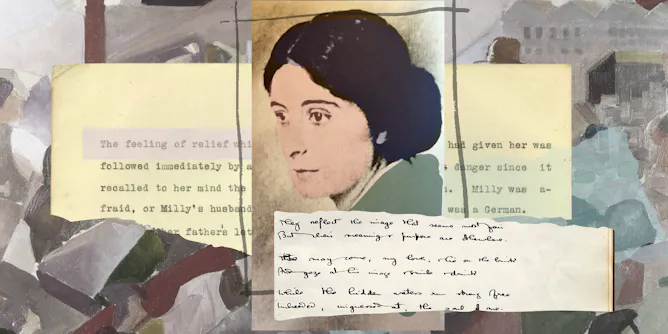
Lesbia Harford knew she would die young but became a revolutionary all the same. Her writing captured the dizzying confusion of a violent time.
Articles on Modernism
Displaying 1 - 20 of 62 articles
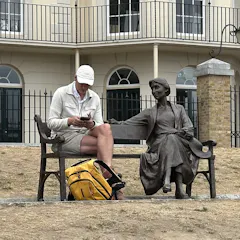
Writing prompts to generate images combines two literary tasks at once: the realist description of concrete things and the modernist evocation of atmosphere.
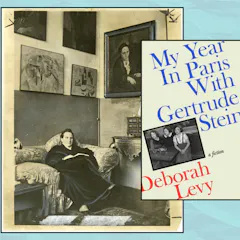
A novel about a women trying to write about Gertrude Stein and also the art of creating.

Niall and Leah’s long distance relationship will test what love and career mean on a planet in crisis.
Noise first became a public health issue in interwar Britain – called the ‘age of noise’ by dystopian author Aldous Huxley.
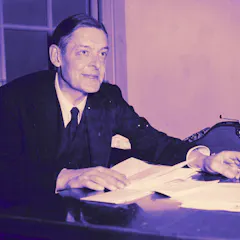
Diagnostic and symptomatic, accusatory and culpable, communal and personal, The Hollow Men is a poem about that which ails society at large.
‘If the book we are reading doesn’t wake us up with a blow on the head, what are we reading it for?’
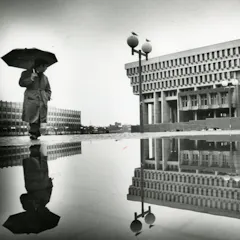
Its staggering forms made monuments out of ordinary places frequented by ordinary people.
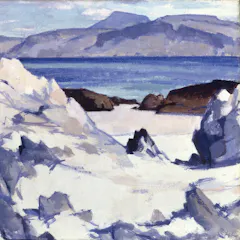
In the early years of the 20th century, four painters left behind a drab grey Presbyterian Scotland for the exciting avant-garde scene in Paris and changed Scottish painting forever.
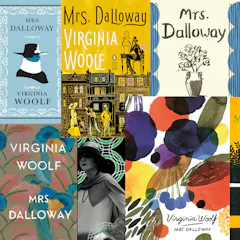
Virginia Woolf’s classic Mrs Dalloway was revolutionary for its challenge to the novel form and its representation of time.
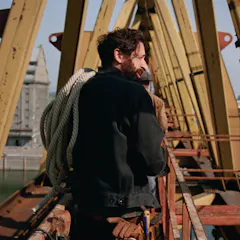
Brady Corbet’s epic is a hymn to one man’s tenacity and vision that explores the interconnected fates of the architect and his buildings.
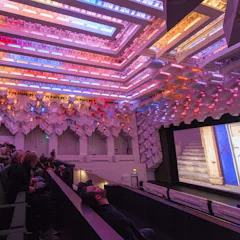
Unlike other great modern structures, The Capitol is imbued with symbolism and a sense of mystique.
Reading poetry can be a daunting affair. In Australian Poetry Month, an expert shows us how one poem works – and what it reveals.
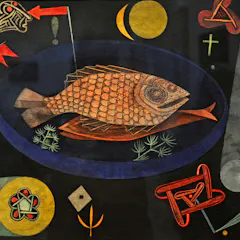
Alice B. Toklas and her partner, the influential modernist writer Gertrude Stein, hosted a celebrated Paris salon. Toklas would go on to write an unusual bestseller.
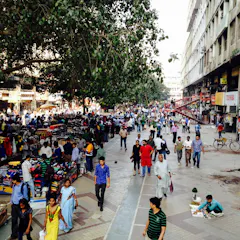
Contemporary characterisations of squatters and street vendors as a “nuisance” reproduces colonial urbanism ideas of hygiene and order.
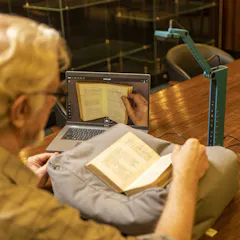
A Sydney librarian recently discovered a misfiled lost gem in the stacks: Virginia Woolf’s own copy of her first novel, with handwritten notes for revision. An expert explores what they tell us.

Western approaches to studying African materials have had a colonial bias. A curator considers what it means to think of the collection as needing to exist in relation to communities.
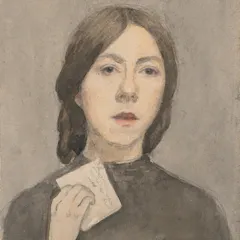
Gwen John was very much her own woman and followed her own artistic instincts, producing small, intimate, idiosyncratic paintings that resonate.
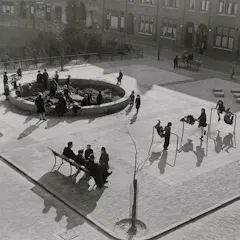
One visionary modernist architect saw play spaces as crucial to the 20th-century city. But they have to be cared for in order to survive.
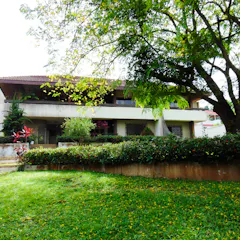
Too often, in discussions about tropical modernism, what African architects working in Africa were doing is overlooked. Their work matters.
Top contributors
-

Professor, Head of Visual Arts, Queensland University of Technology
-
Professor, University of Sydney
-
Clinical Associate Professor of Urban and Regional Planning, University at Buffalo
-
Assistant Professor in Architecture and Urban History, Texas Tech University
-
Research Student, Modernist Literature and Culture, King's College London
-
Professor of Art History, Newcastle University
-
Post Doctoral Research Fellow, RMIT University
-
Associate Professor in Visual Communication, Nottingham Trent University
-
Deputy Director for Creative Writing, University of Nottingham
-
Senior Research Associate, The University of Melbourne
-
Senior Lecturer in Design, Culture and Context, Nottingham Trent University
-
Professor, Urban Studies and Professor of Resource and Environmental Management, Simon Fraser University
-
Founding Director of The Skyscraper Museum, Adjunct Associate Professor of Architecture, Columbia University
-
Lecturer of Architecture, Case Western Reserve University
-
Associate professor, University of Bradford