
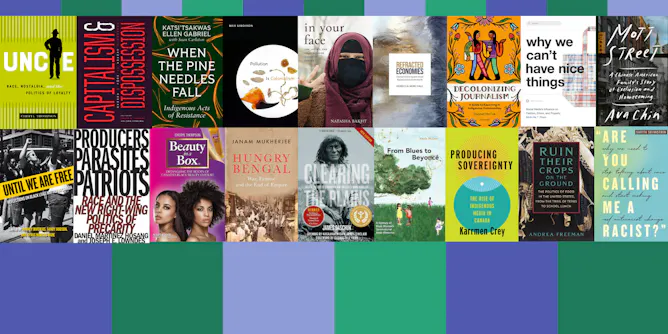
Thought-provoking reads for the critical thinker on your gift list. Each book connects with a past Don’t Call Me Resilient episode. Listen alongside reading to bring the scholar & their ideas to life.
Articles on Niqab
Displaying 1 - 20 of 21 articles
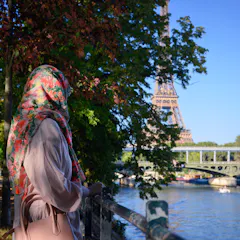
As France enshrines abortion rights in its constitution, the country’s ban on wearing religious symbols in schools turns 20 years old.

The Québec government thought it would Charter-proof its religious symbol law when it invoked the nothwithstanding clause. It was wrong.
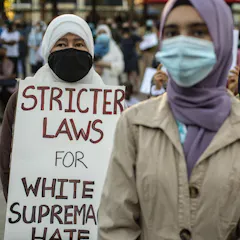
In today’s episode, we take a look at some ways lawmakers have legalized Islamophobia through niqab bans and other restrictive policies.

Ignorant assumptions about what the headscarf means fail to recognise how integral it can be to a woman’s identity.

Muslim women say the practice of wearing masks has given them more confidence to wear face coverings in public.

Boris Johnson has attacked Muslim women for covering their faces. Now he wants the whole of the UK to do so.
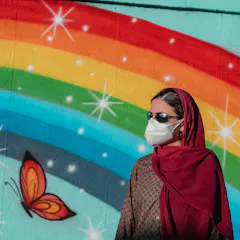
Now that face masks are being used to help fight the spread of COVID-19, it has caused some to look anew at discrimination against Muslim women who wear niqabs.

As people everywhere don face masks, scarves and bandanas to protect against coronavirus, Muslim women who wear the niqab, or Islamic veil, are feeling a lot less conspicuous.
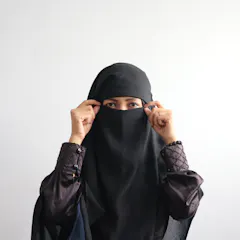
If we acquiesce to the ban of the niqab, what makes the banning of other types of women’s clothing any different?

While few would deny secularism and religious neutrality are legitimate goals, they don’t justify Bill 21’s undue restriction of minority rights.

If Quebec’s new premier succeeds in passing ‘secularization’ legislation by wielding the notwithstanding clause, it will come at the cost of civil rights and the protective capacity of the Charter.
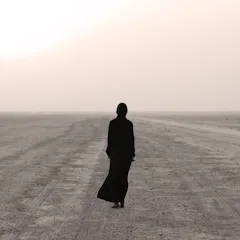
From Turkey to Saudi Arabia, Muslim women are battling for their rights - but religion is not at fault.

Muslim women and men are choosing to wear Islamic clothing in the face of rising religious hatred.
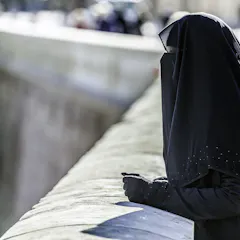
The principle argument as to why women should remove the niqab in court seems compelling, but it is based on flawed assumptions.

A number of women who once wore and defended the full Islamic veil known as the niqab later chose to renounce it. Here two of them tell their stories.

Bill 62, a bill passed last week banning the wearing of Niqab in Québec for those seeking access to public services, is widely seen as an attack on Muslim women. Why is it even necessary?
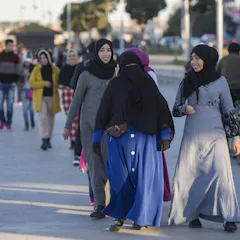
The recent burqa ban in Morocco highlights tensions between radical Salafists and a moderate Islamic government that has taken steps to further women’s rights.
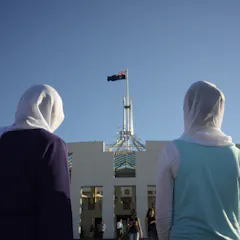
A call to ban the burqa has permeated Australian political discussions since police raided the homes of suspected Islamist extremists in Sydney and Brisbane on September 18. Liberal Senator Cory Bernardi…

The burqa and niqab are often viewed as symbols of extremism. In the wake of the rise of Islamic State, it is unsurprising, therefore, that in recent days a number of Australian politicians have called…
Top contributors
-

Visiting Scholar in Religious Studies and Gender, Northwestern University
-
Associate Professor of Psychology and Inclusion, University of Bristol
-
Professor and Chair of Department, University of Sydney
-
Senior Lecturer & Head of the Europe Research Cluster in the Department of International Politics, City St George's, University of London
-
Senior Lecturer Faculty of Business and Law, De Montfort University
-
Assistant Professor, School of Journalism and Communication, Carleton University
-
Senior Lecturer in International Relations, York St John University
-
Professor of Communication Studies; Research Chair on Intersectionality, Violence and Resistance, Concordia University
-
Sociologue, chercheuse associée Iremam, Aix-Marseille Université (AMU)
-
Senior Lecturer in Criminology, Nottingham Trent University
-
Lecturer in Politics, De Montfort University
-
Full professor, Faculty of Law, L’Université d’Ottawa/University of Ottawa
-
Lecturer in Islamic Politics, University of Toronto
-
Associate Law Professor, University of New Brunswick
-
Postdoctoral Researcher, Memorial University of Newfoundland